Your Cart is Empty


Short answer: A useful under-eye routine needs only three things: gentle cleansing, one well-chosen moisturizer or targeted eye product, and daily sun protection. The “targeted” step should match the cause—dryness, puffiness, pigment, visible vessels, or structural shadow—because no single eye cream corrects all five.
You do not automatically need a separate eye cream. A fragrance-free facial moisturizer may be enough if it is comfortable around your eyes and the label permits use there. Choose a dedicated eye product when its texture, applicator, or carefully formulated active ingredients solve a specific need.
| Step | Morning | Evening |
|---|---|---|
| 1. Cleanse | Rinse or use a gentle cleanser; pat dry | Remove eye makeup without scrubbing, then cleanse gently |
| 2. Target | Optional hydrating, antioxidant, caffeine, or other eye-area product | Optional targeted product; introduce potentially irritating actives slowly |
| 3. Moisturize | Use a small amount if the targeted product is not moisturizing enough | Seal in moisture with a comfortable cream if needed |
| 4. Protect | Broad-spectrum, water-resistant SPF 30 or higher plus sunglasses outdoors | No sunscreen needed while sleeping |
In general, treatment products go on after cleansing and before moisturizer and sunscreen. Follow the label for the specific formula, especially if it contains a retinoid or is not intended for the mobile eyelid. Herbal Dynamics Beauty's skincare-layering guide explains the full-face sequence.
Use lukewarm water and a gentle cleanser. If you wear long-wear or waterproof eye makeup, soften and remove it with a suitable remover instead of repeatedly rubbing the same area. Pat dry with a clean, soft towel.
Friction matters because rubbing can worsen irritation and may contribute to post-inflammatory discoloration. Persistent itching, scaling, watering, or burning can signal dermatitis, allergy, dry eye, or another condition that needs more than a new cosmetic.
| Main concern | Reasonable cosmetic target | Important limit |
|---|---|---|
| Dryness or fine dehydration lines | Glycerin, hyaluronic acid, beta-glucan, ceramides, and emollients | Hydration smooths the surface; it does not remove deep wrinkles |
| Temporary morning puffiness | Cool compress, caffeine, and a lightweight moisturizer | These do not remove structural bags or festoons |
| Brown or pigmentary darkness | Sun protection, reduced rubbing, and a well-tolerated brightening formula intended for the eye area | Active dermatitis must be controlled; stubborn pigment may need dermatologic care |
| Blue-purple or vascular-looking darkness | Caffeine may give a temporary cosmetic effect; vitamin K evidence is preliminary | No topical is proven to “repair circulation” or erase every vascular cause |
| Fine lines and photoaging | Sun protection, moisturization, and a carefully formulated retinoid if tolerated | Retinoids can irritate; they do not correct bags or tear-trough anatomy |
| Hollow or shadow | Hydration may soften surface texture | A cream cannot rebuild bone or replace lost volume |
Start with Herbal Dynamics Beauty's dark-circle cause guide if you are unsure which pattern you have. For persistent fullness or swelling, use the under-eye bags and puffiness guide.
If your treatment step already uses a moisturizing cream, another layer may be unnecessary. If the area still feels dry, apply a small amount of a bland moisturizer the skin tolerates. Glycerin and hyaluronic acid attract water; emollients soften the surface; ceramides and other lipids can support the barrier.
Topical hyaluronic acid is not the same as injected hyaluronic-acid filler. A hydrating serum or cream can improve surface dryness, but it cannot fill a deep tear trough.
Use a broad-spectrum, water-resistant sunscreen with SPF 30 or higher on exposed skin and wear sunglasses outdoors. Tinted formulas containing iron oxides can be useful when visible light contributes to hyperpigmentation, but comfort and safe placement around the eyes still matter.
If sunscreen stings, do not abandon protection. Try a formula designed for sensitive skin or the eye area, use sunglasses and a hat, and ask a dermatologist for help finding a tolerable option.
Follow the product directions. A simple moisturizer may be used once or twice daily if comfortable. Potentially irritating formulas are better introduced less often and increased only as tolerated. Using several eye products at once raises the chance of irritation without proving better results.
There is no universal waiting period required between ordinary cosmetic layers. Let each layer settle enough to avoid pilling, and place sunscreen last in the morning before makeup.
Use baseline photographs taken at the same time of day and in the same lighting. Morning fluid shifts, concealer, sleep, and camera exposure can make casual before-and-after comparisons unreliable.
Use only a suitable formula, start slowly, and avoid combining it with multiple exfoliating products near the eye. Avoid retinoids during pregnancy or while planning pregnancy, and discuss breastfeeding with a healthcare professional.
A product safe for the cheeks is not automatically appropriate on eyelids. Do not bring glycolic acid, salicylic acid, strong vitamin C serums, or other concentrated actives closer to the eye than their label permits.
Vitamin K1 and vitamin K oxide are different cosmetic ingredients, and contact-allergy concerns exist. Evidence for dark circles comes from small multi-ingredient studies. Read the central Vitamin K evidence guide and Herbal Dynamics Beauty's Vitamin K eye-cream usage guide for the limitations and safety context.
For help choosing a vitamin K eye cream for the dark-circle step in your routine, review the product comparison and the directions for the formula you select.
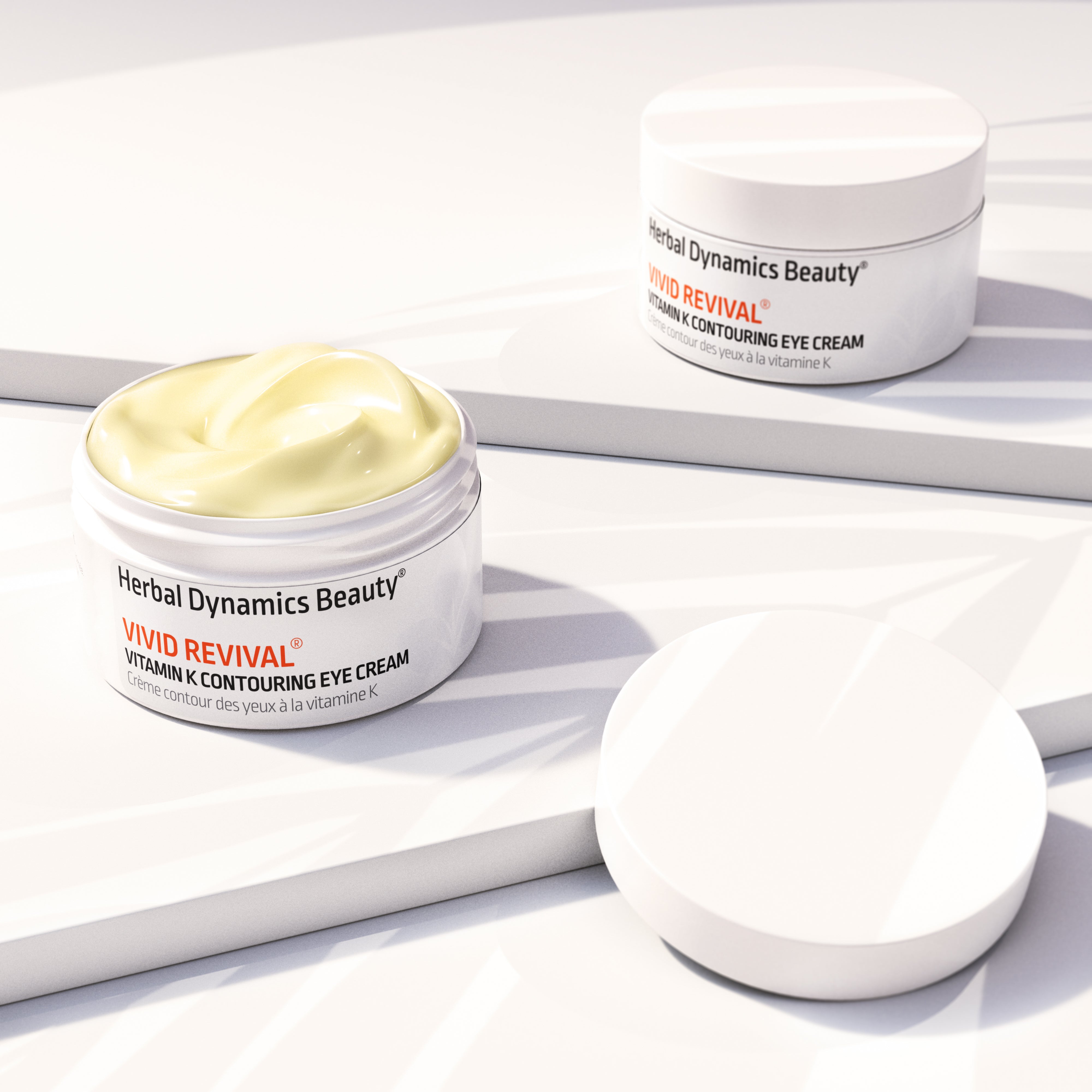
Disclosure: Herbal Dynamics Beauty makes and sells Vivid Revival® Vitamin K Contouring Eye Cream. Its current formula contains phytomenadione, glycerin, hyaluronic acid, beta-glucan, green tea, centella asiatica, oils, retinyl palmitate, and other ingredients.
It can serve as the moisturizing/targeted step in a routine for someone who tolerates the complete formula. It is not proven to correct every cause of dark circles, remove structural bags, or treat an eye or bleeding disorder. For a broader comparison by concern, see Herbal Dynamics Beauty's cause-based eye-cream guide.
Seek professional care for persistent eyelid dermatitis; recurrent swelling; sudden or one-sided changes; pain; marked redness or warmth; discharge; an eye injury; unexplained bruising; or any change in vision. Seek emergency care for trouble breathing or swelling of the lips, tongue, or throat.
A targeted eye product usually goes after cleansing and before a heavier facial moisturizer. If the eye cream is your moisturizer, a second layer may not be needed. Follow the formula's directions and place sunscreen last in the morning.
Often, yes—if the label permits it and the formula does not sting or migrate into the eye. People using potent actives, fragranced products, or formulas not intended for this area should be more cautious.
Usually not. One tolerable product that addresses your main concern is a better starting point than stacking several formulas. Add a second layer only for a clear reason.
Only if the label specifically directs use there. The mobile eyelid and lash line are easy to irritate, and products can migrate into the eye.
Use the eye-cream guide to decide whether a separate product is useful, then compare formulas by concern. For dry skin, start with under-eye hydration care; for texture, compare peptides and retinol-related choices. Detailed amount and placement instructions live in the application guide.
The current Vivid Revival® Vitamin K Contouring Eye Cream directions allow morning and night use after cleansing and toning. Toner is optional in a basic routine. Follow the formula’s placement instructions and introduce it according to tolerance.
This article provides cosmetic education and is not a diagnosis or a substitute for professional eye or skin care.
Use pigment-focused guidance for brown or gray circles, vascular guidance for blue or purple tones, and structural guidance when shadow follows a hollow. If the area is itchy or congested, review allergic shiners before adding stronger actives.
See retinoids during pregnancy and breastfeeding for the evidence and questions to discuss with your healthcare professional.
Coordinate eye care with the full-face routine. Keep product-specific and prescription instructions first; an additional cosmetic step is optional.
An eye formula containing Beta Glucan follows its own directions; a face serum with the same ingredient is not automatically interchangeable. The format guide explains that distinction. Beta-glucan selection guidance also separates confirmed ingredient presence from unconfirmed source, concentration or a dark-circle treatment claim. Keep the complete formula and eye-area tolerance central.