Your Cart is Empty


The best eye cream for mature under-eyes is a comfortable moisturizer that matches your main concern. Dryness may need a richer texture; persistent fine lines may justify an eye-specific retinol or peptide formula if tolerated. Age alone is not a reason to use more actives, and no cream can restore lost facial volume or remove a protruding fat pad.
The mature-skin guide explains age-related context. Use the overall product-selection framework to decide whether a separate eye product adds useful care.
| Main concern | Practical priority | Guide |
|---|---|---|
| Tightness, roughness or dry-looking creases | Humectants with a comfortable emollient base | Hydrating eye creams |
| Fine lines and crow’s feet | Moisture and sun protection first; consider a targeted formula | Fine-line eye creams |
| Morning puffiness | Separate changing swelling from fixed bags | Puffiness and bags |
| More visible color or shadow | Identify the cause before buying a brightener | Why dark circles change with age |
| New sensitivity | Simplify and identify triggers | Eye-area irritation |
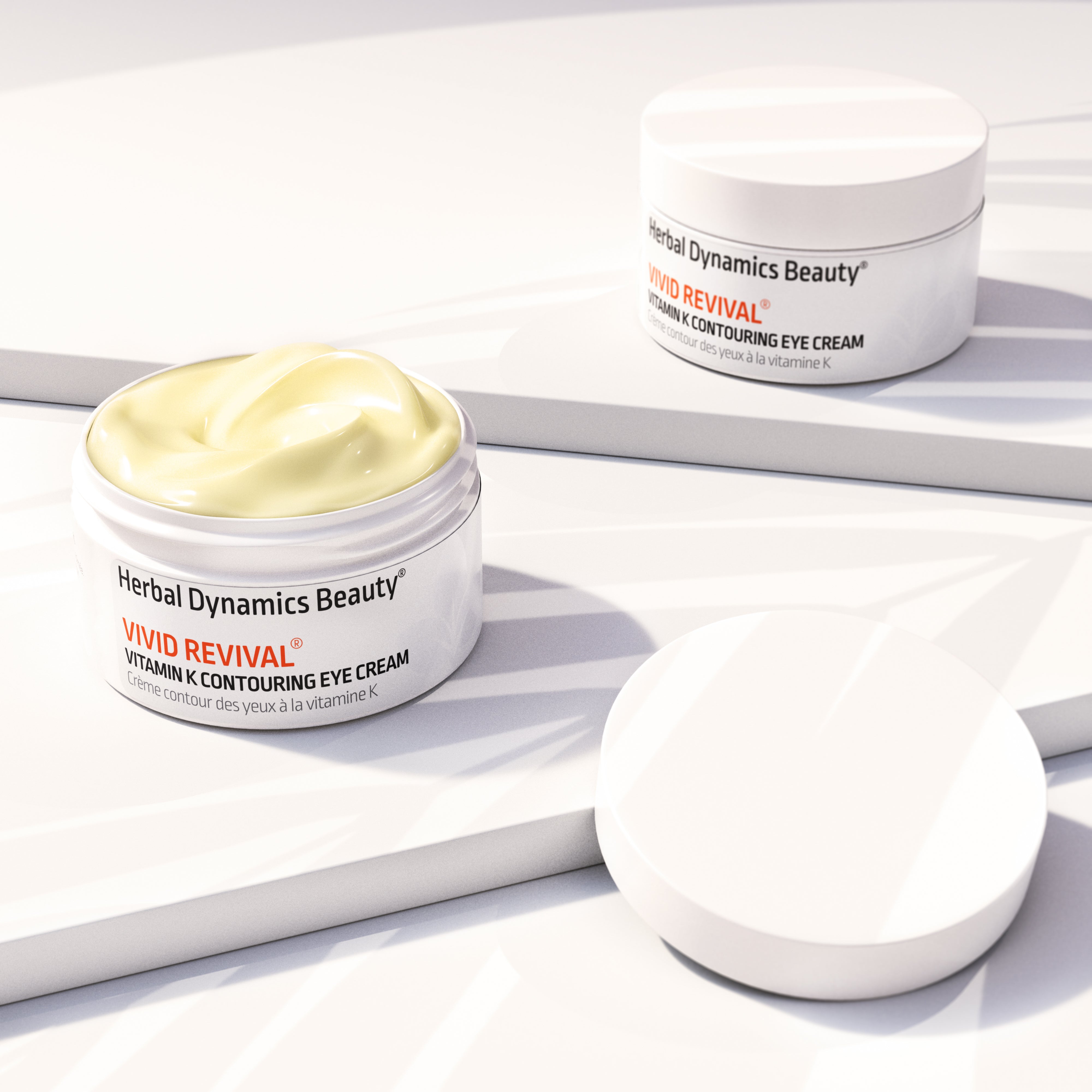
Herbal Dynamics Beauty disclosure: We make and sell Vivid Revival® Vitamin K Contouring Eye Cream. It combines hyaluronic acid, glycerin and oils with green tea, phytomenadione and other ingredients. It may suit someone seeking moisturizing botanical eye care who tolerates the complete formula.
Its retinyl palmitate is a vitamin A ester, not retinol. Do not assume it has the wrinkle results of a retinol trial. Vitamin K studies are small and often involve several ingredients; they do not prove that Vitamin K reverses aging.
For mature under-eyes, compare three needs: a fragrance-free moisturizing base for dryness, an optional peptide formula for cosmetic texture care, or an eye-area retinol formula if appropriate and tolerated. Retinol requires more attention to irritation and safety restrictions. A richer texture or higher price does not establish better results.
Skin can become drier with age, and an established product can also become uncomfortable for reasons unrelated to age. New itching or scaling should not be dismissed as normal aging. Retinoids, fragrance, cosmetics and transferred allergens can all complicate eye-area care.
Choose one product to introduce, use a small amount and reassess before adding anything else. A thick layer is more likely to travel toward the eye. Keep the waterline and lash roots clear, and apply to the mobile eyelid only if the label permits it.
Better hydration can make surface texture look softer. Selected retinol and peptide formulations have shown fine-line improvements in studies, but research on one formula cannot establish another formula’s results. A line that appears when you smile is a different target from a dry crease at rest.
Loose skin, hollows and structural bags are anatomical concerns. If they are what you want to change, consider a professional assessment before repeatedly replacing your cream. Read the established tear-trough and structural-shadow guide.
Cleanse gently, apply one moisturizing or targeted eye product according to its label, and use daytime sun protection. Sunglasses can help protect exposed eye-area skin. At night, remove makeup without repeated friction and use a formula you tolerate. A second moisturizer is optional.
Seek care for unexplained swelling, persistent dermatitis, eye pain or changes in vision. Cosmetic care should not delay assessment of new symptoms.