Your Cart is Empty


Short answer: The best eye cream for under-eye bags depends on what is creating the “bag.” A cooling product with caffeine may temporarily lessen mild morning puffiness, and a well-formulated moisturizer can make dry, crepey skin look smoother. No cosmetic cream can remove a protruding fat pad, tighten significant loose skin, erase a deep tear trough, or reliably correct festoons.
That distinction prevents wasted money: fluid-related puffiness can change from day to day, while structural bags tend to stay in place. Dark circles may be pigment, visible vessels, or shadows rather than swelling.
| What you notice | Common pattern | What a cosmetic may realistically do |
|---|---|---|
| Temporary puffiness | Often changes through the day or looks worse after waking, crying, a salty meal, or poor sleep | Cooling and caffeine may provide a temporary visible improvement |
| Allergy- or irritation-related swelling | May come with itching, watering, redness, scaling, congestion, or frequent rubbing | A bland moisturizer may support the skin barrier, but the trigger or underlying condition needs attention |
| Structural lower-eyelid bags | Persistent fullness associated with genetics, skin laxity, and forward movement of orbital fat with age | Skin care can improve surface hydration, not remove the underlying structure |
| Festoons or malar bags | Swelling or folds lower on the lid-cheek area rather than directly beneath the lash line | Topicals are unlikely to make a major change; professional diagnosis matters |
| Dark circles or a tear-trough shadow | Brown, blue-purple, or shadowed appearance without true swelling | Treatment should match pigmentary, vascular, or structural causes |
For help separating pigment, visible vessels, hollowness, and mixed patterns, use Herbal Dynamics Beauty's dark-circle cause guide. If darkness—not swelling—is the main concern, compare Herbal Dynamics Beauty's best eye creams for dark circles.
With age, tissues supporting the lower eyelid can weaken and fat may move forward, creating persistent fullness. Fluid can also collect below the eyes and make the area look puffier. Genetics, allergies, lack of sleep, smoking, and excess dietary sodium may contribute for some people. A deep tear trough beside a bag can increase the shadow and make the bag look more prominent.
“Under-eye bag” is not one diagnosis. Festoons, dermatitis, infection, medication-related swelling, and swelling after cosmetic filler or a procedure require different decisions. If the change is sudden, one-sided, painful, red, itchy, persistent, or accompanied by vision symptoms, do not try to solve it with an eye cream.
Caffeine is commonly used in de-puffing products and may temporarily make vascular-looking puffiness less noticeable. Evidence for finished eye creams is limited, and a temporary cosmetic effect should not be described as permanent “lymphatic drainage” or correction of structural bags.
Glycerin, hyaluronic acid, beta-glucan, and emollients can reduce dryness and make fine dehydration lines look softer. They improve the surface appearance; they do not dissolve under-eye fat or rebuild the lower-eyelid anatomy.
Retinoids can support photoaged skin and fine-line improvement, but the eye area is easily irritated. Choose a product intended for this area, start slowly, and keep it out of the eye. Avoid retinoids during pregnancy or while planning pregnancy, and discuss breastfeeding with a healthcare professional. Retinoids do not remove a fat pad or festoon.
Peptides, green tea, and other antioxidants may support a formula aimed at skin texture or environmental stress, but claims depend on the specific ingredient, concentration, vehicle, and finished-product testing. An ingredient list alone cannot prove that a cream will reduce bags.
Vitamin K has preliminary research in multi-ingredient formulas for under-eye discoloration and procedure-related bruising. It is not established as a treatment for lower-eyelid bags. Some vitamin K forms also carry contact-allergy concerns; read Herbal Dynamics Beauty's Vitamin K for Skin evidence guide before choosing a product.
These measures may change temporary fluid-related puffiness. They will not remove persistent anatomic bags.
Persistent structural bags, prominent tear troughs, or festoons need an individualized assessment by a board-certified dermatologist, ophthalmologist, oculoplastic surgeon, or plastic surgeon. Procedures can carry meaningful risks, and the right option depends on anatomy. For example, filler can worsen or cause prolonged lower-eyelid edema in some people; it should not be treated as a universal alternative to surgery.
Seek prompt medical care for sudden or one-sided swelling, pain, marked redness or warmth, fever, discharge, trouble opening the eye, eye injury, or any change in vision. Seek emergency care for swelling with trouble breathing or swelling of the lips, tongue, or throat.
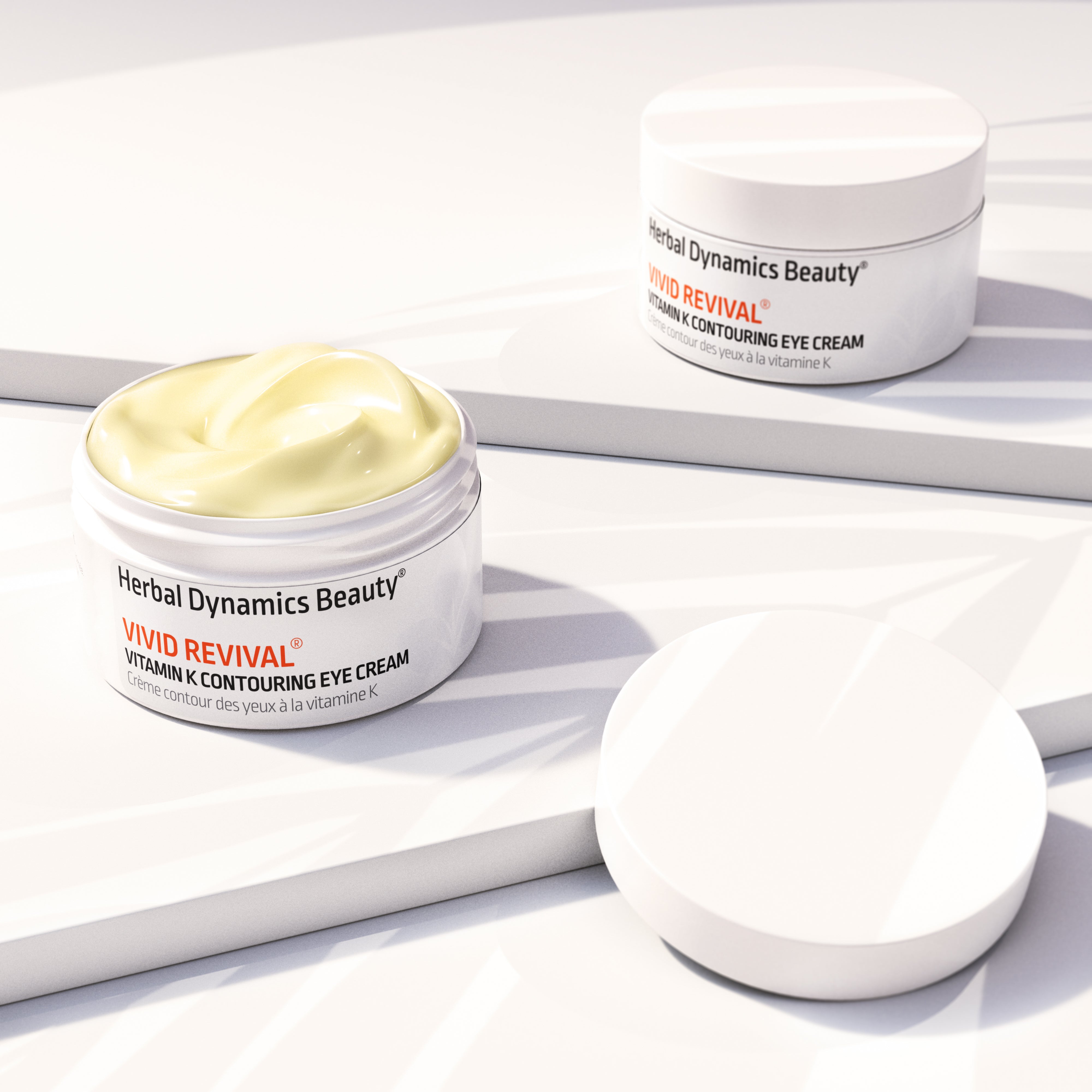
Disclosure: Herbal Dynamics Beauty makes and sells Vivid Revival® Vitamin K Contouring Eye Cream. Its current formula contains phytomenadione, glycerin, hyaluronic acid, beta-glucan, green tea, centella asiatica, oils, retinyl palmitate, and other ingredients.
It is best understood as a moisturizing cosmetic for overall under-eye appearance—not as a product proven to remove structural bags or treat unexplained swelling. People with eyelid eczema, known cosmetic allergy, or recent eye-area procedures should seek professional advice before use.
No. A cream may temporarily reduce mild fluid-related puffiness or improve dry surface texture. It cannot permanently reposition fat, remove excess skin, or correct festoons.
No. A bag is fullness or swelling. A dark circle may come from pigment, visible vessels, thin skin, a hollow, or a shadow cast by a bag. The two concerns can occur together.
A cooling or caffeine-containing product may create a temporary visible change after application, while hydration and texture changes depend on regular use. No credible timeline applies to every formula, and persistent structural bags will not disappear with continued use.
Topical hyaluronic acid is a humectant and is not the same as injected hyaluronic-acid filler. A topical product may make the surface look more hydrated, but it cannot remove a bag. Persistent swelling after injectable filler needs evaluation by the treating clinician.
If temporary puffiness is the main concern, look for caffeine on the ingredient list and keep expectations modest. Our Vivid Revival® Vitamin K Contouring Eye Cream is a moisturizing botanical option; its current formula does not list isolated caffeine. Neither an ingredient choice nor an applicator can remove anatomical bags.
A controlled caffeine-gel trial found no significant advantage over its base. Choose a comfortable product for a realistic appearance goal, then use the main eye-cream comparison and ingredient guide for context.
This article provides cosmetic education and is not a diagnosis or a substitute for eye care.
Temporary puffiness may change through the day and respond to cool care, sleep habits or a caffeine-containing formula. Persistent bags often reflect anatomy and can cast a dark shadow beneath them. Eye cream may improve hydration and the look of mild puffiness, but it cannot permanently reposition a fat pad.
Use the safe puffiness guide for practical steps, then check the dark-circle causes page if discoloration remains.
See retinoids during pregnancy and breastfeeding for the evidence and questions to discuss with your healthcare professional.