
Your Cart is Empty


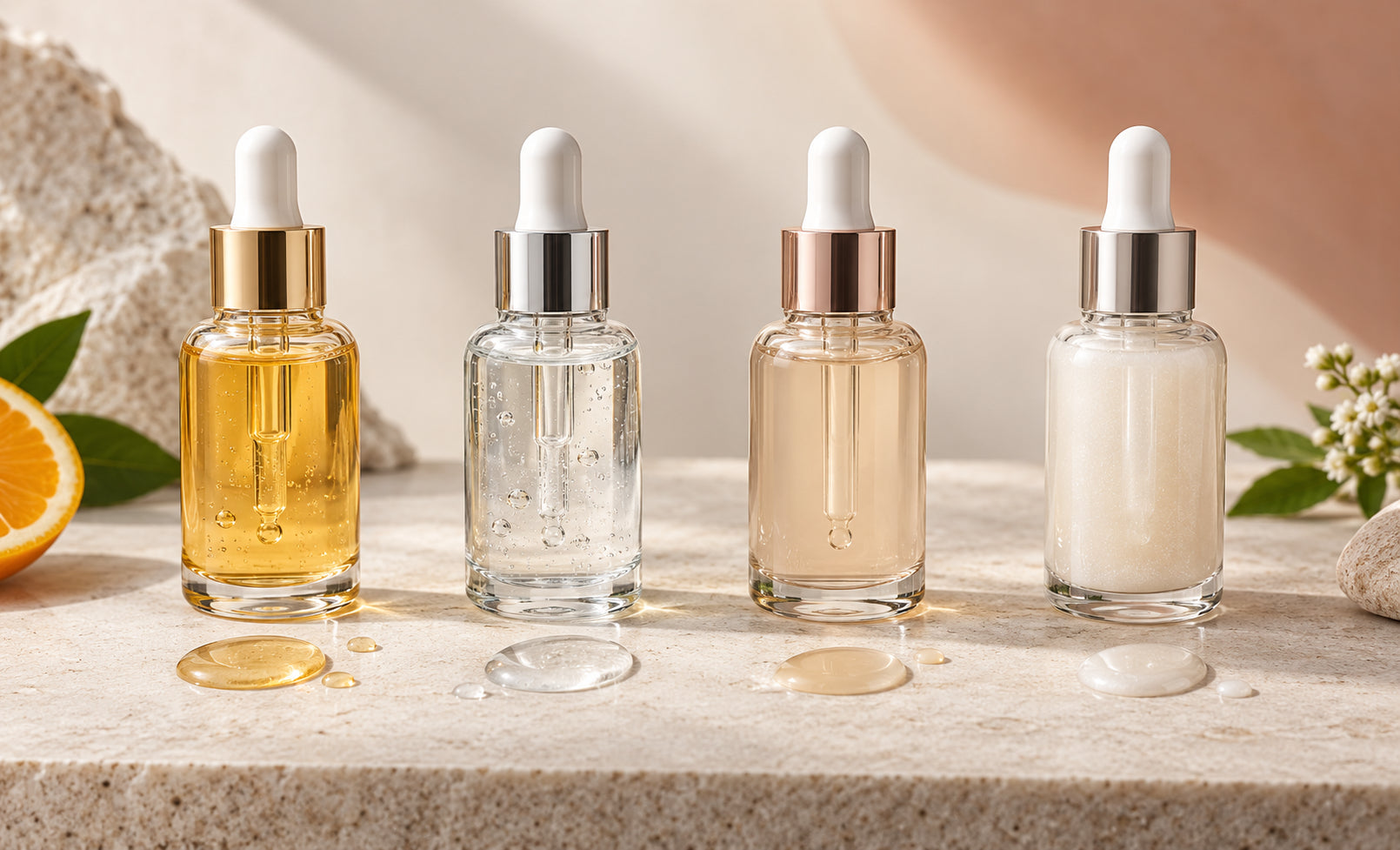
Quick answer: Vitamin C offers antioxidant and tone-support benefits; niacinamide supports barrier function and can help uneven tone; alpha arbutin targets pigment pathways; and retinoids influence cell turnover and have broader photoaging evidence. The best choice depends on the cause of the mark, sensitivity and the rest of your routine.
| Ingredient | Main role | Key caution |
|---|---|---|
| Vitamin C | Antioxidant support and gradual improvement in uneven-looking tone | L-ascorbic acid can oxidize or sting; derivative evidence varies |
| Niacinamide | Barrier support, oil-balance support and appearance of uneven tone | The complete formula can irritate susceptible skin |
| Alpha arbutin | Targets tyrosinase-related pigment pathways | Clinical evidence and formula quality vary |
| Retinoid | Cell-turnover and photoaging support; prescription forms have stronger evidence | Dryness and irritation; pregnancy considerations require professional guidance |
Often yes, but “compatible” does not mean “start everything tonight.” Add one active at a time. Vitamin C in the morning and a retinoid at night is a common low-confusion structure. Niacinamide can sit in either routine. Alpha arbutin may be layered according to the product directions.
See the vitamin C pairing guide for a step-by-step routine.
A flat post-acne mark is not the same as a textural acne scar, and melasma is not the same as an isolated sun spot. Use our acne scars versus dark spots guide and dark-spot type comparison before selecting an active.
Vivid Revival® Vitamin C Rejuvenating Serum supplies ethyl ascorbic acid in a hydrating base. It can serve as the morning antioxidant step while a different targeted active is used at night—provided the overall routine remains comfortable.
Vitamin C versus niacinamide: the decision depends on the finished formula and whether antioxidant-focused care, uneven tone, oil appearance or moisturizing support is the priority. Neither is a universal winner for all dark spots. Read niacinamide-specific pigmentation evidence for the narrower role.
Alpha arbutin versus niacinamide: alpha arbutin is considered for pigment-pathway effects, while niacinamide has additional barrier and oil-appearance research. A mechanism does not prove that one product fades marks faster. Do not stack both simply to cover two mechanisms.
Retinol versus niacinamide: retinoids have different cell-signaling effects, evidence and precautions. Niacinamide is not a gentler form of retinol or a guaranteed equivalent for acne or wrinkles. The mature-skin niacinamide guide and retinol pairing guide separate selection from compatibility.
For buying within the niacinamide category, use the niacinamide serum comparison; for ingredient background, use the main guide.
Retinol for dark spots distinguishes cosmetic evidence from prescription studies. Retinol combination guidance covers practical pairings. Avoid retinoids during pregnancy or while trying to conceive, and discuss breastfeeding with a clinician; see the separate safety guide.
This comparison remains the guide for vitamin C versus niacinamide and other pigment-focused ingredients. For current serum categories across skin concerns, use the face-serum selection guide. The brightening-serum guide focuses on label selection, while the serum overview explains the format’s limits.
For the alpha-arbutin route, start with its benefits and evidence, then use the alpha-arbutin serum selection guide to evaluate concentration, supporting ingredients and routine fit.
By Herbal Dynamics Beauty • Updated September 25, 2026






