
Your Cart is Empty


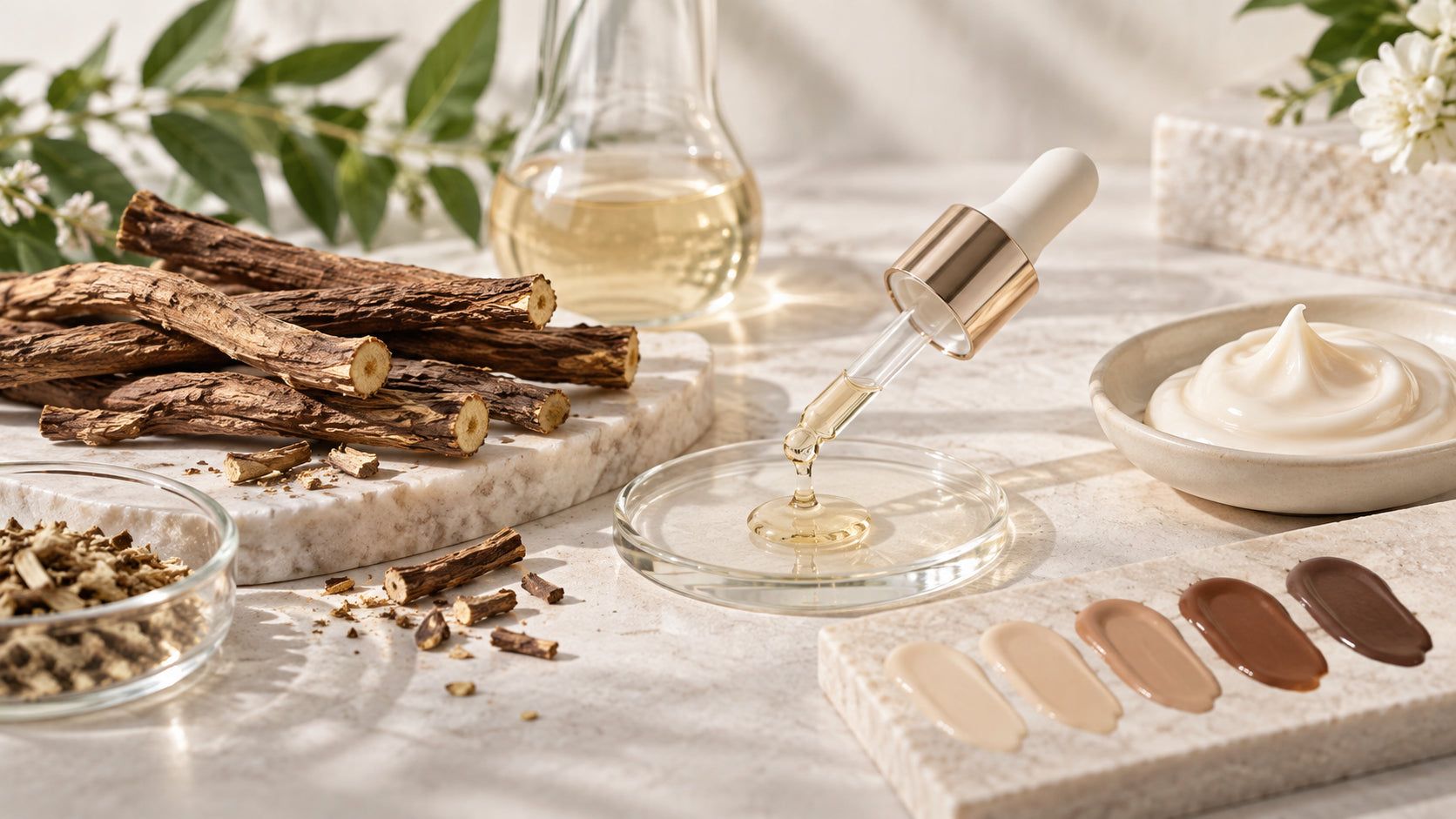
Quick answer: Specified licorice root extracts can contain compounds such as glabridin that have shown antioxidant, anti-inflammatory and pigment-pathway activity in laboratory research. The ingredient is promising for the appearance of dark spots, but direct high-quality human evidence is limited and results depend on the extract and finished formula.
Cosmetic licorice extracts are derived from Glycyrrhiza species. Depending on the extract, they may contain glabridin, liquiritin, licochalcone A and other compounds. An ingredient list may use names such as Glycyrrhiza glabra root extract, so the specific INCI matters.
Laboratory research suggests that glabridin can influence tyrosinase-related pathways involved in melanin production, while other licorice compounds have antioxidant or soothing properties. Those mechanisms make licorice relevant to brightening formulas, but a mechanism is not the same as proof that every topical product will fade dark spots.
Published reviews describe potential dermatologic uses for licorice compounds, but direct randomized human trials for hyperpigmentation are limited. Extracts are not interchangeable, and studies may use concentrations or vehicles unlike commercial skincare. We therefore describe licorice as a supporting botanical, not a proven treatment for melasma or another disorder.
The two ingredients may be used in the same routine when the formulas are compatible and comfortable. Vitamin C has a larger topical evidence base overall; licorice can add a different botanical approach. See our comparison of dark-spot ingredients and the complete hyperpigmentation ingredient guide.
Seek evaluation for persistent melasma, rapidly changing pigment, an irregular spot, or discoloration that appears after a medication or health change. A botanical cosmetic cannot diagnose the cause.
This article discusses cosmetic use and research limitations; it is not medical advice.
Kojic acid is a distinct compound, with its own enzyme-related and clinical-formula evidence. Pairing guidance explains why combining botanical and pigment-focused ingredients does not itself demonstrate synergy. Keep the extract-specific evidence separate from the kojic ingredient claim.
Glabridin is an isoflavan especially associated with Glycyrrhiza glabra, with pigment-pathway and antioxidant research. Licochalcone A is a distinct chalcone; specified Glycyrrhiza inflata preparations appear in human irritation studies. Liquiritin, glycyrrhizin and glycyrrhizate salts are different materials again. The glabridin guide and the licochalcone A guide give each compound its own evidence context.
A general root-extract label does not disclose all these compounds or their amounts. Species and concentration-label guidance explains what ingredient names and percentages leave unanswered.
Licorice may contribute to a formula designed for comfortable skin and a more even-looking complexion. Controlled licochalcone A irritation experiments are relevant to that interest; their findings remain specific to the studied preparation and model. Antioxidant cell findings do not establish an SPF, reversal of sun damage or treatment of a skin disease. The redness and sensitive-skin guide explains those practical boundaries.
| Evidence type | What to keep separate |
|---|---|
| Glabridin pigment experiments | Cell and animal findings versus a clinical result in people |
| Small liquiritin melasma study | A defined cream and diagnosed population versus a generic licorice cosmetic |
| Licochalcone A irritation models | Specified formulas and induced redness versus every cause of facial redness |
| Combined creams or complete regimens | Whole-product outcomes versus the effect of licorice alone |
The human-evidence assessment also covers visible-result expectations. There is no validated universal licorice timeline, ideal percentage or guaranteed outcome.
A licorice serum is optional; a suitable moisturizer can fill the moisture step while including the botanical. Use the routine-order guide for the broader sequence. For pigment goals, keep appropriate sunscreen in place. Cosmetic licorice does not treat active acne, rosacea, eczema or dermatitis, and oral licorice is a different exposure from topical skincare.
Reviewed October 6, 2026.
For a licorice formula described as adaptogenic, the topical adaptogen explanation puts the marketing category in context. Oral stress research and a cosmetic pigment claim need separate evidence.
Licorice extract and concentrated aromatic oils are different materials. essential oils and brightening-claim limits helps distinguish their formulation roles rather than grouping every botanical as a pigment treatment.
For a different botanical given tone claims, turmeric preparation and skincare evidence separates ingredient interest from results established for a particular cosmetic.






