
Your Cart is Empty


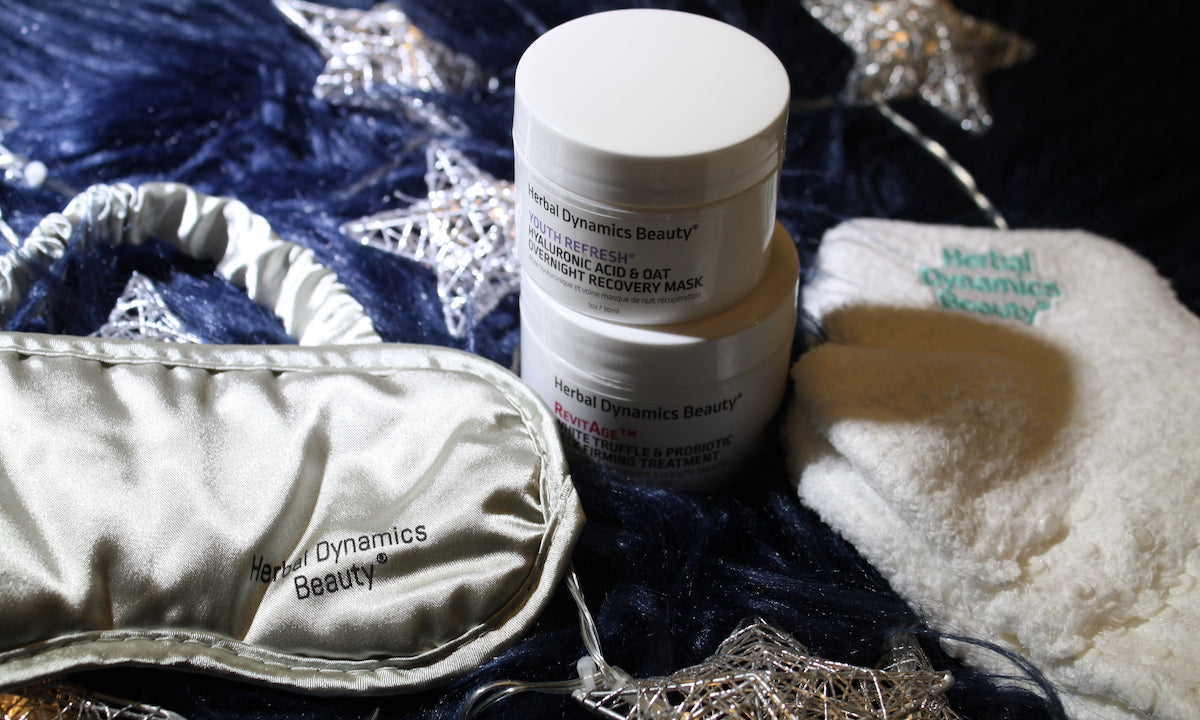
A nighttime routine can support skin comfort with gentle cleansing and a suitable moisturizer. Botanical extracts are optional; natural origin does not make a formula safer or prove that it rejuvenates skin while you sleep. Choose ingredients for a clear purpose and judge the finished product’s evidence and tolerance.
Skin appearance reflects many factors, including genetics, UV exposure, inflammation, treatment and daily habits. A person’s complexion is not a reliable measure of their overall health or how well they care for themselves.
Dry skin does not necessarily mean the whole body is dehydrated, and a breakout does not establish a nutrient deficiency. Persistent changes are better assessed in context than explained by a single lifestyle cause.
We take good care of our skin because of both personal and social reasons. Eating healthy food, exercising, sleeping right, managing stress, and reducing unhealthy habits can all contribute to better looking skin.
However, lifestyle modifications may not always be effective for some. We have different skin types, different environmental challenges, hormones and other daily life stresses. This is the reason why cosmetics and beauty products are one of the leading industries in the world today. As technology and science expands our knowledge of skincare, our options continue to grow.
It is easier than ever before to find the skin care products we want. Gone are the days when the rich and famous were the only the ones who had access to advanced skin care products! Thanks to the advent of technology, more people are able to access the information and products that will help them improve their skin.
Both botanical and synthetic ingredients can be useful, irritating or unsuitable depending on concentration and formulation. Choose a product for your skin’s needs rather than assume that grocery-store or drugstore products are harmful because they contain manufactured ingredients.
Absorption through skin does not by itself establish a harmful exposure. The route, amount, chemical identity and evidence matter. FDA’s aromatherapy guidance explains that plant-derived materials are not automatically safe; an unsupported quotation about artificial ingredients cannot replace a product-specific safety assessment.
Sleep is relevant to general wellbeing, and poor sleep may accompany stress and some skin concerns. Those relationships do not establish that sleep loss is the main cause of an individual’s rash, acne or visible aging.
Some people disregard the importance of sleep in our health, especially teenagers and younger people. But once we start to experience its harmful result, we begin to take extra precautions and make sure that our body gets lots of it.
Skin renewal occurs continuously and follows biological rhythms. Adequate sleep can support general health, but it does not justify a promise that one night product accelerates repair or replaces treatment for a diagnosed condition.
Studies linking sleep quality with skin measurements are informative, but observational associations cannot isolate sleep from stress, illness, age and other factors in every person.
Psoriasis and eczema are complex inflammatory conditions. Sleep difficulties may accompany them; it is inaccurate to say that insufficient sleep simply causes these diseases or that sleeping longer will remove wrinkles and spots.
A regular sleep schedule can be useful for wellbeing. Persistent insomnia or a skin condition that interrupts sleep merits appropriate care. Avoid turning normal variation in sleep into a guarantee about the skin’s nightly repair cycle.
Night can be a convenient time for a richer moisturizer or a treatment whose instructions favor evening use. There is no universal rule that all ingredients absorb better at night. Formula, medication directions and tolerance determine the schedule.
A comfortable moisturizer may reduce tightness and dryness by morning. That visible or sensory change is different from demonstrated collagen rebuilding or an overnight anti-aging result.
Select a formula that fits your skin and avoids known allergens. Botanical extracts, preservatives and synthetic actives all require appropriate formulation and evaluation; “natural” is not a guarantee of minimal side effects.
The following examples explain why plant extracts may appear in a formula. Evidence about a food, oral supplement or isolated compound should not be presented as clinical proof for a cream containing the plant extract.
Chamomile extracts are investigated for soothing-related properties, but they are not established substitutes for acne medicine. They do not unclog every pore or act as a clinical antiseptic simply because laboratory activity has been reported. People with relevant plant allergies may react.
Green tea extract from Camellia sinensis contains catechins studied for antioxidant activity. That research does not establish that a nighttime cosmetic prevents cancer, boosts immunity or treats skin infections. The antioxidant evidence guide explains the limits for environmental-stress and visible-aging claims.
Watermelon extracts can be included for conditioning or formulation purposes. Eating the fruit provides nutrition; applying an extract does not deliver the same nutritional exposure or establish retinoid-like benefits from its vitamin content.
Lentils provide protein and other nutrients when eaten. A topical lentil extract is not a treatment for iron deficiency or poor circulation, and food nutrient content does not demonstrate faster skin, hair or nail repair from a cosmetic.
Apple extracts may contain compounds studied for antioxidant activity. The effect in a finished cosmetic depends on preparation, amount, stability and delivery. Neither eating apples nor applying an extract guarantees smoother or younger-looking skin.
Cucumber extract can contribute to a refreshing cosmetic texture or skin conditioning. Its food water and vitamin content do not prove deep hydration, infection treatment or a clinically active lactic-acid concentration in the finished product.
Burdock has traditional uses and experimental research, but a cosmetic containing its extract should not be described as treating acne, eczema or psoriasis without the appropriate clinical evidence and regulatory basis. Use it, if tolerated, for the product’s labeled cosmetic purpose.
Passionflower extracts and oral preparations have been studied in different contexts. Applying a nighttime cosmetic containing the plant is not an established way to induce sleep or treat anxiety. Consider it a formulation ingredient rather than a sleep treatment.
Elderberry (Sambucus nigra) contains anthocyanins that are studied for antioxidant activity. That ingredient-level finding does not show that a night product prevents UV damage or supplies daytime sun protection.
Use the facial sunscreen guide to choose broad-spectrum SPF 30 or higher and apply it properly. FDA guidance explains why tested sunscreen claims, protective clothing and correct use matter; ingredient or nutrition research is not an SPF rating.
To choose an evening product, compare night-cream criteria with routine order. A study of sleep quality and skin aging concerns associations and barrier measurements; it does not prove that a botanical night cream repairs the consequences of poor sleep.
Start with how your skin feels after cleansing. Tightness and flaking can favor a richer moisturizer; a comfortable, oily face may prefer a lighter texture. Humectants help retain water, emollients soften the surface and occlusive ingredients help limit moisture loss. A botanical extract can be included alongside those functions without replacing them.
A night cream and an overnight mask can overlap in purpose, but their labels may specify different amounts and removal steps. Do not layer several rich products simply because each promises overnight renewal. Introduce one change, keep other treatments stable and assess comfort over ordinary use rather than judge a single morning’s glow.
If a product contains a retinoid or exfoliant, its treatment instructions take priority over a general botanical routine. Irritation is a reason to reconsider frequency or the formula. An evening moisturizer does not remove the need for properly labeled sunscreen during the day.
Content updated October 8, 2026.
If you prefer a leave-on mask format for extra moisture, compare overnight-mask formula choices. Check whether it adds a function your night cream already supplies before layering both.






