Your Cart is Empty



Green tea extract is not the same ingredient as caffeine. Tea can contain caffeine, but an extract's name does not tell you how much remains in a finished eye cream. Green tea's catechins and isolated caffeine also have different research backgrounds, so neither should automatically inherit the other's claims.
The green tea overview introduces the botanical. For eye-area use, the key distinction is between an identified ingredient, an unspecified extract and a tested complete formula.
| Feature | Green tea extract | Caffeine |
|---|---|---|
| Identity | A mixture often listed as Camellia Sinensis Leaf Extract | A defined molecule listed as Caffeine |
| Research interest | Catechins, antioxidant activity and selected skin pathways | Topical delivery and cosmetic questions including puffiness |
| Label limit | Caffeine and EGCG amounts may be unknown | The name alone still does not specify concentration or results |
| Practical priority | A tolerable eye-area formula | A tolerable eye-area formula with realistic claims |
The answer is more cautious than a simple ingredient ranking. A randomized trial in 34 volunteers compared a caffeine gel with its gel base after a sleepless night. Overall puffiness reduction was not significantly different between them. The researchers considered the cooling gel effect important.
That finding does not prove that no caffeine formula can help anyone. It shows why a refreshed appearance should not automatically be attributed to caffeine, especially when the base and application conditions also matter.
Green tea's broader skin research gives an antioxidant rationale, but evidence specifically establishing routine under-eye de-puffing from an unspecified extract is limited. A cosmetic cannot be expected to reverse structural bags or fill a tear trough.
The green tea eye-area guide covers those limits. For the distinction between temporary swelling and persistent bags, read the puffiness and bags selection guide.
Vitamin K is a separate ingredient, not another name for caffeine or a tea catechin. Evidence for eye-area combinations cannot establish that adding Vitamin K to any green tea cream creates a clinically proven synergy.
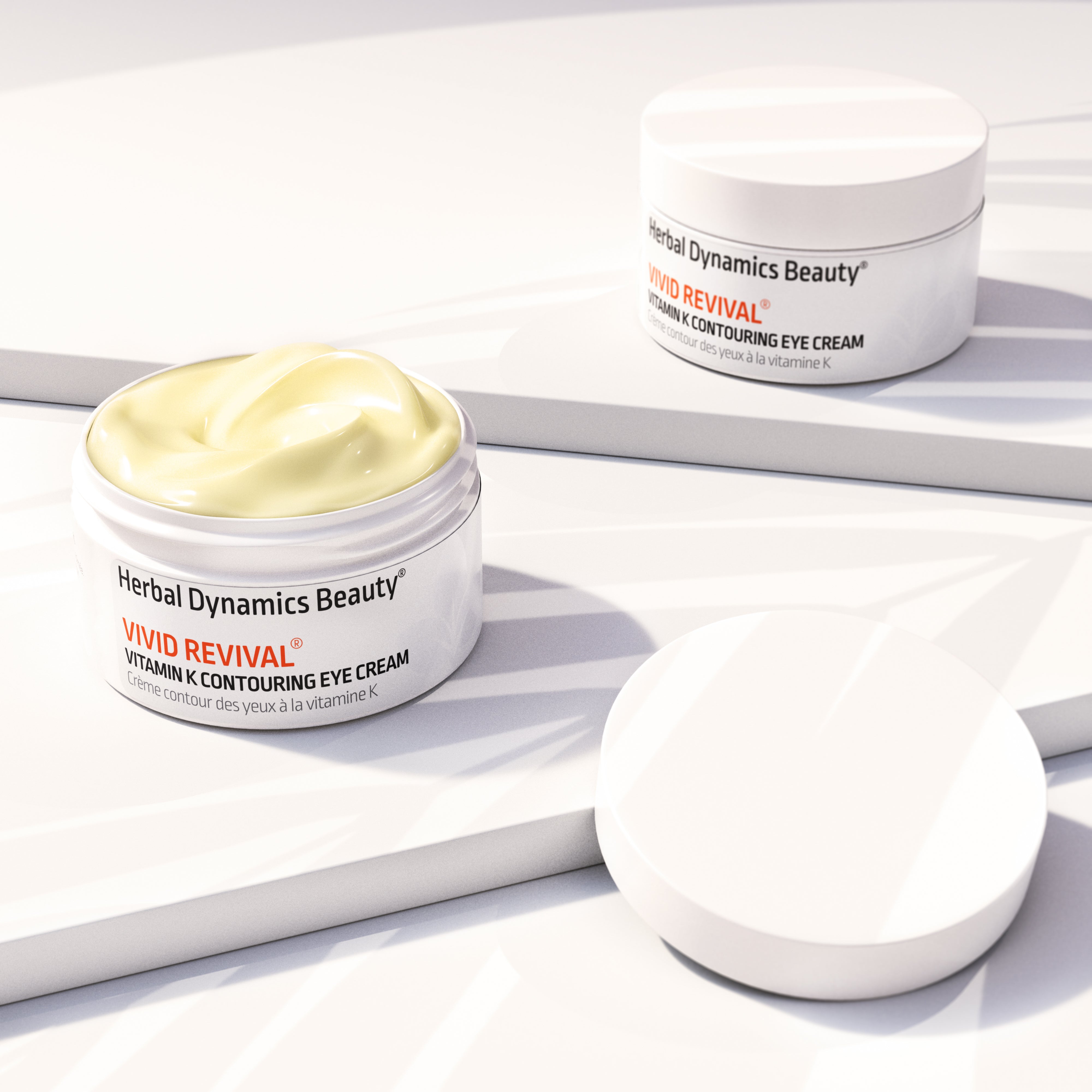
Herbal Dynamics Beauty Vivid Revival® Vitamin K Contouring Eye Cream lists Camellia sinensis leaf extract and phytomenadione in a moisturizing formula. It does not list isolated caffeine or disclose a caffeine concentration. It also includes retinyl palmitate, so the entire formula matters to tolerance.
Choose it for an appropriate moisturizing eye-care role if the ingredients suit you. Read the Vitamin K eye cream guide and the Vitamin K versus caffeine comparison before assuming those categories are interchangeable.
Tea bags do not provide a standardized topical dose or the preservation and directions of a cosmetic. Avoid particles, heat and contact with the eye itself. For a temporary cooling step, a clean cool washcloth is simpler than trying to formulate an eye treatment from a beverage.
Identify the concern first, then choose a product intended for the eye area. Follow its directions, apply gently and stop if it causes persistent irritation. Sudden or painful swelling, one-sided symptoms or vision changes need medical assessment rather than a cosmetic comparison.
Use the under-eye routine for application and the green tea selection guide for formula criteria. You do not need separate caffeine and tea products to make a routine complete.
By Herbal Dynamics Beauty · October 1, 2026