Your Cart is Empty


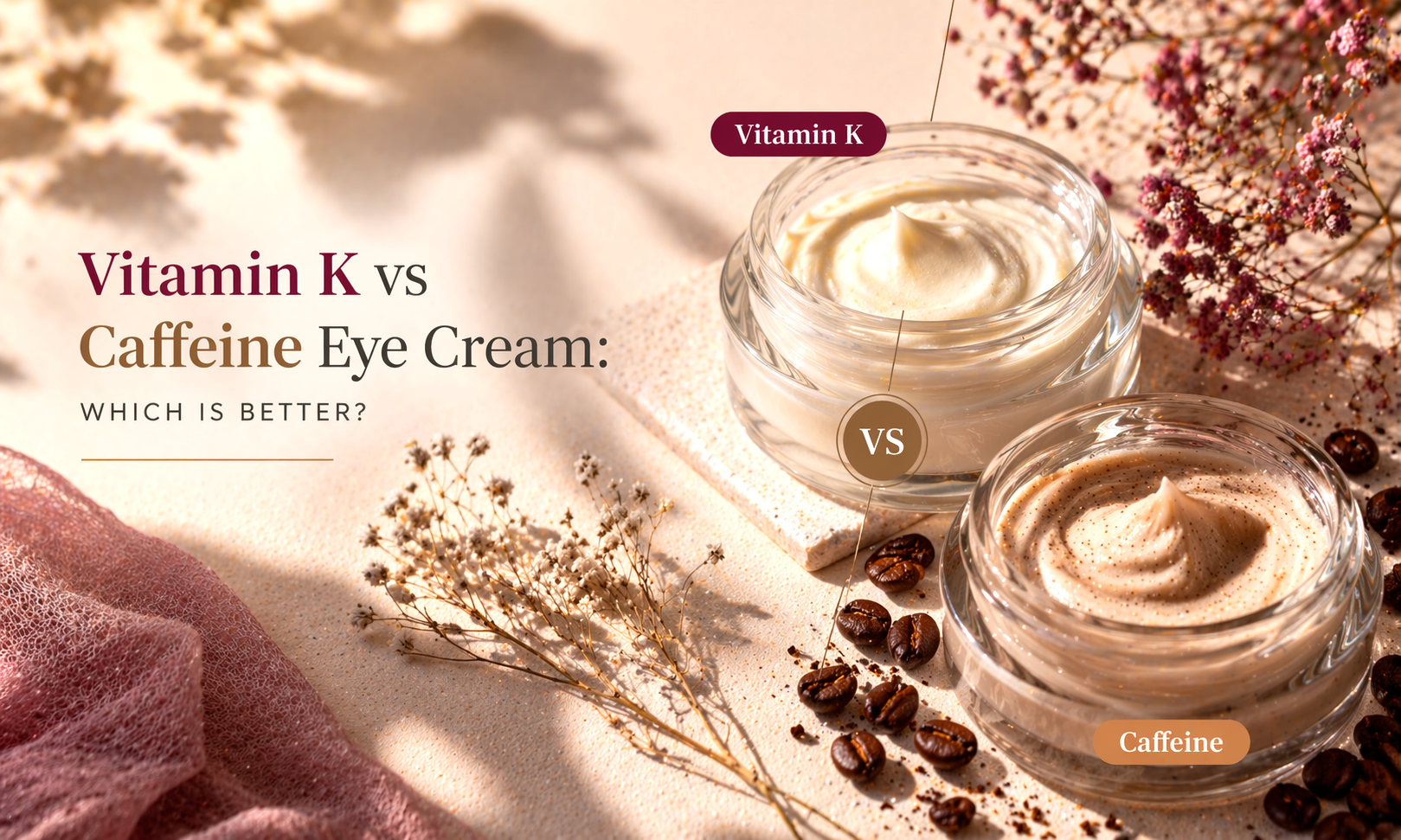
Vitamin K and caffeine are used for different cosmetic goals. Vitamin K appears in formulas marketed for under-eye discoloration, while caffeine is common in products for temporary puffiness. Evidence is limited for both specific outcomes, and neither ingredient removes a structural bag or fills a hollow. Choose by your concern and the complete formula, not a universal winner.
| Question | Vitamin K | Caffeine |
|---|---|---|
| Why it appears in eye creams | Appearance of certain discoloration patterns | Temporary refreshed or less-puffy appearance |
| Evidence to understand | Small studies often combine several ingredients | A controlled caffeine-gel study found no advantage over its base |
| What the label cannot prove | Repair of blood vessels or improved circulation | Guaranteed de-puffing or permanent bag removal |
| Key practical consideration | Specific Vitamin K form, overall formula and contact-allergy history | Finished-formula tolerance and whether the concern is actually temporary puffiness |
An open-label study tested phytonadione with retinol and vitamins C and E. A separate small study tested Vitamin K with caffeine in an eye pad. Neither isolates Vitamin K’s contribution or establishes the results of a different commercial cream.
Use the Vitamin K evidence and safety guide for the full assessment, and the dark-circle study review for that narrower question.
In a randomized, double-blind study of 34 volunteers, a 3% caffeine gel did not significantly outperform its gel base for puffiness after sleep deprivation. The authors attributed the improvement mainly to cooling from the gel. This does not settle every caffeine formulation, but it cautions against treating caffeine on a label as proof of a de-puffing result.
For a practical response to morning swelling, start with safe puffiness care. For the broader ingredient background, read caffeine in skincare.
They can appear in the same eye-area formula. That does not prove synergy or mean two separate products are better than one. Layering adds opportunities for irritation and may be unnecessary when you mainly need moisture.
Introduce one formula at a time and follow its directions. A new rash, persistent itch or swelling is a reason to stop.
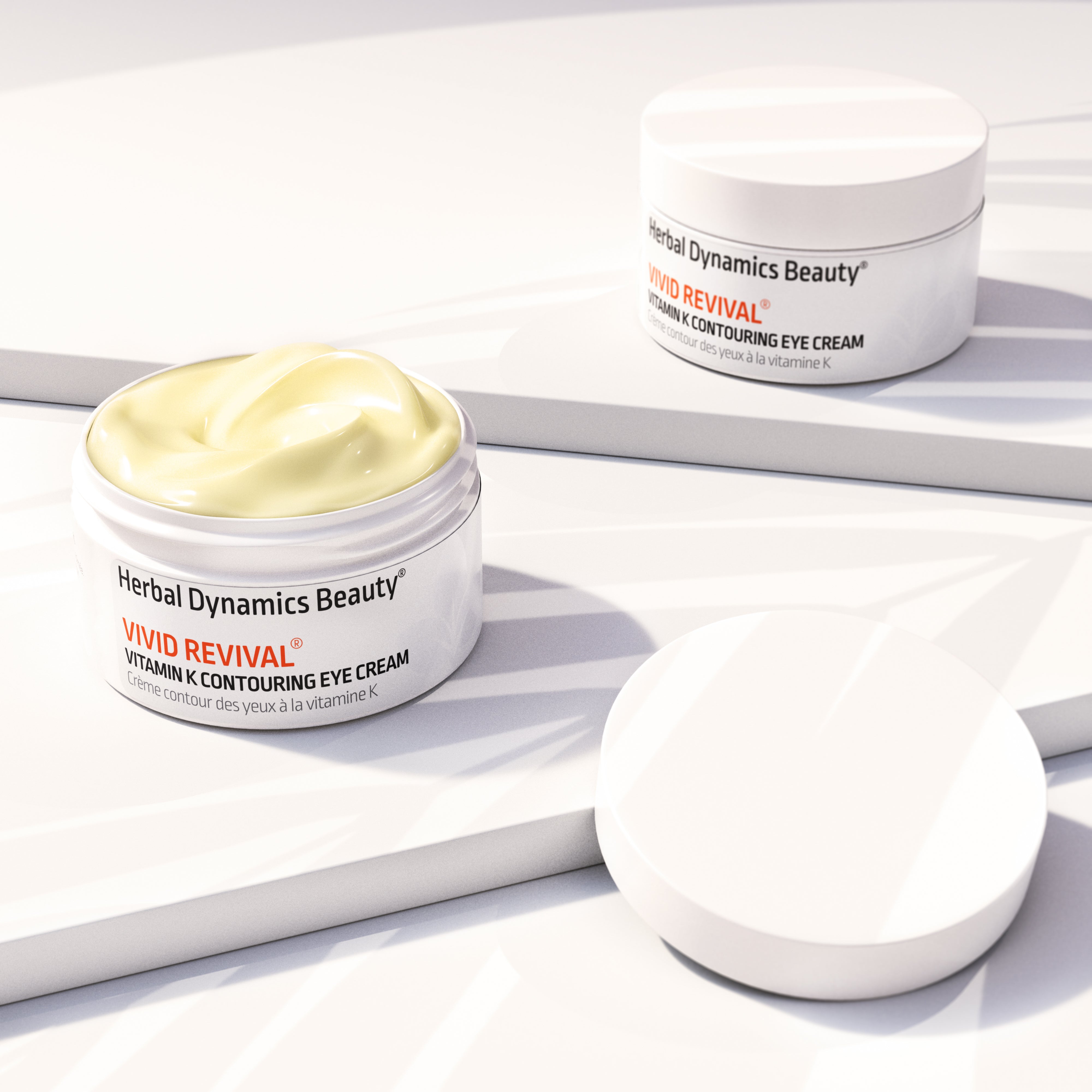
Vivid Revival® Vitamin K Contouring Eye Cream lists phytomenadione and green tea in a moisturizing formula. It does not list isolated caffeine as a separate ingredient, and the caffeine content of the green tea extract is not specified. Do not treat it as equivalent to a standardized caffeine eye product.
It contains hyaluronic acid, glycerin, oils and retinyl palmitate. Those formula details matter when evaluating hydration and tolerance; they do not prove a medical effect on circulation.
If the main concern is changing morning puffiness, compare eye-area moisturizing and caffeine-containing formulas with modest expectations. If it is brown color, a blue-purple appearance or shadow, begin with the dark-circle cause guide.
For persistent fullness, review under-eye bags and cream limitations. Seek care for new, painful, one-sided or otherwise unexplained swelling.
If vitamin K is the category you want to explore, our vitamin K eye cream options guide provides a product comparison to use alongside this ingredient discussion.
For the whole-product question, Vitamin K eye-cream benefits and formula roles explains the moisturizer system alongside Vitamin K. Ingredient evidence, temporary surface smoothing and correction of structural shadow are different expectations.