
Your Cart is Empty


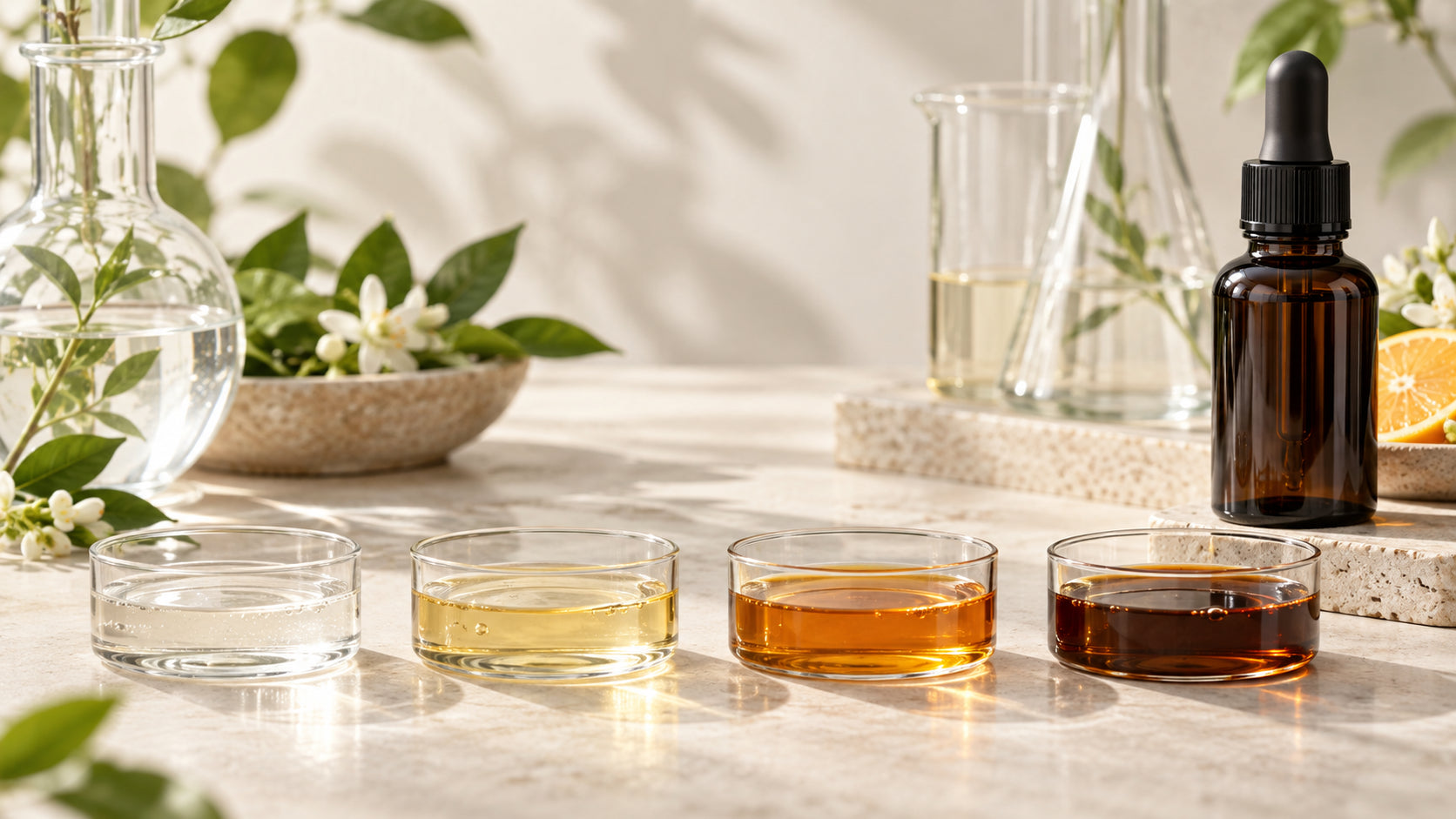
Quick answer: Vitamin C serum may turn yellow, orange or brown as its ingredients oxidize or naturally age. The meaning depends on the vitamin C form and the product’s original color. A major change toward dark orange or brown, especially with a changed odor or texture, is a reason to follow the manufacturer’s guidance and consider replacing it.
Oxidation is a chemical change in which ascorbic acid loses electrons and forms degradation products. As this progresses, a formula may darken and provide less of the intended active ingredient. Packaging, pH, water content, antioxidants and storage all affect the rate.
No. A serum may be naturally tinted by vitamin C derivatives, botanical extracts or other ingredients. Compare the product with its appearance when opened and with the manufacturer’s description. A subtle shift is different from a clear progression to deep orange or brown.
Do not try to “use it up faster” by applying more.
They can, and the finished formula—not just the vitamin C ingredient—can change over time. Derivatives may be more stable under some conditions, but “stable” never means immune to degradation. Compare forms in L-ascorbic acid vs. vitamin C derivatives.
Ferulic serum stability and storage covers packaging, pH, encapsulation and color limits. Vitamin C with Ferulic explains why stability data for one formulation cannot establish the shelf life of another, and why layering products does not stabilize the serum still in its bottle.






