
Your Cart is Empty


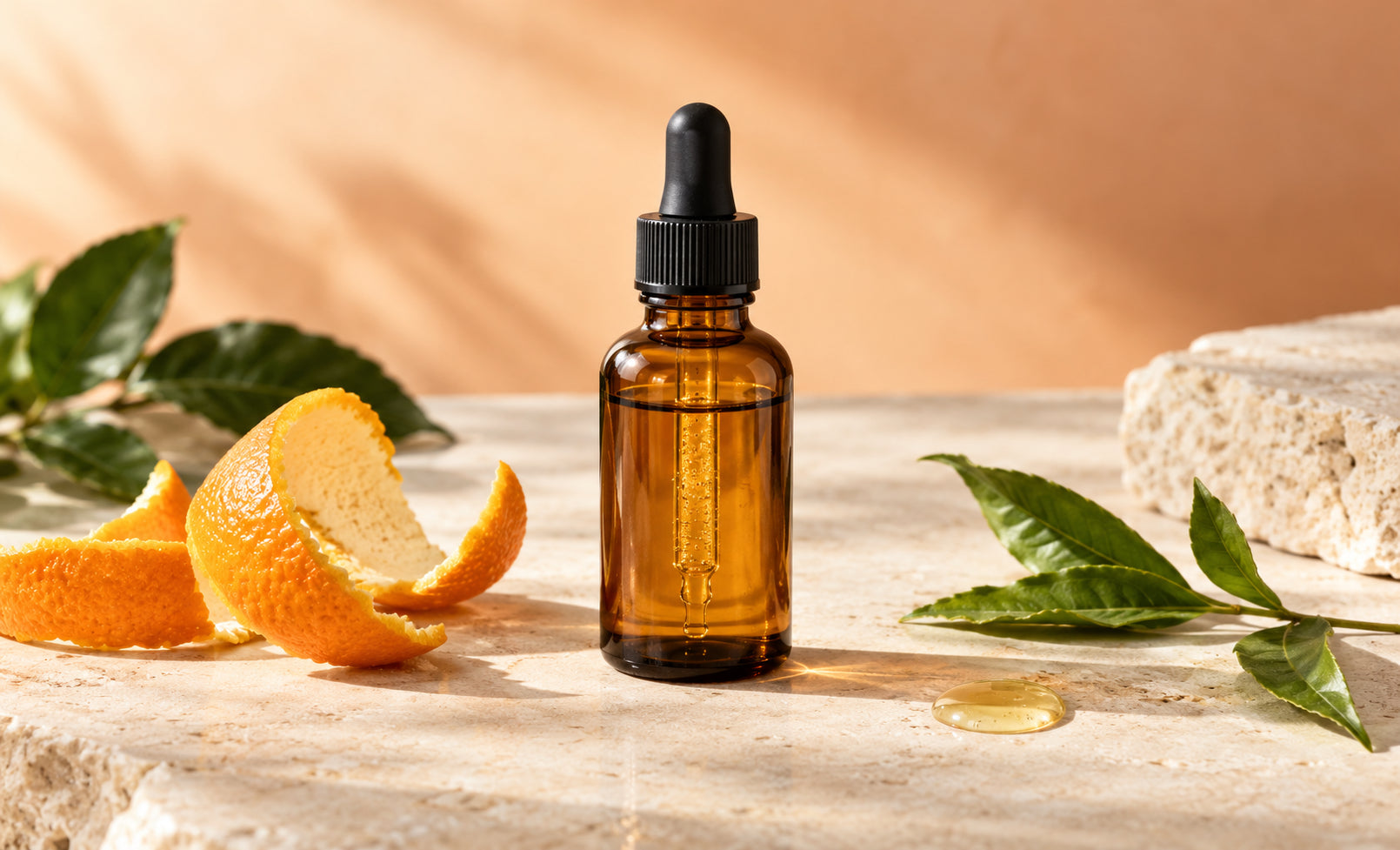
Quick answer: The best vitamin C serum is not automatically the one with the highest percentage. Look for a clearly named vitamin C form, protective packaging, a formula suited to your skin, realistic claims and supporting ingredients that help you use it consistently.
A useful serum tells you which form of vitamin C it contains and protects the formula from light, air and heat. It should also fit your routine well enough that you can use it consistently. Dermatology reviews support topical vitamin C as an antioxidant and as a cosmetic ingredient that can help improve the appearance of uneven tone, but results depend on the form, vehicle, stability and regular use.
Be cautious with claims such as “erases dark spots,” “medical grade,” or guaranteed results in a fixed number of days. A serum can support brighter, more even-looking skin; it cannot replace diagnosis or professional care for a changing lesion or a persistent pigment disorder.
| Check | Why it matters |
|---|---|
| Named vitamin C form | “Vitamin C complex” alone does not tell you whether the formula uses L-ascorbic acid or a derivative. |
| Light- and air-conscious packaging | Vitamin C can degrade; opaque or amber packaging and a well-closing pump or dropper can reduce exposure. |
| Formula fit | Sensitive or dry skin may prefer a gentler derivative and hydrating base; experienced users may tolerate acidic L-ascorbic acid. |
| Supporting ingredients | Humectants, soothing botanicals and antioxidants can improve comfort and routine value. |
| Realistic directions | A good label explains frequency, placement in the routine and storage. |
L-ascorbic acid is the active form most extensively studied, but it is water-soluble, oxidation-prone and often formulated at a low pH. Derivatives such as 3-O-ethyl ascorbic acid are modified for formulation stability or tolerability. They require conversion or have different biological behavior, and the clinical evidence varies by derivative.
Use our L-ascorbic acid versus vitamin C derivatives comparison to choose based on evidence, sensitivity and routine preferences—not a single percentage.
Vivid Revival® Vitamin C Rejuvenating Serum uses ethyl ascorbic acid in a hydrating base with hyaluronic acid, aloe, glycerin, green tea and centella asiatica. That makes it a practical option for someone seeking antioxidant and brightening support without choosing an acidic L-ascorbic acid formula. Herbal Dynamics Beauty does not publish a verified vitamin C percentage for this formula, so we do not infer one from its URL or make concentration-based claims.
When comparing that botanical with the vitamin C active, use green tea versus vitamin C. The green tea selection guide explains extract identity and why a combined formula should be judged as a whole.
See the full vitamin C application and layering guide for routine order and frequency.
Seek professional guidance for melasma, rapidly changing or irregular dark marks, pigment changes after a medication, persistent irritation or discoloration that does not have a clear cause. A cosmetic serum should not be used to self-diagnose a skin lesion.
This educational article is not medical advice. Patch test new products and consult a board-certified dermatologist for persistent or concerning pigmentation.
A facial Vitamin C serum is not automatically an eye product; read the eye-area guide.
Compare vitamin C serum and HA serum when hydration is also a concern. Use brightening-serum selection for a wider tone-focused decision or face serums by concern for the broad shortlist.
For wider category selection, use choosing skincare for mature skin. Mature-skin education explains why not every reader needs the same active.
Use Vitamin C and Ferulic pairing guidance to assess the added ingredient, and Ferulic serum selection when Ferulic is the starting point of your search. A derivative-based Vitamin C formula does not automatically inherit the evidence for a defined L-ascorbic acid, Vitamin E and Ferulic system.
For the purchase decision before comparing labels, read whether a vitamin C serum is worth adding. A higher percentage alone is not evidence of better results, and a tested ascorbic-acid preparation should not be equated automatically with every derivative.
Content updated October 8, 2026.






