
Your Cart is Empty


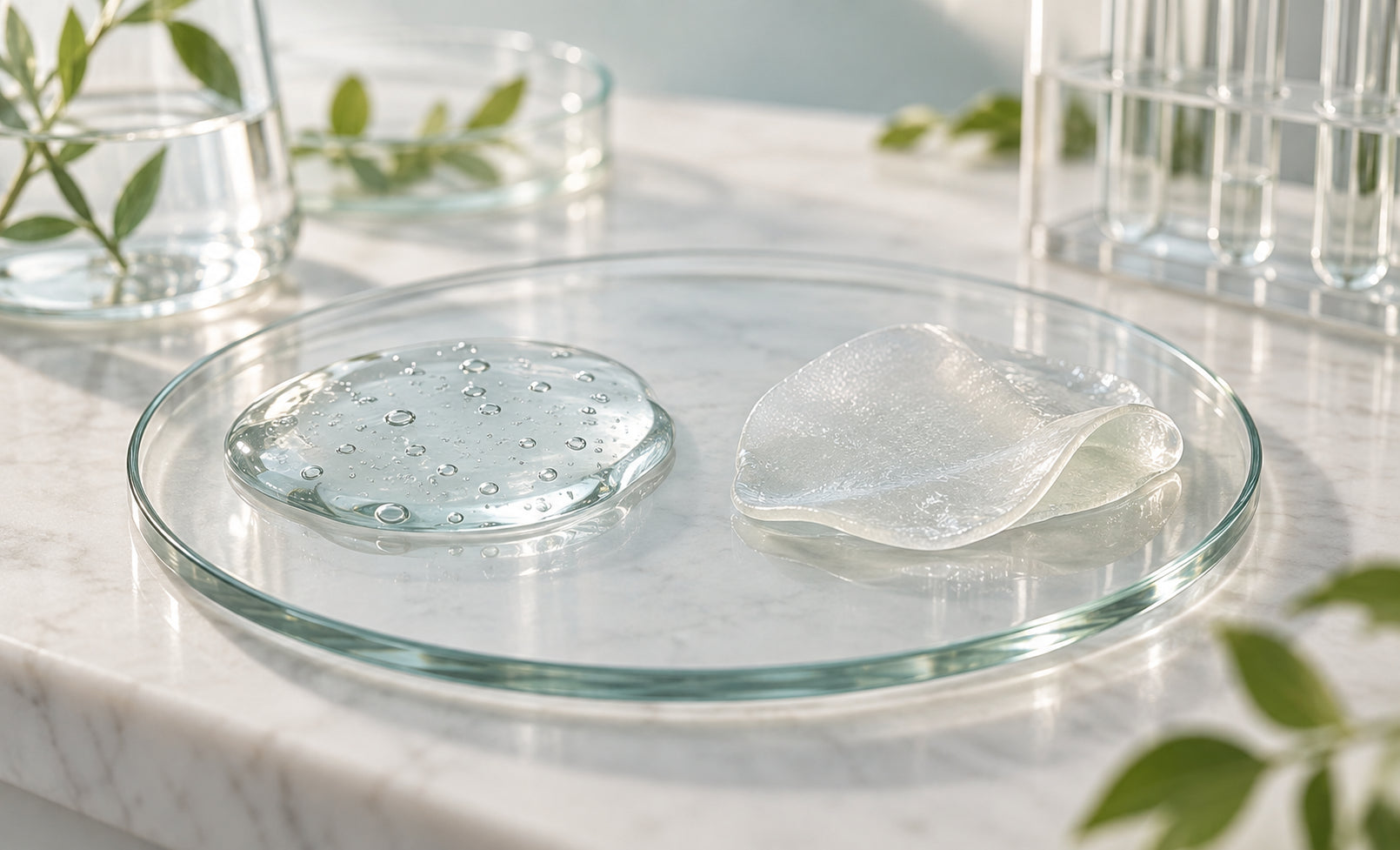
Hyaluronic acid and polyglutamic acid are both water-binding polymers used for surface hydration, but there is not enough direct human evidence to declare one universally better. Hyaluronic acid has broader topical skincare literature; poly-γ-glutamic acid is promising, with much of the newer work still laboratory or model based.
| Hyaluronic acid | Polyglutamic acid | |
|---|---|---|
| Structure | Glycosaminoglycan made from repeating sugars | Polymer made from glutamic acid units |
| Cosmetic role | Humectant and film former | Humectant and film former |
| Natural occurrence in human skin | Yes | No |
| Topical evidence base | Broader, though formula studies vary | Growing; direct consumer comparisons remain limited |
| Routine conflict | None expected between them | None expected between them |
These figures are often repeated without enough context. A polymer’s water uptake in a laboratory system is not the same as measured hydration from a finished serum on human skin. The vehicle, concentration, molecular size and other ingredients all matter. Without a well-designed head-to-head trial, the numbers should not be used to rank products.
A 2025 study of a specific high-molecular-weight poly-γ-glutamic acid evaluated keratinocytes and a reconstructed skin model and reported changes related to moisture retention and barrier markers. That is useful preliminary formulation evidence, not proof that every polyglutamic serum outperforms hyaluronic acid in people.
Topical hyaluronic acid has more clinical-formula literature, but reviews also include heterogeneous products and some industry involvement. Evidence should support modest hydration and appearance claims—not guaranteed wrinkle reversal.
Yes. Because both function primarily as hydrating polymers, they can be formulated or layered together. More layers are not always better, though. If the combination feels tacky or pills, use one product or reduce the amount.
For an HA-focused purchase, HA serum selection looks beyond raw-material water-binding claims to the formula, texture and routine fit. A comparison of polymers alone cannot establish which finished serum suits your face.
For another common water-binding ingredient, the glycerin hydration guide explains its role within a complete moisturizer. Choosing between polymer headlines is not the only way to address surface hydration.






