
Your Cart is Empty


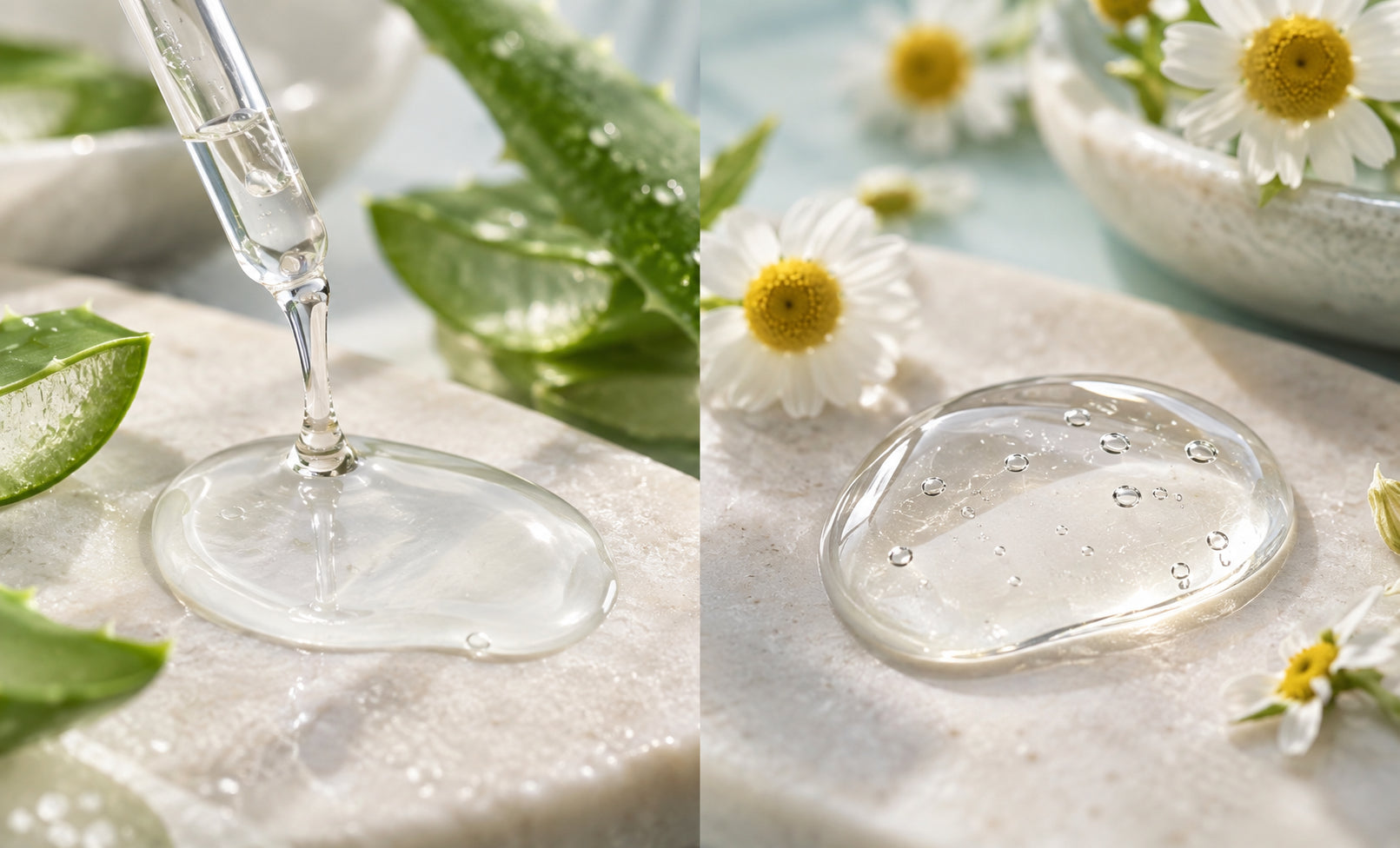
Neither hyaluronic acid nor glycerin is universally “better.” Both are humectants that support water in the outer skin layer. Glycerin has an especially long record in moisturizer research; hyaluronic acid is valued for its film-forming feel and temporary plumping effect. Many well-designed formulas combine them.
| Feature | Hyaluronic acid | Glycerin |
|---|---|---|
| Ingredient type | Large sugar polymer / glycosaminoglycan | Small polyol |
| Main cosmetic role | Humectancy, surface film, slip | Humectancy, solvent and formula support |
| Texture | Can create gel-like slip or tack at higher polymer levels | Can feel silky or sticky depending on concentration and vehicle |
| Evidence | Topical-formula studies support hydration and temporary appearance benefits | Hydration evidence is substantial; a reduced-water-loss claim needs its own supporting data |
| Best choice | The well-formulated, comfortable product you can use consistently | |
A head-to-head answer cannot be made from the ingredient names alone. Concentration, molecular weight, supporting ingredients and vehicle determine finished-product performance. A small study of a fluid containing 1% hyaluronic acid, 5% glycerin and a Centella-derived ingredient reported short-term hydration changes. It tested the combination, not isolated HA against isolated glycerin; its results cannot establish which ingredient contributed most.
Avoid translating water-binding measurements from raw materials into guaranteed results on human skin. “Holds X times its weight in water” is not a consumer outcome.
Both can be tolerated by sensitive skin, but sensitivity applies to the whole formula. Fragrance, botanical extracts, preservatives or active ingredients may matter more than the choice between these two humectants. Introduce a new product carefully; our glycerin tolerance guide explains home use testing and its limits.
Either can add hydration, but dry skin generally benefits from a moisturizer with emollient or occlusive support. A humectant-only serum may not address lipid deficiency or increased transepidermal water loss. See how to use hyaluronic acid for dry skin.
Yes. They have no known routine conflict, and formulators often combine them to balance hydration and sensory feel. Youth Refresh® Hydrating Hyaluronic Acid Serum contains hyaluronic acid, vegetable glycerin and sodium PCA in the same formula.
For a deeper ingredient profile, read glycerin for skin and our hyaluronic acid guide.
Glycerin is a small polyol. Hyaluronic acid is a much larger repeating sugar molecule, and topical formulas use materials with different molecular weights and modifications. Those differences affect formulation behavior; they do not make all HA products identical or prove that one penetrates to a medically meaningful depth.
For HA-specific questions, continue to the hyaluronic acid ingredient guide. A product’s HA terminology should be interpreted alongside its vehicle and finished-formula evidence.
Compare a glycerin serum with an HA serum only after checking what else they contain. Comparing a watery HA gel with a glycerin-rich cream changes several variables at once: emollients, film-formers, other humectants and intended use. A comfortable cream can be the better purchase for dry skin without proving that glycerin is inherently stronger than HA.
Use the glycerin selection guide alongside the HA serum-selection guide. Our hydrating-serum guide covers the broader format decision.
Assess the complete formula and routine. Applying more layers may increase tack without resolving later tightness. Review whether you need a moisturizer with complementary roles, and stop a product that persistently irritates.
The dedicated guides to glycerin in low humidity and HA and dry-feeling skin explain why a humectant should not be judged from a simple air-versus-skin water-pulling story.
A formula may already include both, as the ingredient example above shows. You do not need to alternate them, separate them into morning and night or buy a second product just to complete the pairing. Keep the moisturizing system that feels comfortable and meets your needs. See glycerin’s other ingredient combinations for complementary options.
By Herbal Dynamics Beauty · Updated October 1, 2026.
Commercial disclosure: Herbal Dynamics Beauty publishes this guide and sells the Herbal Dynamics Beauty products mentioned. Ingredient research does not establish clinical results for these finished products.






