Your Cart is Empty


Xanthan gum in skincare is mainly a thickener and stabilizer. It helps control texture, suspend ingredients and support consistency in a finished formula. Those benefits to the product are different from evidence that xanthan gum itself treats acne, reverses aging or repairs a damaged skin barrier.
Below, we break down what Xanthan Gum is, how it’s made, the benefits for skin, possible side effects, and how it’s used in skincare formulations.
Definition: Natural polysaccharide produced through sugar fermentation
Key Benefits: Emulsion stabilizer, texture enhancer, skin-conditioning support
Drawbacks: Reactions to a finished product remain possible; dietary effects are a separate exposure
Concentration: Depends on the finished formula; an ingredient label does not disclose a universal usage percentage
Precautions: Patch test recommended for very sensitive skin
Works Well With: Most ingredients; especially helpful in lotions, serums, and emulsions
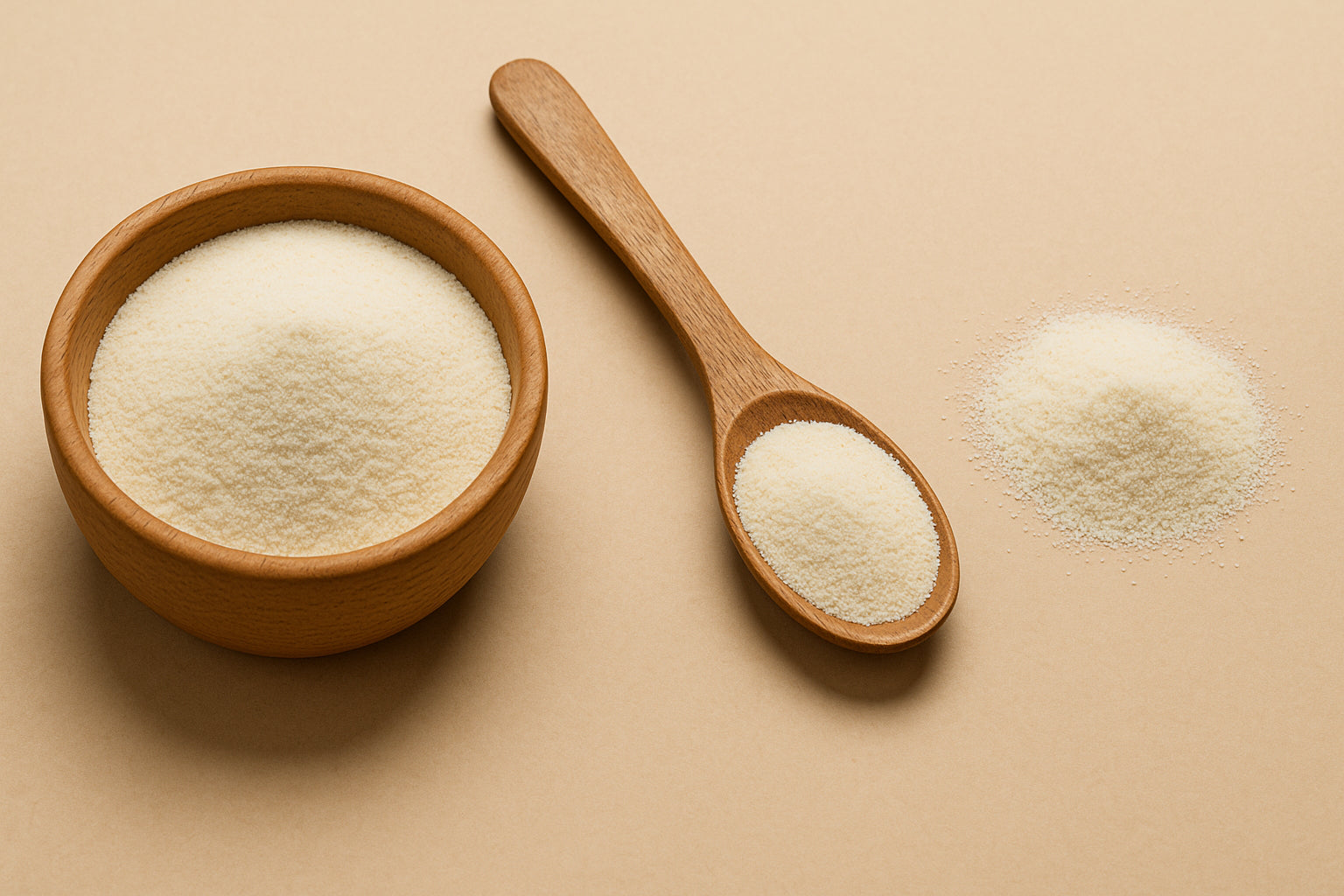
Xanthan Gum is a natural thickening and stabilizing ingredient created through the fermentation of sugar by the Xanthomonas campestris bacteria. Once fermented, the mixture is dried and milled into a fine off-white powder that dissolves easily into water-based formulas.
While it’s widely known for culinary uses, Xanthan Gum plays an equally important role in skincare by helping products maintain a smooth, consistent texture. Because it forms a flexible, gel-like network in water, it keeps formulas uniform, prevents ingredient separation, and enhances how products feel on the skin.
The process is simple but effective:
Sugar is fermented by Xanthomonas campestris.
The fermentation creates a gel-like substance.
This gel is dried and turned into a powder.
That powder becomes the Xanthan Gum used in skincare and cosmetics today.
This fermentation process is what gives Xanthan Gum its unique ability to thicken, stabilize, and bind ingredients together.
Xanthan Gum helps ingredients stay evenly mixed, especially in lotions and creams that contain both oils and water. This keeps products smooth, creamy, and consistent over time.
Xanthan gum can contribute film formation and the feel of a formula. That formulation role does not establish that a small amount in any cream produces a clinically meaningful hydration benefit by itself. Evaluate the full moisturizer, including its humectants, emollients and other ingredients.
Xanthan Gum increases a product’s viscosity, helping create luxurious textures—from silky gels to creamy lotions. It improves spreadability and enhances the overall sensory experience.
You’ll find Xanthan Gum in a variety of skincare and haircare products, including:
Cleansers
Serums
Moisturizers
Face masks
Shampoos
Toothpaste
Its role may vary, but its purpose is consistent: to enhance stability, texture, and performance.
Xanthan Gum is generally considered safe for cosmetic use and is well tolerated by most skin types, including sensitive skin. However:
Rare allergies: Very uncommon, but possible
Patch testing recommended for sensitive or reactive skin
Important note:
Digestive side effects (such as bloating or gas) relate to eating large amounts of Xanthan Gum—not using it topically on the skin.
A Cosmetic Ingredient Review assessment of microbial polysaccharide gums evaluates cosmetic safety in its stated use context. A safety conclusion is not a guarantee that every individual will tolerate every finished product or proof of a treatment benefit.
If you’re using store-bought skincare, the ingredient is already carefully balanced for you.
In manufacturing, a formulator may pre-disperse xanthan gum in a suitable ingredient to reduce clumping. This processing step is not a complete home skincare recipe: concentration, mixing, stability and preservation must all be assessed in the final formula. Choose a finished cosmetic rather than adding glycerin, gum or water to a stored product. Our glycerin usage guide explains the difference between an ingredient and a finished skincare product.
Helps control a cleanser’s viscosity and texture. The surfactant system, rather than xanthan gum alone, determines cleansing and foaming performance.
Enhances thickness and provides the creamy glide that makes moisturizers easy to spread and satisfying to use.
Helps foundations, primers, and tinted moisturizers maintain consistency and a seamless finish.
Used in toothpaste, gels, and masks to provide body and richness without heaviness.
Can support viscosity and emulsion stability alongside the formula’s emulsifiers. It is not a substitute for an appropriate emulsifying or preservative system.
Its clearest benefit is helping a product maintain a usable texture and consistency. It is not an active you need to buy separately. For a dry-feeling face, use the face-moisturizer selection guide to assess the complete formula.
Yes. It helps thicken face masks, smooth their texture, and keep ingredients evenly distributed.
Topically, side effects are rare. People with highly sensitive skin may experience mild irritation. Dietary side effects only occur when consuming large amounts—not from skincare use.
Yes. Xanthan Gum is considered safe for cosmetic use and is well tolerated by most skin types.
Xanthan Gum may not be the most talked-about skincare ingredient, but it plays an essential role in the performance, feel, and stability of your favorite products. From enhancing textures to helping formulas stay perfectly blended, it’s a quiet hero in modern skincare.
When reading an ingredient label, treat xanthan gum as part of the formulation system rather than a reason to add another product. Use a properly formulated cosmetic instead of adding gum or water to a stored cream.