Your Cart is Empty


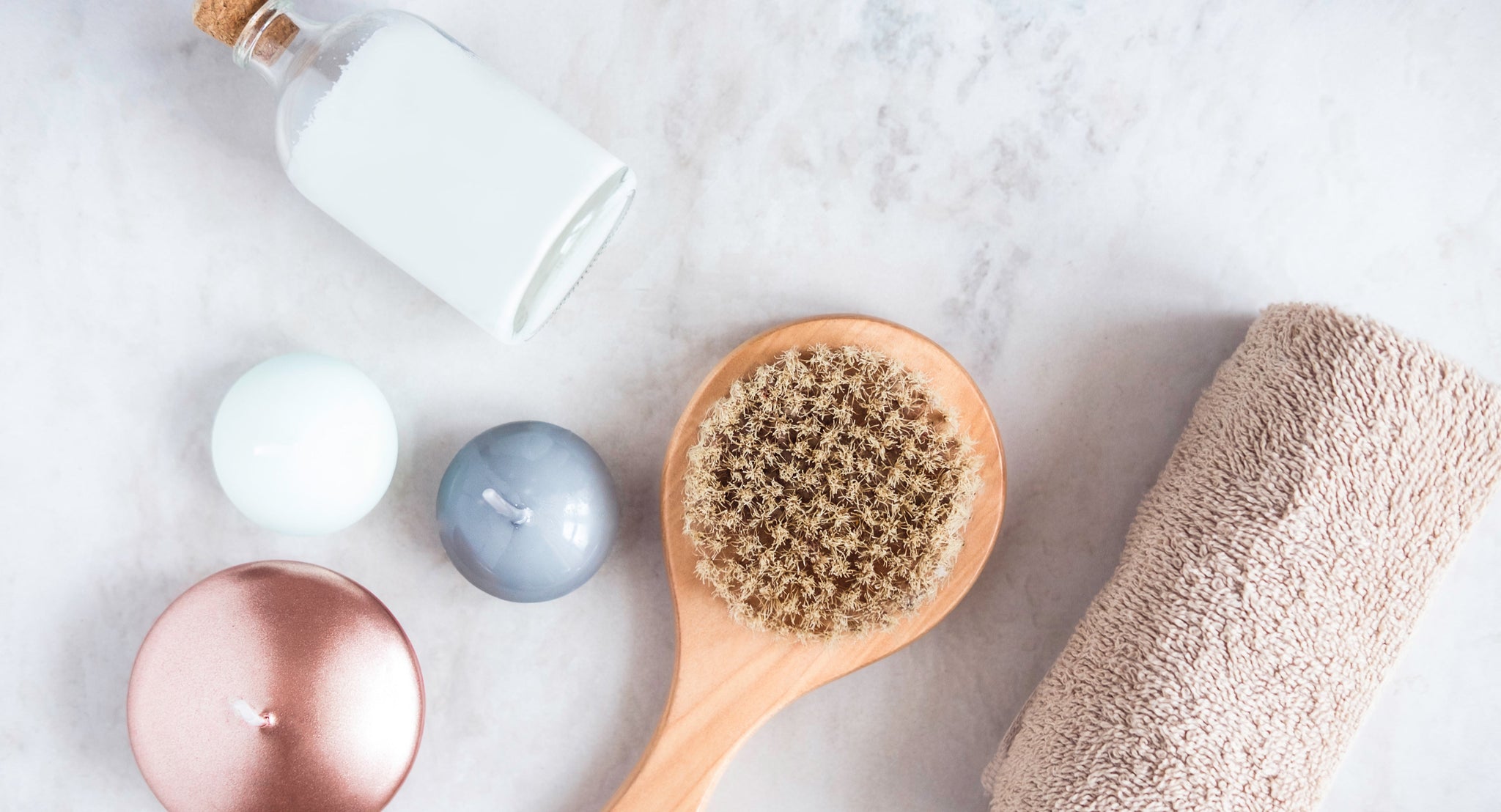
Dry brushing and massage are not established ways to permanently remove cellulite. A brush exfoliates the surface; massage applies pressure to skin and underlying tissues. Changes in feel or short-term appearance do not show that either technique removes fat, toxins or the connective-tissue bands involved in dimpling.
Brushing can remove some loose surface scale, but it is not necessary for everyone. On dry, irritated or fragile skin, friction can make discomfort worse. More pressure does not make a brush a deeper cellulite treatment.
If your goal is softer body skin, a gentle cleansing and moisturizing routine is a simpler starting point. See rough body skin care before assuming a rough patch needs scrubbing.
Studies of specific mechanical massage devices have produced mixed and often temporary cosmetic results. Their methods are not equivalent to every massage performed at home. Dermatology guidance on cellulite treatments describes these limitations.
Medical lymphatic drainage may be part of care for particular diagnosed conditions under trained guidance. That does not make a beauty massage a way to detoxify the body or cure cellulite. Unexplained swelling should be assessed before massaging it.
| Method | Reason someone might choose it | Limit to keep in mind |
|---|---|---|
| Gentle dry brushing | Optional surface exfoliation on tolerant, intact skin | No established lasting cellulite-removal benefit. |
| Gentle hand massage | Comfort or spreading a moisturizer | Does not prove tissue remodeling or fat loss. |
| Professional device treatment | A specific cosmetic procedure with a defined protocol | Results, risks and maintenance differ by device. |
| Clinical lymphatic care | Management of a diagnosed problem | Requires appropriate clinical advice, not a cosmetic self-diagnosis. |
Keep pressure light and avoid painful or repeated strokes. Do not brush broken skin, sunburn, active rashes, inflamed acne or fragile areas. Clean and dry the tool according to its instructions and do not share it.
Stop if redness, discomfort or irritation persists. Skip the technique and obtain advice if skin tears easily, sensation is reduced or you have a condition affecting circulation or healing. The guide to safe exfoliation emphasizes matching the method to your skin.
A moisturizer can improve surface comfort without making the massage a proven cellulite treatment. Apply it with light strokes; there is no need to forcefully knead “problem areas.” The body moisturizing routine covers a straightforward approach.
Claims for caffeine or other ingredients need their own evidence. Read caffeine in body creams and cellulite causes and realistic results before combining products and techniques.
Do not massage a newly painful, hot or swollen area. Persistent bruising, skin tears or an unexplained rash should be evaluated. Body care should be comfortable; soreness is not evidence that cellulite is being broken down.
By Herbal Dynamics Beauty • Updated September 24, 2026