
Your Cart is Empty


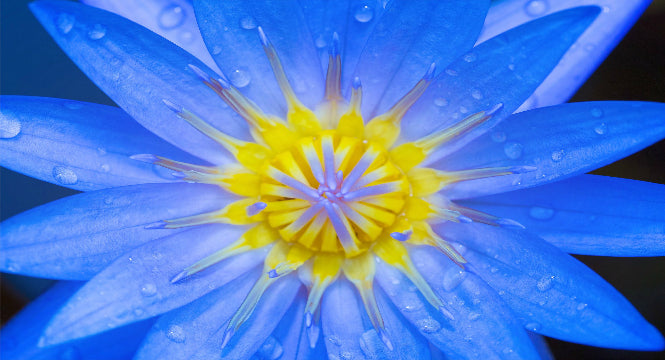
Floral extracts can provide fragrance, conditioning or other formulation functions, but traditional use and laboratory activity do not prove that a cosmetic heals skin disease. This guide explains botanical examples while separating cosmetic roles, experimental findings and medical treatment.
The participants of the movement became known as “flower children.” Songs were written about “wearing flowers in your hair,” the Beatles animated movie “Yellow Submarine” was popular, and Bob Dylan songs ruled the radio.
In skincare, “flower power” describes a botanical approach to formulation. A pleasing scent or plant origin can be part of a product experience without proving that it treats irritation, reverses aging or suits sensitive skin.
Flowers have been used medicinally for thousands of years. As far back as 2500 BC, a Chinese book on roots and grasses included references to 365 different drugs that had their origin in dried parts of medicinal plants, some of which are still used today. These include camphor, ginseng, jimson weed, cinnamon bark, ephedra, and many others.
Many other references discuss plant pharmacology. Homer’s classics “The Iliad” and “The Odyssey,” from 800 BC, referenced 63 different plant species used in pharmacotherapy.
The most well known writer on using plants in medicine was Dioscorides, who was called “the father of pharmacognosy.” In the year 77 AD he wrote his classic text on 600 medicinal plants that included descriptions, how to collect them, their medicinal properties, and therapeutic effects.
His writings included references to plants used as palliatives for every type of pain, or as emollients, diuretics, cardiac stimulants, and more. The most popular plants referenced included poppy, buttercup, jimson weed, henbane, deadly nightshade, chamomile, garlic, ivy, sage, coriander, and many others.
During the Middle Ages, many monasteries began cultivating plants to be used for medicinal purposes, including sage, anise, mint, savory, tansy, and others. From 742 AD and continuing on throughout history, many of the plants described in various writings of their time are still in use today - in one form or another.
Flowers and their extracts have been used throughout history to help treat skin conditions and beautify skin. The plants’ benefits were passed on from generation to generation and were refined, enhanced, and upgraded in each successive use.
It started what we know today as a sophisticated and modern use of the plants that nature has given us and we’re continuing to search for new flowers and plants along with new uses for existing ones.
The concept of using “nature’s bounty” was applied to help the human population live a better, healthier life. And in this case - to have better, healthier skin. Flowers from lavender to hibiscus to calendula have been used historically to treat skin irritations, as well as to freshen and even out the complexion.
Many flowers contain high levels of antioxidants that help fight environmental stressors, these stressors cause premature aging of the skin that has no correlation to a person’s chronological age.
Skin loses its elastic properties due to a loss of collagen and elastin. The skin then sags, giving the appearance of an older person’s skin. Intermittent age spots can develop as well.
Antioxidant mechanisms are relevant to research on oxidative stress. They do not establish that every floral extract restores skin tone, eliminates sagging or rebuilds lost collagen in a finished cream.
Antioxidant research examines particular compounds and outcomes. Dietary findings and topical laboratory findings cannot be combined into a claim that every floral cosmetic delays aging. For cosmetic selection, look for evidence about the actual formula and keep daily sun protection as a separate routine step.
Most floral ingredients used in cosmetic skincare formulations offer many benefits to skin, such as the many varieties of flowers and plants that are anti-inflammatory for skin. These include calendula flowers, hamamelis bark, marshmallow root, oat straw, yarrow, sage leaf, evening primrose oil and the list goes on and on.
Inflammation is a complex biological response. A plant compound can affect an experimental pathway without proving that a cosmetic controls an inflammatory disease. Keep the extraction method, dose, formulation and type of study in view when interpreting a botanical claim.
Calendula has a history of use and has been studied in particular preparations. That history does not make every calendula cosmetic an established treatment for contact dermatitis, eczema or acne.
Antibacterial activity concerns microorganisms; antioxidant activity concerns chemical reactions involving oxidants. Bacteria and free radicals are different things, and one property does not prove infection treatment or repair of UV injury.
A calendula-containing moisturizer may condition skin as part of its complete formulation. Claims about blood flow, scar reduction or wrinkle improvement require evidence for the actual preparation and outcome.
Natural origin does not make calendula universally gentle or allergy-proof. Choose a formula for hydration and comfort, introduce it cautiously and stop if it reacts. A cosmetic should not promise infection control or new tissue growth from the botanical name alone.
Rose petals, waters and oils have traditional cosmetic uses. Laboratory antimicrobial findings do not justify using a rose cosmetic to treat fungal infection, eczema or dermatitis.
Rose water, essential oil and rosehip oil are distinct materials. Their names do not establish a clinically effective vitamin C concentration or a milder equivalent to a tested vitamin C serum. Evaluate the actual formula and purpose.
Spilanthes acmella is sometimes marketed as “plant Botox.” That phrase does not establish equivalence to botulinum-toxin treatment or prove relaxation of facial muscles from a topical cosmetic. Human outcomes need formulation-specific evidence.
Antioxidant findings for a Spilanthes preparation can motivate research, but they do not provide an SPF or prove prevention of photoaging. Sunscreen remains a separately tested product.
The photoaging process creates free radicals, molecules that combine with oxygen and damage the skin at the cellular level, affecting the DNA, cell membranes and the mitochondria within the cell.
There are many other varieties, including Spanish and French lavender, but they’re used for purposes other than topical skincare formulations.
Lavender is often used for scent and can appear in different extracts. It is not an established acne treatment simply because some preparations show antimicrobial activity in the laboratory.
A lavender-containing product’s moisturizing and pH effects depend on the complete formula. Do not infer free-radical removal, balanced pH or reliable anti-inflammatory treatment from the presence of lavender alone.
Topical lavender is not established as a way to oxygenate skin cells, regenerate tissue or make wrinkles disappear. Extracts and essential oils differ, but neither format is automatically less irritating or clinically anti-aging.
A pleasant aroma can be part of a cosmetic experience. That does not establish normalization of sebum or a reliable cortisol-mediated treatment for skin problems. Fragranced botanicals can cause irritation or allergy.
Rashes can have different causes, including allergy, irritation and infection. A cosmetic moisturizer may support comfort, but the presence of flowers does not establish treatment of eczema, hives, psoriasis or dermatitis.
Suspected infection requires appropriate assessment. It is inaccurate to recommend floral cosmetics as treatment merely because an infection appears superficial; appearance alone does not identify the organism or suitable therapy.
Acne involves follicles, sebum and inflammation as well as microbial factors. Laboratory activity against Cutibacterium acnes does not show that every flower extract clears breakouts or prevents infection.
Pigmentation changes can involve different mechanisms and causes. A review of botanical preparations is not proof that every floral extract corrects melasma or other pigmentation disorders. Compare the preparation, study population and outcome, and seek assessment for changing or unexplained patches. Read the botanical review in context.
Some people prefer botanical formulations, but fewer side effects cannot be assumed from traditional use. A count of plants studied or described as effective does not establish clinical benefit for each retail cosmetic.
We’ve provided some background on why floral and plant extracts are more and more popular in cosmetic product formulations. After thousand of years of use, you shouldn’t be surprised! Now it’s time for you to harness flower power to help beautify your skin.
A tolerable floral-containing formula may help moisturize or condition the surface. Antioxidant activity is a separate research question and should not be presented as proven cellular rebuilding or superior protection to daily sun care.
Read the actual ingredient list and directions. A prominent plant name does not reveal the extract’s active composition, clinical dose or preservation quality, and a longer list is not automatically worse.
For next steps, compare rose versus rosehip and sensitive-skin guidance. FDA’s guidance on aromatherapy and natural ingredients explains why origin does not replace safety assessment.
Start with the job you want a product to do. For dry skin, compare how the complete moisturizer feels and whether it helps maintain comfort between applications. For cleansing, consider the cleansing system and your skin's response. A floral ingredient can be part of either product, but its presence does not tell you how much hydration, cleansing or tolerance to expect.
Next, identify the material rather than rely on the front-label plant name. Rose water, rosehip oil and rose essential oil are not interchangeable. Likewise, a lavender extract and a lavender essential oil can differ in composition and purpose. Check the ingredient list and directions, and ask the manufacturer for clarification when the plant name does not explain what is actually in the formula.
When a benefit is supported by a study, look for a match between that study and the product being considered. Was the research performed in cells, in an animal model or in people? Did participants use the same preparation, dose and finished formula? Was the measured result a cosmetic change, a symptom score or a laboratory marker? These questions help explain why a promising finding can be informative without establishing the same result for every floral cream.
Introduce an optional product only when it has a clear role in your routine. Follow its directions, avoid adding several unfamiliar formulas at once and stop using a product that causes a reaction. Preference for a botanical scent is reasonable; it is different from choosing a formula because of evidence for a specific concern. You do not need several products containing the same plant to obtain a complete routine.
Finally, keep cosmetic use separate from treatment decisions. A routine for comfort does not establish care for an infected wound, an unexplained rash or persistent acne. The practical value of a floral cosmetic should come from its formulation, tolerability and supported purpose, rather than a promise to replace appropriate medical care.
Content updated October 10, 2026.






