Your Cart is Empty


An eye cream can moisturize thin-looking under-eye skin and soften dry surface texture. It cannot be assumed to thicken the area enough to hide blood vessels, fill a hollow or reverse inherited anatomy. Choose a comfortable eye-area moisturizer first, then consider a targeted active only for a specific, realistic goal.
Under-eye appearance depends on skin thickness, pigment, visible vessels, lighting and the structures beneath the skin. Dryness can make texture look more pronounced, but it is not the explanation for every translucent or blue-purple appearance.
Use the vascular-looking dark-circle guide for visible-vessel questions and the tear-trough guide for shadows.
Before judging a brightening result, use the dark-circle cause and type guide to distinguish pigment, visible vessels, swelling and structural shadow. That distinction helps set a realistic goal for an eye-area moisturizer.
Humectants such as glycerin or hyaluronic acid, together with suitable emollients, can help with moisture and comfort. Choose a texture that does not migrate into the eye. A fragrance-free formula may simplify selection, although it cannot guarantee tolerance.
If fine lines are the main concern, an eye-specific retinol may be an option, but it can irritate. A vitamin A ester is not interchangeable with retinol. Avoid retinoids during pregnancy and follow product-specific directions.
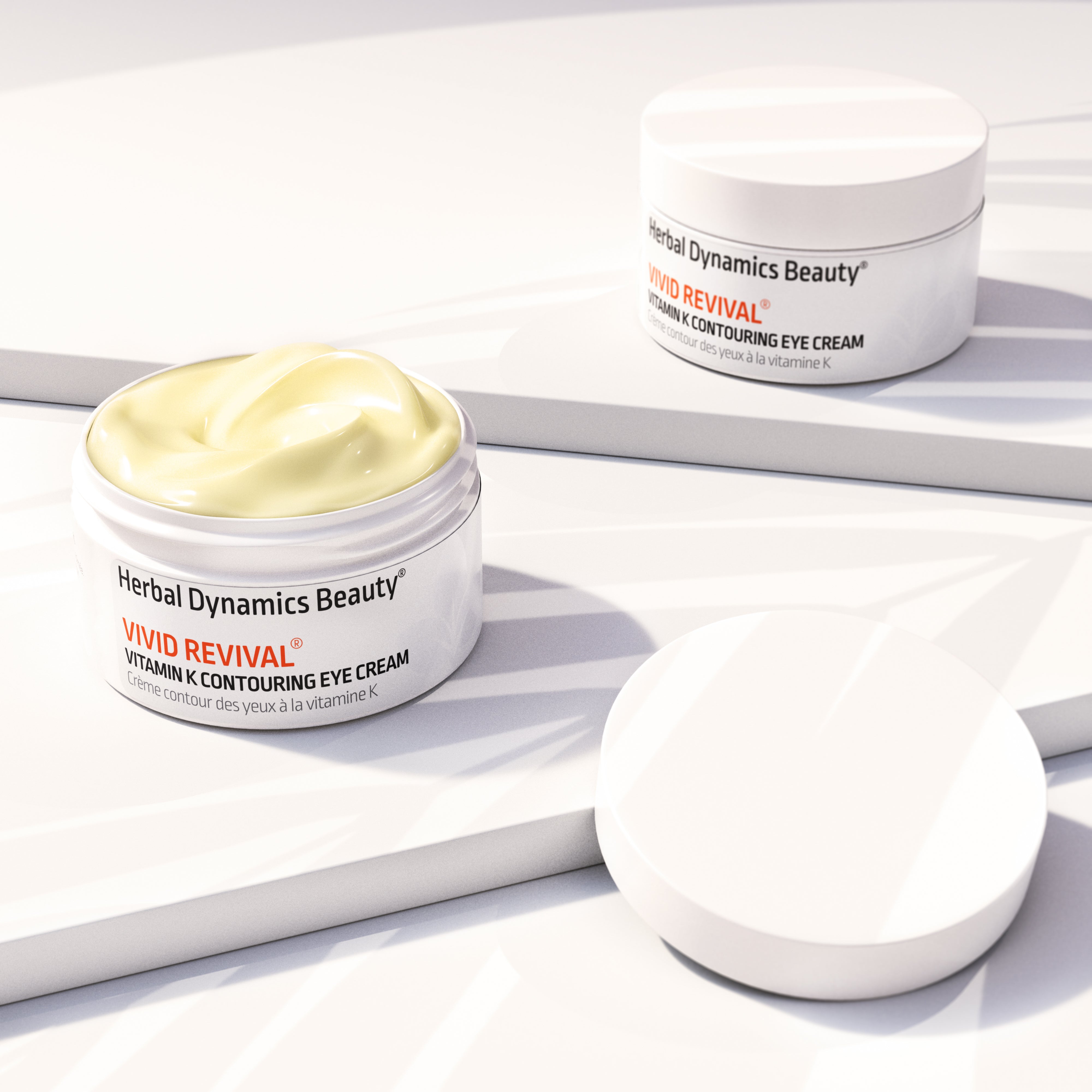
Vitamin K research around the eyes is limited and often tests combinations. It does not establish that an ordinary cream repairs fragile vessels or makes thin skin opaque. Vivid Revival® Vitamin K Contouring Eye Cream combines phytomenadione with moisturizers, green tea and retinyl palmitate. Consider the full formula and your reaction history.
For named options, use the dark-circle formula comparison. For wider goals, use the eye-cream buying guide.
If Vitamin K is the ingredient you are evaluating, the vitamin K eye-cream comparison reviews the whole formula and the limits of available evidence. It does not establish that a cream thickens translucent skin or changes a hollow.
Apply gently in the area allowed by the label. Avoid rubbing, strong exfoliants and repeated new products on already irritated skin. Protect exposed skin from the sun. New easy bruising, unexplained swelling, pain or vision symptoms need medical assessment.