
Your Cart is Empty


The best eye cream for fine lines depends on whether you are seeing dry surface creases, lines that appear with expression, or persistent photoaged texture. Start with adequate moisture. If lines remain and the skin is comfortable, an eye-specific retinol or peptide formula may be worth considering. A stronger active is not automatically a better choice.
For puffiness and fine lines together, look for a moisturizing formula that combines a plausible texture ingredient with caffeine, while keeping expectations modest. Caffeine does not remove structural bags.
| What you notice | First choice to compare | Why |
|---|---|---|
| Fine crinkles with tightness or flaking | A well-tolerated hydrating eye cream | Moisture can soften the appearance of dry surface texture. |
| Lines at rest with sun-related texture change | An eye-area retinol formula, if tolerated | Retinol has controlled clinical evidence for photoaged skin. |
| Preference for a peptide-based formula | A moisturizing eye product listing specific peptides | Evidence is ingredient- and formula-specific. |
| Lines plus morning puffiness | Hydration with caffeine and peptides | One formula can address several cosmetic goals without layering multiple actives. |
| Deep folds, fixed bags or a hollow | Assessment before another topical purchase | Creams cannot reshape the underlying anatomy. |
See what causes under-eye fine lines if you need help distinguishing dryness, expression and aging.
Check that the retinol formula is intended for the eye area, then assess its moisturizing base and introduction instructions. Consider this category for fine-line appearance only when retinoids are appropriate and tolerated. Do not move a strong facial treatment close to the eyes simply because it contains the same ingredient.
Retinol may cause dryness or irritation. Avoid it during pregnancy, and discuss use with your clinician when planning pregnancy or breastfeeding. Do not bring a prescription facial retinoid onto the eyelids unless your prescriber directs it.
Palmitoyl tripeptide-1 and palmitoyl tetrapeptide-7 are examples of peptide names you may encounter. Humectants, emollients and optional caffeine change the overall formula. A study of a different preparation does not prove the performance of your chosen eye cream.
Read our peptide eye-care evidence guide before interpreting claims about collagen or “Botox-like” effects.
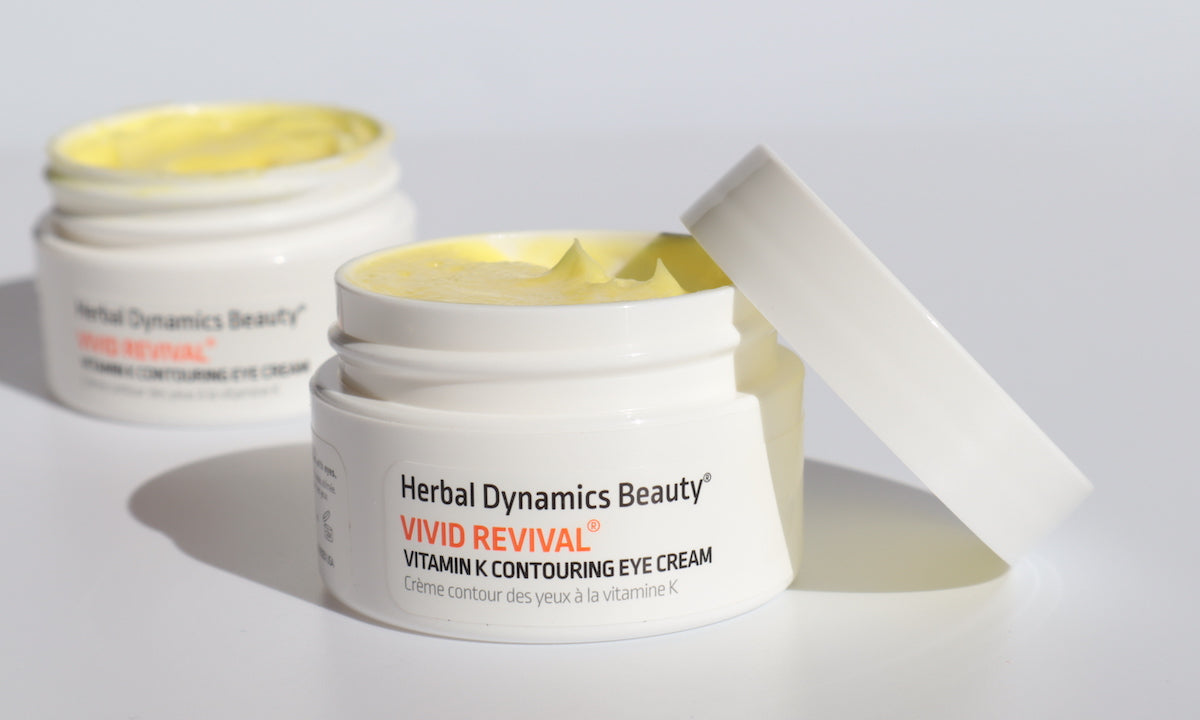
Vivid Revival® Vitamin K Contouring Eye Cream combines hyaluronic acid, glycerin and emollient oils with green tea, phytomenadione and other ingredients. It is a moisturizing option for someone who tolerates the formula and wants smoother-looking dry under-eyes.
The formula contains retinyl palmitate, a vitamin A ester. It should not be described as a retinol eye cream or credited with the results of retinol trials. Vitamin K alone is not an established wrinkle treatment.
A vehicle-controlled trial of specific retinol creams found improvements in facial wrinkling, with irritation in some participants. An eye-area retinoid study also reported improvement, but it was open-label and tested a particular formulation. These support realistic interest in the category, not identical performance across all products.
Small controlled peptide trials have reported changes in crow’s-feet measurements. Samples, treatment periods and peptide types differ. Moisturization itself can also change the way a line looks.
Dry-looking texture may change with hydration sooner than established wrinkles. There is no universal number of weeks after which every eye cream should work. The results-timeline guide helps you judge the right outcome.
The mature-skin guide covers the wider context, while mature under-eye selection distinguishes moisturizing, texture and anatomical concerns.






