Your Cart is Empty


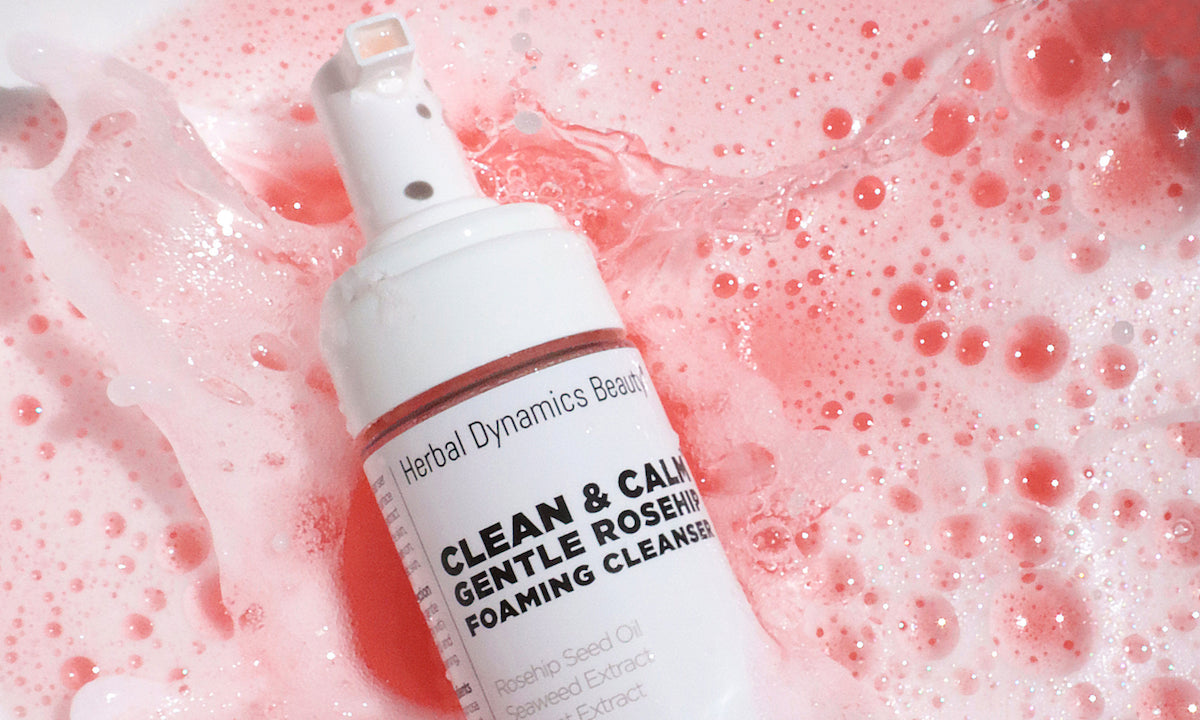
Botanical ingredients can contribute texture, emollience, fragrance or other cosmetic properties to a facial cleanser. Their presence alone does not establish better cleansing, gentleness or treatment of acne. Choose the finished wash first, then assess whether its plant ingredients suit your needs.
A cleanser may contain plant oils as part of a makeup-removing base, extracts as supporting ingredients, or plant-derived surfactants that help lift residue. These are different roles. A flower extract is not automatically the ingredient doing the cleaning.
| Ingredient or category | Possible formulation role | Evidence boundary |
|---|---|---|
| Plant oils, such as sunflower or jojoba | Emollience or part of an oil-cleansing base | A rinse-off cleanser is different from applying a plain kitchen oil |
| Oat-derived ingredients | Conditioning or soothing functions in a specific formulation | Do not transfer results from an eczema treatment or leave-on product to every oat wash |
| Aloe and other water-based extracts | Supporting cosmetic and sensory roles | An ingredient study does not prove a cleanser heals wounds |
| Rose, lavender, citrus or mint materials | Often fragrance or a sensory feature, depending on the ingredient | Botanical fragrance can still cause irritation or contact allergy |
| Saponin-containing plant extracts | Potential surface-active properties | Natural origin does not establish a universal mildness advantage |
Before accepting an antioxidant, brightening or soothing claim, ask what was actually studied: an isolated extract, a laboratory model, a leave-on cream or the finished cleanser. Concentration, formulation and exposure differ. A laboratory finding cannot establish that brief washing will treat pigmentation, rebuild collagen or heal an inflammatory skin disease.
The review of soaps and synthetic detergents also explains why a natural-versus-synthetic distinction is a poor shortcut for assessing a wash. Plant origin and finished-product performance are separate questions.
For a plant ingredient intended to stay on your skin, use the broader botanical selection framework. It separates skin needs and formulation roles so evidence for a leave-on product is not borrowed to justify a brief wash.
Not necessarily. A simple fragrance-free option may be easier to assess when your face reacts readily. “Unscented” and “natural” do not mean that every potential trigger is absent. Read the whole ingredient list and avoid known allergens.
DermNet describes contact reactions to cosmetics, including reactions to fragrances and plant materials. That does not mean everyone must avoid every extract. It means a familiar plant name is not proof of tolerance. For the buying decision, use gentle cleansers for sensitive skin.
A formulated cleansing oil can interact with oily makeup and rinse away through its emulsifying system. This is not the same as choosing a pure oil from a comedogenic-rating chart. Product performance and your response matter more than a blanket rule that all oils clog pores or that oil cleansing stops sebum production.
Compare oil and water-based cleansers and balms and liquid cleansing oils. Avoid prolonged massage or scrubbing to force supposed “grits” out of pores.
DIY combinations of essential oils, plant powders or kitchen oils do not have the same testing, preservation or rinse behavior as a finished cleanser. There is no need to experiment with them to build an effective routine. Persistent irritation deserves a clinical assessment.
Use the facial-cleanser guide for the full selection framework and the surfactant guide to understand what actually helps a wash remove residue.
If eucalyptus is the featured fragrance ingredient, eucalyptus oil’s cosmetic role separates its aromatic role from actual cleanser removal and tolerance.
For turmeric in a wash, turmeric preparation and skincare evidence distinguishes a rinse-off cosmetic from the preparations used in clinical research.
By Herbal Dynamics Beauty · Updated September 21, 2026. General skincare education.