
Your Cart is Empty


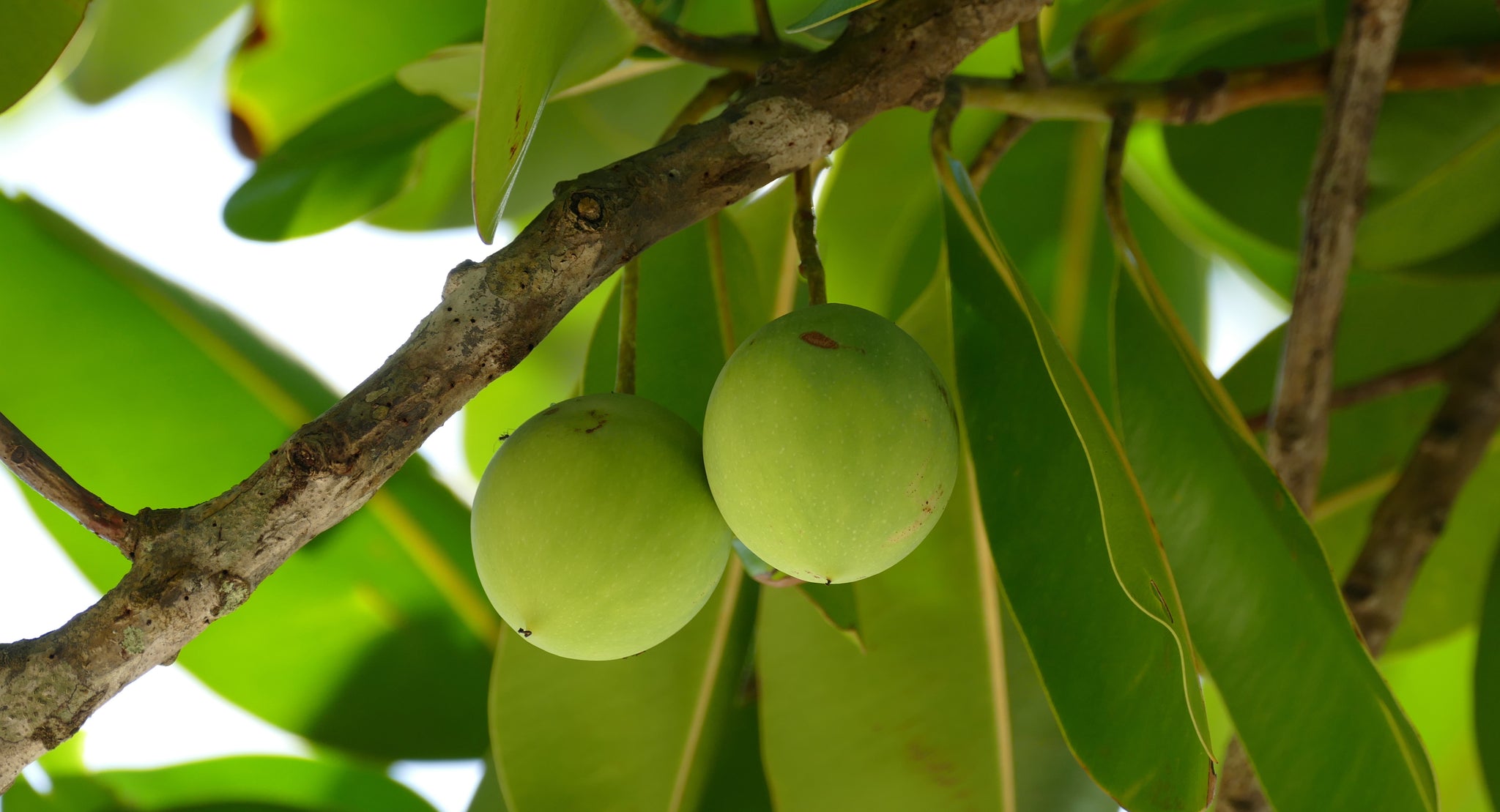
Tamanu oil is an emollient plant oil from Calophyllum inophyllum. Laboratory studies investigate its biological activity, but they do not establish that a cosmetic oil treats infected wounds, cystic acne, eczema or vaginal infections. Its most defensible everyday role is conditioning intact skin in a tolerable formula.
A useful change to your routine should answer a specific need, such as dryness or an uncomfortable texture. Adding another oil because it is described as an elixir can make a routine more complicated without improving that need.
Alas, with all the cosmetic clamor out there, it can feel overwhelming to know which product or ingredient to look out for when you want to change it up.
You may have heard of this luscious liquid by the name “Alexandrian laurel” (or perhaps you’ve never heard of it at all!). Native to Southeast Asia and the South Pacific islands, tamanu oil is exotic to the U.S., and therefore hasn’t made its way into mainstream cosmetics yet.
But, the skincare secret is out, and the tamanu imports are in!
Read on to find out everything you need to know about tamanu oil. Some highlights include:
Tamanu oil comes from the nuts of a tropical tree called Calophyllum inophyllum, which is native to the South Pacific islands — namely, Polynesia — but can also be found in Southeast Asia, India, and parts of Africa and Australia.
The genus Calophyllum literally translates to “beautiful leaf” in Greek -- a fitting name for its large, bright, waxy green leaves, which frame the white flowers that blossom biannually.
Tamanu oil has a long history of traditional use for skin and hair. Historical accounts include the following conditions; this list describes traditional practice, not proven uses or instructions for self-treatment:
Tamanu oil is extracted from the kernel of the apricot-sized drupes (the fleshy fruit with a thin outer layer and a hard core — think: peaches, plums, cherries, mangoes) that grow on tamanu trees. The oil is viscous with a yellow-greenish hue (similar to olive oil).
Traditional uses and experimental findings are different from demonstrated clinical outcomes. Older accounts may describe healing or pain relief without the controlled methods needed to establish benefit and risk. The timeline below provides cultural context rather than a treatment endorsement.
Centuries ago: Exactly when Pacific island cultures such as Polynesia and Fiji began to implement tamanu oil uses is unknown, but it’s thought to have been used for centuries.
The benefits from the Calophyllum inophyllum tree are not limited to its oil; South Pacific islanders used the leaves, bark, and twigs of the tree for various medicines. They also used tamanu oil for hair and skin care.
Early 1900s: Tamanu oil is used as a pain reliever in Fiji for more serious conditions such as shingles, neuralgia, sciatica, and leprous neuritis. The French begin to discover tamanu oil.
Early research accounts described healing-related and antimicrobial properties. Those terms should not be read as confirmation that a modern cosmetic is a drug treatment. Later laboratory work has investigated these areas:
1980s: Specific testing of tamanu oil takes place in the U.S. in an attempt to find skin technology advancements. More English-language research emerges in publication.
Today: tamanu oil appears in some facial oils and other cosmetics. Extraction, composition and finished formulation vary, so clinical conclusions cannot be transferred automatically from one preparation to another.
Though it has been used medicinally in the South Pacific for centuries, tamanu oil is still coming of age in the U.S., which perhaps is why it hasn’t nailed down one ubiquitous term yet. The most popular English alternative is Alexandrian laurel, but you may also find tamanu oil referred to as the following:
Alright, let’s get to it. What are the benefits of tamanu oil?
The evidence varies by proposed benefit. Cell-culture and bacterial studies can suggest mechanisms, while human trials are needed to establish the relevant clinical effect. A traditional use or a promising mechanism is not the same as proven treatment efficacy.
The table keeps these proposed uses visible while explaining their limits. Read the research context alongside the practical guidance; a cosmetic ingredient should not be used as a substitute for medical care for wounds, infections or persistent skin disease.
(Reminder: Everyone’s skin can react differently to new ingredients. We recommend a patch test before applying new products to the skin!)
|
Tamanu Oil Benefits |
Explanation |
Tamanu Oil Uses |
|
Wound-related laboratory research |
Researchers have investigated wound-related effects in experimental systems. This is useful for generating hypotheses, not a basis for recommending raw oil on an open wound. A scratch assay measures how cultured cells move into a gap. Faster closure in that system is not the same outcome as safe, faster healing of a human burn or infected cut. Studies of isolated calophyllolide and animal models cannot automatically be generalized to whole tamanu oil on human scars. The preparation, concentration and outcome all matter. The 2015 Calophyllum oil study tested cell and bacterial cultures, not patients with infected wounds. Its therapeutic language should be interpreted within that experimental design. |
Do not apply a cosmetic oil to burns, blisters, open cuts or an infected wound to pursue faster healing or scar prevention. Follow appropriate wound care and obtain care for worsening pain, spreading redness, pus or other concerning changes. |
|
Acne: mechanism versus treatment |
Tamanu oils have shown activity against particular bacteria in laboratory tests. Acne is not a bacterial strain, and inhibition in a dish does not establish acne clearing in people. Inflammatory and cystic acne involve more than surface bacteria. A cosmetic oil has not thereby been shown to replace established acne treatment or prevent acne scars. An antimicrobial experimental result does not make an oil a clinically proven cleanser, antiseptic or acne drug. Choose cleansing for comfort and makeup removal, and treat active acne according to reliable guidance. The skin microbiome is complex. It should not be reduced to a rule that all antimicrobials are harmful or that any probiotic can counteract acne. Different products, medications and conditions require separate evidence. |
If a tamanu-containing cosmetic is intended for facial use, introduce it to intact skin as directed and monitor tolerance. New or worsening breakouts are a reason to reconsider the product. Moisturizing can help acne-prone skin tolerate a routine, but hydration is not itself an acne cure. Oils mainly supply emollient lipids; a balanced moisturizer may also provide humectants and an appropriate occlusive system. A comedogenic rating is not a guarantee of low breakout risk. The complete formula, amount used, body site and individual response matter more than a single oil’s number. |
|
Anti-aging |
Some experimental work investigates collagen-related mechanisms. It does not establish that applying a tamanu cosmetic rebuilds human dermal collagen or reverses visible aging. An emollient can soften a dry surface and make dryness-related lines look less prominent. That cosmetic effect should be separated from long-term wrinkle reduction or tissue remodeling. |
Choose a facial oil for tolerable emolliency, rather than promised tightening. For sustained photoaging care, compare the evidence for the complete preparation and keep daytime sunscreen consistent. |
|
Antimicrobial and pain-related hypotheses |
Traditional and laboratory accounts have discussed antimicrobial and pain-related activity. These findings do not establish that a retail oil is a suitable antiseptic or pain medicine. Clinical antiseptics and analgesics have specific intended uses, formulations and safety requirements. A cosmetic oil should not inherit those uses simply because related activity appears in an experiment. Tamanu oil is not an established substitute for antibiotics or antifungal treatment of vaginal symptoms. Vaginal infections and other causes of irritation require diagnosis and condition-specific care. |
If you have vaginal symptoms, seek appropriate health care. Do not insert tamanu oil or another cosmetic into the vagina or select a treatment merely because it is described as natural. Antibiotics and antifungals have different targets and are used for different diagnoses. Their appropriate use cannot be dismissed as instant relief that fails to address an ecosystem. The right treatment depends on the cause of symptoms. |
|
Anti-inflammatory |
Anti-inflammatory activity in an experimental model can be a useful research lead. It does not establish that a finished oil treats burns, boils, eczema, psoriasis or rosacea. A paper concerning biological activity or a particular experimental preparation should not be presented as proof that an arbitrary tamanu cosmetic treats atopic dermatitis. Evidence for one model or condition cannot be transferred automatically to psoriasis or rosacea. These conditions have different mechanisms and treatment needs. |
For an inflammatory skin condition, follow your clinician’s plan. A tolerable moisturizer may support comfort, but changing prescription treatment or adding an oil to inflamed skin should be discussed in that context. Avoid experimenting on broken or actively reacting skin. Improvement in softness on a small area does not prove treatment of the underlying condition, and a home spot test cannot exclude all allergy risks. |
|
Moisturization |
Tamanu oil is rich in fatty acids, specifically palmitic, oleic, linoleic, alpha-linoleic, and stearic acids. Fatty acids help the skin lock in moisture by acting as a barrier. This leaves skin looking firm and fresh. Fatty-acid content does not provide a tested SPF or reliable UVA protection. Use a labeled broad-spectrum sunscreen rather than assume that oil lowers your sensitivity to sunlight. |
For cosmetic use on intact skin, follow the finished product’s directions. An oil may be an optional emollient layer; it does not automatically replace a balanced moisturizer. If you notice improved hydration and smoothness, incorporate into daytime use as well. Do not use raw oil as a first-line treatment for fresh sunburn. Cool the skin, avoid further exposure and use a gentle product if tolerated; blistering or severe symptoms require appropriate assessment. |
|
Hair care |
An oil may condition hair and affect its shine or feel. That does not establish thickening of follicles, new hair growth or the same effect as another oil. Laboratory antimicrobial findings do not establish treatment of a bacterial scalp infection. Persistent scalp pain, sores or inflammation needs assessment. |
Use a hair product according to its instructions and judge conditioning rather than promised growth. Stop if the scalp reacts, and avoid overnight application when it causes discomfort. |
|
Pigmentation: evidence limits |
Antioxidant activity is not automatically skin-lightening activity. Evidence about tamanu oil does not establish reliable treatment of dark spots or melasma. Hyperpigmentation can follow inflammation, sun exposure or other causes. A proposed mechanism for an oil is insufficient to identify the appropriate treatment for each cause. |
Trying a new oil is not risk-free: irritation can worsen some pigmentation patterns. A home spot test may identify an immediate reaction but cannot establish long-term effectiveness or safety. Use hyperpigmentation guidance and sun protection for dark spots rather than apply oil as a melasma treatment. |
Neither oil is a cure-all. Both can act as emollients in suitable formulations, and both can cause unwanted reactions in some people. Evidence for one preparation does not establish the same effects in the other.
When comparing oils, consider these limits:
Tamanu oil can be an ingredient in lotions, creams, serums and facial oils. Choose a texture you tolerate and a product with clear directions, ingredient information and suitable storage guidance. Its aroma and botanical origin are preferences, rather than proof of performance.
Preservatives are not automatically harmful additions. A water-containing tamanu product needs adequate microbial protection, while a pure oil has different stability needs. Cold-pressed, unrefined and organic claims do not replace a finished-product safety assessment.
These familiar shopping terms describe marketing or sourcing claims, not interchangeable safety certifications:
Plant-derived and synthetic ingredients can both serve useful functions. The appropriate comparison is identity, quality, concentration, stability, exposure and evidence for the complete formula. Review preservation and parabens and clean-label claims before relying on an ingredient-origin promise.
Content updated October 8, 2026.






