
Your Cart is Empty


Adaptogen is a term used for several botanicals studied or marketed in relation to stress responses; it is not one ingredient with one established effect. Oral supplements and topical cosmetics require different evidence and should not be treated as interchangeable.
Some particular preparations have human research for selected outcomes. Traditional use and the umbrella term adaptogen do not prove effectiveness across all herbs, all conditions or every product containing one of these plants.
With so many different types of adaptogens out there, it can be hard to know where to start. Keep reading to learn all about adaptogens—what they are, the benefits they can offer, and how to incorporate them into your routine.
The term is often applied to certain herbs and mushrooms. It does not mean that a plant detects everything your body needs and automatically supplies it. Identify the botanical, preparation, dose and route of use before interpreting a claim.
Historical stress-response models are background for the term. They do not demonstrate that any retail product keeps a user in a specific physiological stage or reliably prevents exhaustion.
Stress and persistent symptoms deserve context-specific care. A proposed effect on a signaling pathway is different from demonstrating a clinical benefit; do not assume that all these plants regulate the same glands in the same way.
Natural origin does not make an herbal product an appropriate replacement for medicines or establish an energy benefit without adverse effects. Choose treatment decisions with a qualified healthcare professional.
Common marketing claims need separate verification:
The right question is whether a specific preparation has suitable evidence and safety information for a defined purpose. The shared adaptogen label does not justify choosing a herb for anxiety, fatigue or a skin condition.
The following examples describe ingredient identity and evidence limits. They are not a supplement prescription or a ranking of treatments.
Ginseng appears in food, supplements and some cosmetic preparations. These formats differ. A study of an oral extract or a laboratory antioxidant assay cannot establish improved immunity, energy or skin appearance from every ginseng-containing product.
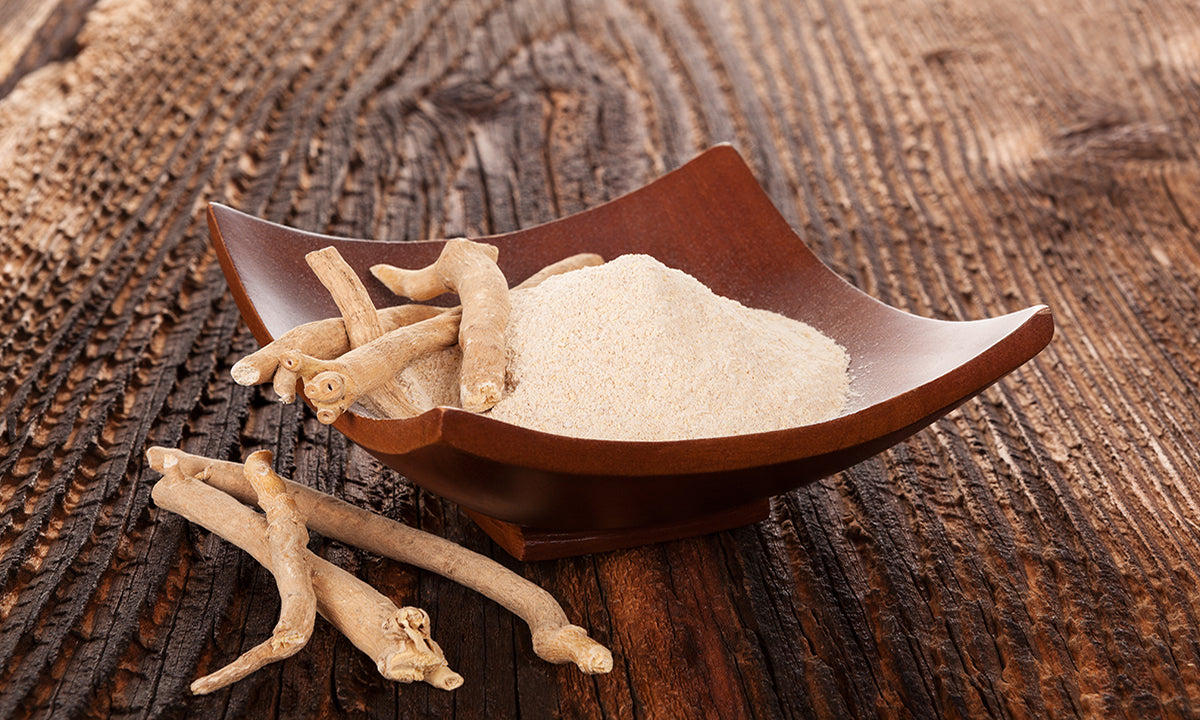
Ashwagandha is a botanical used in traditional preparations and supplements. NCCIH reports that some preparations may help insomnia and stress, while evidence for other conditions is insufficient or uncertain. That does not establish cancer prevention or an acne treatment from a topical cosmetic.
Licorice root has a history of food and traditional use, but oral use is different from topical cosmetic skincare. It should not be presented here as a proven stress, respiratory or digestive treatment. NIH guidance on licorice explains the evidence limits and why glycyrrhizin-containing oral products can affect blood pressure, potassium and medicines. For the skin-specific ingredient question, the licorice skincare guide separates botanical compounds and topical research.
Goji berries can be enjoyed as food, including in oatmeal or trail mix. A berry’s dietary reputation does not establish improved eye health, immune protection or a topical anti-aging effect. Seed oil and fruit extract are also different materials.
Turmeric is a familiar spice, and different extracts are used in research and cosmetics. Laboratory findings do not establish prevention of chronic disease or treatment of depression from a retail product. Food, supplements and topical preparations require separate evaluation.
Maca root appears in powders, capsules and other preparations. Its food use does not prove that every preparation improves mood, memory or stamina, and a topical maca ingredient should not be described as tested UV protection.
Holy basil has traditional uses and is available in different preparations. Those uses do not make it a general treatment for stress, blood sugar, cholesterol, joint pain or digestive symptoms. A topical cosmetic requires evidence for its own supported purpose.
Reishi is a mushroom used in several preparations. It should not be presented here as an established cancer treatment, immune booster or depression therapy. Ingredient identity and experimental findings do not settle the effectiveness of a supplement or cosmetic.
Milk thistle is a botanical found in supplements and other preparations. Claims about brain health, bone loss, blood sugar, acne or milk production need their own evidence and safety assessment; this skincare guide does not establish those uses.
It’s no secret that there are a lot of scams out there when it comes to health and wellness products, supplements being among them. So, you might be wondering, “Do adaptogens really work, and should I try one?”
Research quality differs between preparations and outcomes. Small samples, short follow-up, limited comparison groups and inconsistent ingredients can restrict what a finding establishes. Traditional use is useful history, but it cannot replace clinical evidence for a medical claim.
Different individual experiences are not proof that a herb normalizes whatever the body needs. A perceived benefit may have several explanations, including other changes in a routine. Compare controlled findings with the actual preparation under consideration.
Testimonials can describe experience without establishing causation. Discuss oral herbal products with a qualified healthcare professional when treatment decisions, persistent symptoms or interactions are involved.
Herbal products can have adverse effects and interactions, and safety varies by preparation and user. Lack of long-term information should not be described as absence of side effects. Check the specific ingredient and route rather than rely on natural origin.
Additionally, when choosing an adaptogen product to try, always take the time to do some research beforehand. Is it a reputable brand? What are the ingredients? Can this be taken in combination with other supplements or medications? These are all important questions to ask.
Teas, foods, concentrated supplements and topical cosmetics are different formats. Decide which question you are asking before comparing products; a skincare article should not turn an ingredient overview into instructions for treating a medical condition.
For skincare, focus on a tolerable complete formula and a clear cosmetic purpose. An adaptogen label does not establish treatment of stress, acne or illness, and it does not make an optional botanical essential to a complete routine.
Explore Herbal Dynamics Beauty skincare.
Begin with ingredient identity. A common plant name may cover different species, plant parts, extraction methods or blends. If a study tested one standardized extract, it cannot automatically support a claim for a different powder, tea or cream. Check the actual material before comparing an impressive study headline with a product label.
Next, identify the route and outcome. An oral study measuring a sleep score does not establish that a topical cream treats stress. A cell-culture antioxidant result does not measure how a person’s skin looks after regular use. A clinical study of a multi-ingredient product may support that formula without showing which ingredient caused the result.
Finally, keep a practical routine proportionate to the goal. Moisturizing comfort can be useful even when there is little evidence for a featured botanical’s specific anti-aging claim. A gentle formula does not need to promise hormone regulation or disease prevention to serve a cosmetic purpose. Choose the cleanser and moisturizer you tolerate, protect against sun exposure and add optional steps only when they have a clear role.
Read stress and skin for the broader relationship and ingredient-specific evidence limits for another example of why a category label is not a clinical result.
Content updated October 10, 2026.






