Your Cart is Empty


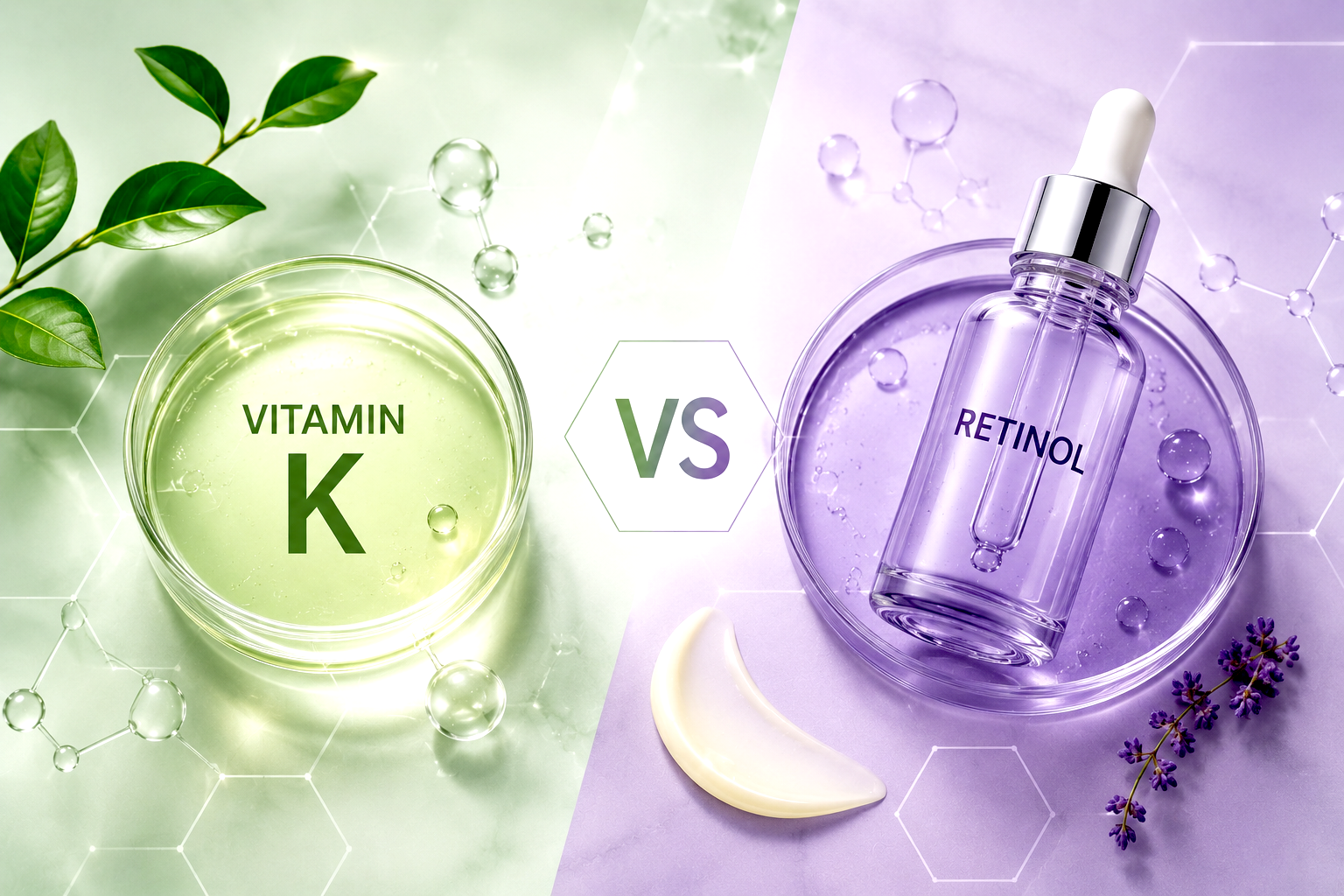
Retinol is more relevant to fine-line and photoaged-texture goals; Vitamin K is marketed mainly for the appearance of certain under-eye discoloration patterns. Retinol has stronger controlled clinical evidence for photoaging, but may irritate eyelid skin. Vitamin K evidence is preliminary and mostly comes from combination formulas. Neither can fill a tear trough or remove a structural bag.
| Goal | Practical consideration |
|---|---|
| Fine lines or photoaged texture | An eye-specific retinol may be an option if the skin tolerates it. |
| Dry-looking surface creases | A moisturizer may be enough; a stronger active is not automatically needed. |
| Mixed or vascular-looking darkness | Vitamin K is a preliminary cosmetic option, with limited evidence. |
| Brown pigmentation | Use the established dark-circle guidance rather than assuming either ingredient is the sole answer. |
| Fixed bags or hollows | A cosmetic cannot reshape the underlying anatomy. |
Retinol, retinal, retinyl palmitate and prescription tretinoin are different ingredients. Their activity, formulation and evidence cannot be treated as interchangeable. A product containing a vitamin A ester does not inherit the results of a retinol or tretinoin trial.
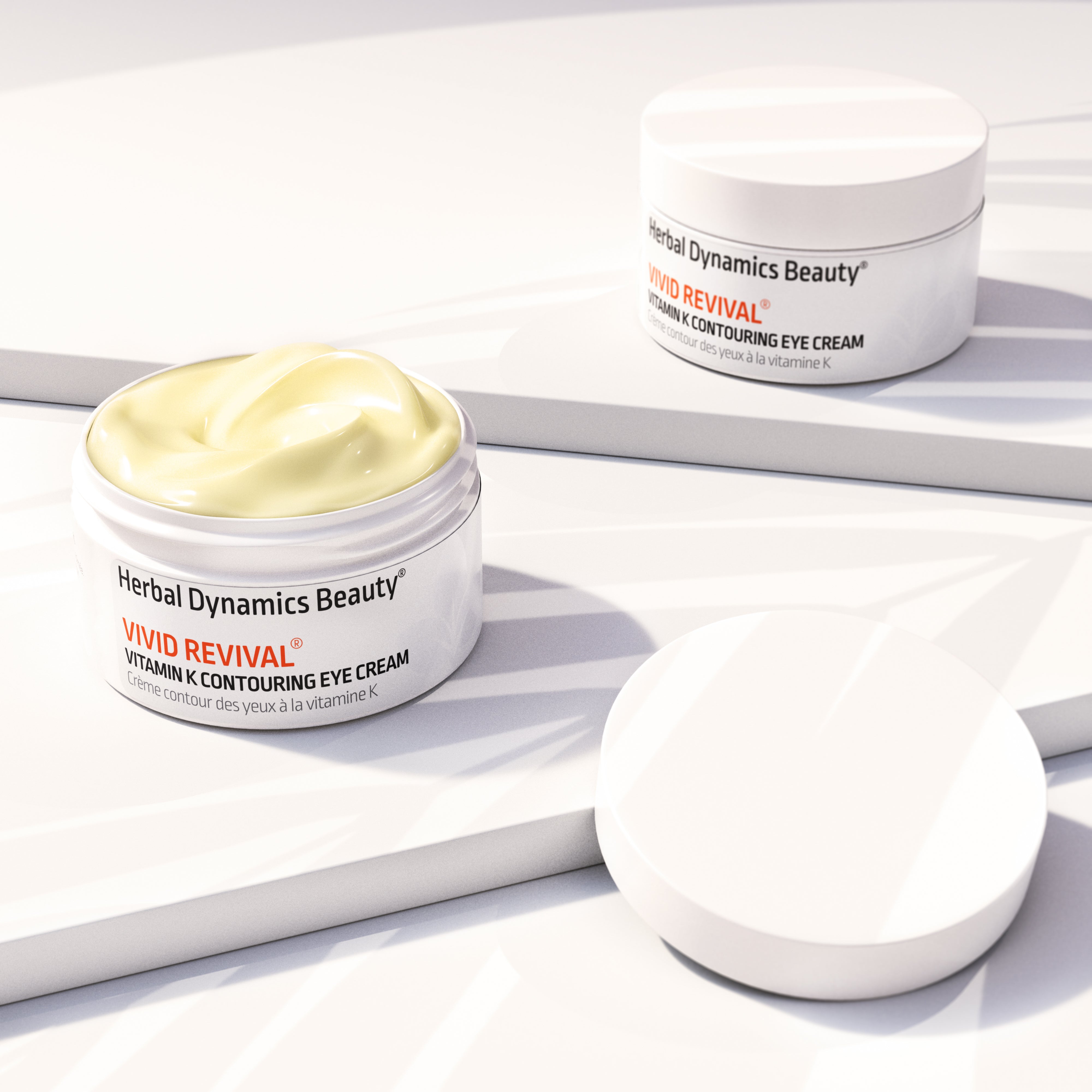
Vivid Revival® Vitamin K Contouring Eye Cream contains retinyl palmitate alongside phytomenadione, green tea and moisturizing ingredients. It should not be described as a retinol eye cream or a substitute for a prescribed treatment.
Controlled facial studies have found wrinkle improvements with specific retinol creams. Eye-area trials also exist, including an open-label study of a particular retinoid formulation. The strength of those findings depends on study design, not simply whether “retinoid” appears on the label.
The commonly cited Vitamin K eye-area study used several active ingredients together. It cannot establish a Vitamin K-only wrinkle effect. Read the Vitamin K evidence guide for its separate scope.
Use a product with directions that permit application in that area. A face retinol serum or prescription retinoid is not automatically appropriate for eyelids. Follow the advised amount and frequency, keep it out of the eye and introduce it gradually.
Avoid retinoids during pregnancy. Discuss use while planning pregnancy or breastfeeding with your healthcare professional. Persistent dryness, burning or scaling is a reason to stop and reassess, not to push through.
They have appeared together in a studied formulation, but that does not establish the safety or effectiveness of layering any two products. Check whether your existing eye cream already contains a vitamin A derivative. Introduce changes separately and avoid adding exfoliating acids near irritated eyelids.
A moisturizing cream may already meet your goal. For a comparison of finished formula options, use best eye creams for fine lines and the broad eye-cream buying guide.
People with active eyelid dermatitis, dry-eye symptoms or a history of reactions should seek individualized advice. Protect exposed skin from the sun, and do not use strong actives to try to correct a structural shadow.
For discoloration-focused product selection, review our guide to the best vitamin K eye creams and check each formula for any additional vitamin A ingredients.