Your Cart is Empty


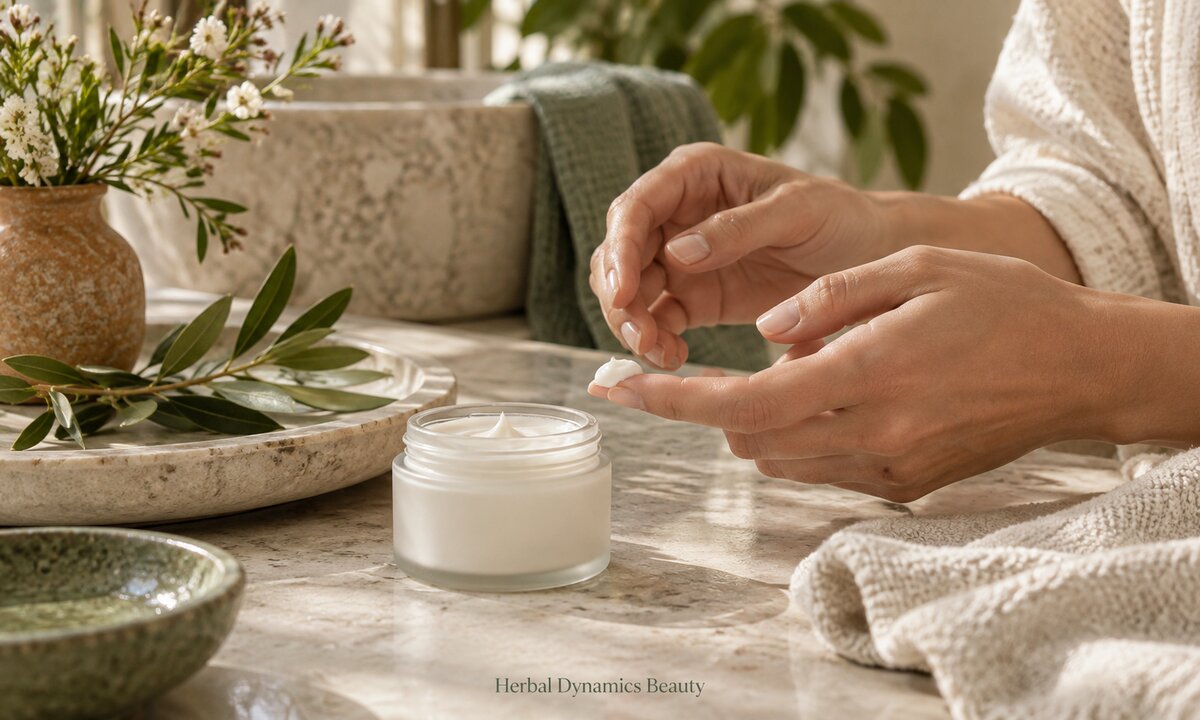
Choose a urea product for the specific location: hands exposed to repeated washing, broadly dry body skin and thick rough heels have different needs. A comfortable body moisturizer may emphasize hydration, while a foot preparation may target localized scale. Neither the highest strength nor the richest texture is automatically the best choice everywhere.
Frequent washing and friction can leave hands dry. A suitable urea hand cream can contribute water-binding support, while its emollient or occlusive base helps provide lasting comfort. Ease of reapplication matters when washing removes the surface product.
Follow the label and avoid treating painful cracks as a reason for stronger keratolysis. Hand rashes, persistent itch and fissures can have causes that need assessment. Urea and stinging explains the tolerance decision.
For ordinary dry shins or arms, evaluate an all-over lotion or cream intended for that use. You may not need the strength or application pattern designed for a thick heel. Urea-specific hydration guidance covers the moisturizing role.
The existing body moisturizer guide and body moisturizing routine cover general body care. Urea adds a concentration-dependent ingredient choice to that framework.
Some urea foot preparations are designed to soften intact thickened surface skin. That is different from ordinary facial hydration. Read whether the product is for localized patches, how often to apply it and whether it should be avoided on surrounding areas.
Do not add airtight wrapping, aggressive filing or a second strong acid to increase the effect unless a clinician or the product’s approved directions require that approach. Specialized nail-removal preparations belong to medical care, not a home smoothing routine.
| Location and goal | What to prioritize |
|---|---|
| Repeatedly washed hands | A hand-labeled, tolerable cream and practical reapplication. |
| General dry body skin | Spreading comfort, hydration and an adequate moisturizing base. |
| Intact thick heel scale | A clearly labeled localized foot preparation. |
| Elbows or knees with mild dryness | Moisturizing first, with any stronger product selected for the actual patch. |
| Face or delicate areas | A formula specifically intended for that area. |
Use the concentration guide to interpret 5%, 10%, 20% and higher labels. The percentage alone cannot establish that a preparation suits every body area.
Human urea studies commonly measure dry forearms and legs. Their hydration and scaling findings are useful for understanding body moisturizing. They still belong to the tested formulas, application schedules and populations; they are not a universal heel-softening timeline.
The barrier evidence guide separates hydration from TEWL, and the rough-scale guide separates a cosmetic texture goal from a diagnosed condition.
Seek assessment for bleeding cracks, infection signs, marked redness, a persistent rash or unexplained pain. If you have diabetes, poor circulation or reduced sensation, get professional guidance before using strong foot treatments or filing thick skin. You may not be able to judge irritation by discomfort alone.
Urea is not a treatment for every cause of heel roughness, and medical conditions such as eczema, psoriasis or keratoderma require an appropriate plan.
Choose one suitable preparation and use it according to the area-specific directions. Do not dilute a foot cream into a face lotion or mix raw urea into a body butter. The selection guide covers buying criteria; the use guide covers routine placement.
For facial questions, use urea cream for the face. The urea overview links the concentration and concern guides together.
By Herbal Dynamics Beauty · Updated October 4, 2026.