
Your Cart is Empty


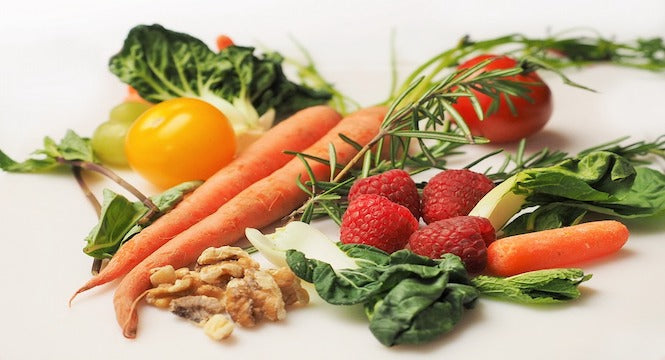
It's no secret that what you eat has a direct effect on your overall health, but what about your skin? Your skin is your body's largest organ, and it is absolutely affected by your diet. But maybe not in the way you think.
A slice of pizza won't necessarily cause pimples, and (good news!) you probably don't need to completely cut out chocolate either. In this article we will delve into what research tells us about the relationship between your diet and your skin.
Not that long ago, it was believed that many dermatological conditions had no relation to diet whatsoever. But recent research studies have shown that diet does in fact play a key role in some conditions.
Acne is a good example, as it was thought formerly that dietary intervention had no impact on the condition. Newer research, however, revealed that diet, particularly the Western diet, is correlated to increased skin inflammation and acne.
A typical Western diet is rich in refined carbohydrates, which are high on the glycemic index. Studies found that this type of diet can influence sebum production. Excessive sebum (oil) production is often a catalyst for acne.
Diet can also be linked to systemic disease like psoriasis.
While there isn’t anything we can do about getting older, some studies show that a healthy diet can help your skin look younger.
For example, omega-6 polyunsaturated fatty acids play a key role in the structural integrity of your skin, and help to form a barrier on the skin against free radicals.
Studies have shown that higher dietary intake of essential fatty acids is associated with a more youthful skin appearance, with less skin wrinkling in sun exposed skin.
A varied diet supports general nutrition, but research on nutrients should not be presented as proof that a particular food prevents skin cancer or supplies sunscreen-level UV protection. Follow established sun-protection advice alongside ordinary healthy eating.
Cocoa flavonoids found in dark chocolate can also help enhance the skin's hydration and boost the skin’s defense against damage from UV radiation from the sun. For green tea, drinking it and applying a topical preparation are different exposures; evidence from one route should not be transferred to the other or used to replace sunscreen.
So, should you be eating a high-protein, low-carb diet for better skin health? Or a diet low in fat? Or maybe it’s time to go with a carb-lovers diet? Or the Mediterranean diet? What about eating strictly vegetarian? Or should you go vegan? There are endless options, but which diet is best for healthier skin?
Unfortunately, there's no one best diet that will give everyone perfect, glowing skin. Each of our bodies have different needs and sensitivities, so a part of it will always be listening to what feels best for you However, these are a few foods you might consider moderating in order to have healthier skin:
Use the facial sunscreen guide to choose broad-spectrum SPF 30 or higher and apply it properly. FDA guidance explains why tested sunscreen claims, protective clothing and correct use matter; ingredient or nutrition research is not an SPF rating.






