Your Cart is Empty


A hydrating serum is a lightweight product designed to increase water in the skin’s outer layer. Most rely on humectants such as hyaluronic acid, glycerin, sodium PCA, panthenol or beta-glucan. A serum can improve comfort and temporary plumpness, but it may not replace moisturizer.
Hydrating serums deliver water-soluble ingredients in a light vehicle. Humectants help bind water; soothing or antioxidant ingredients may add other benefits depending on the formula. The result should be framed as improved hydration and appearance—not permanent wrinkle correction.
| Ingredient | Primary role | What to know |
|---|---|---|
| Hyaluronic acid / sodium hyaluronate | Humectant and film former | Molecular size changes texture and behavior; smaller is not automatically better. |
| Glycerin | Humectant and solvent | Extensive use and evidence in moisturization. |
| Sodium PCA | Humectant; part of natural moisturizing factor | Useful supporting ingredient, not a stand-alone wrinkle treatment. |
| Panthenol | Humectant and conditioning ingredient | Often used in sensitive-skin formulas. |
| Beta-glucan | Humectant/soothing support | Benefits depend on source, structure and formula. |
A serum usually emphasizes humectants and light texture. A moisturizer can also include emollients and occlusives that smooth roughness and reduce water loss. Oily dehydrated skin may prefer a light lotion over serum; dry skin may need a richer cream.
For hyaluronic-acid-specific shopping criteria, see Best Hyaluronic Acid Serum: What to Look For.
If the formula pills, use less and reduce the number of layers. If it burns or causes a persistent rash, stop rather than assuming discomfort signals effectiveness.
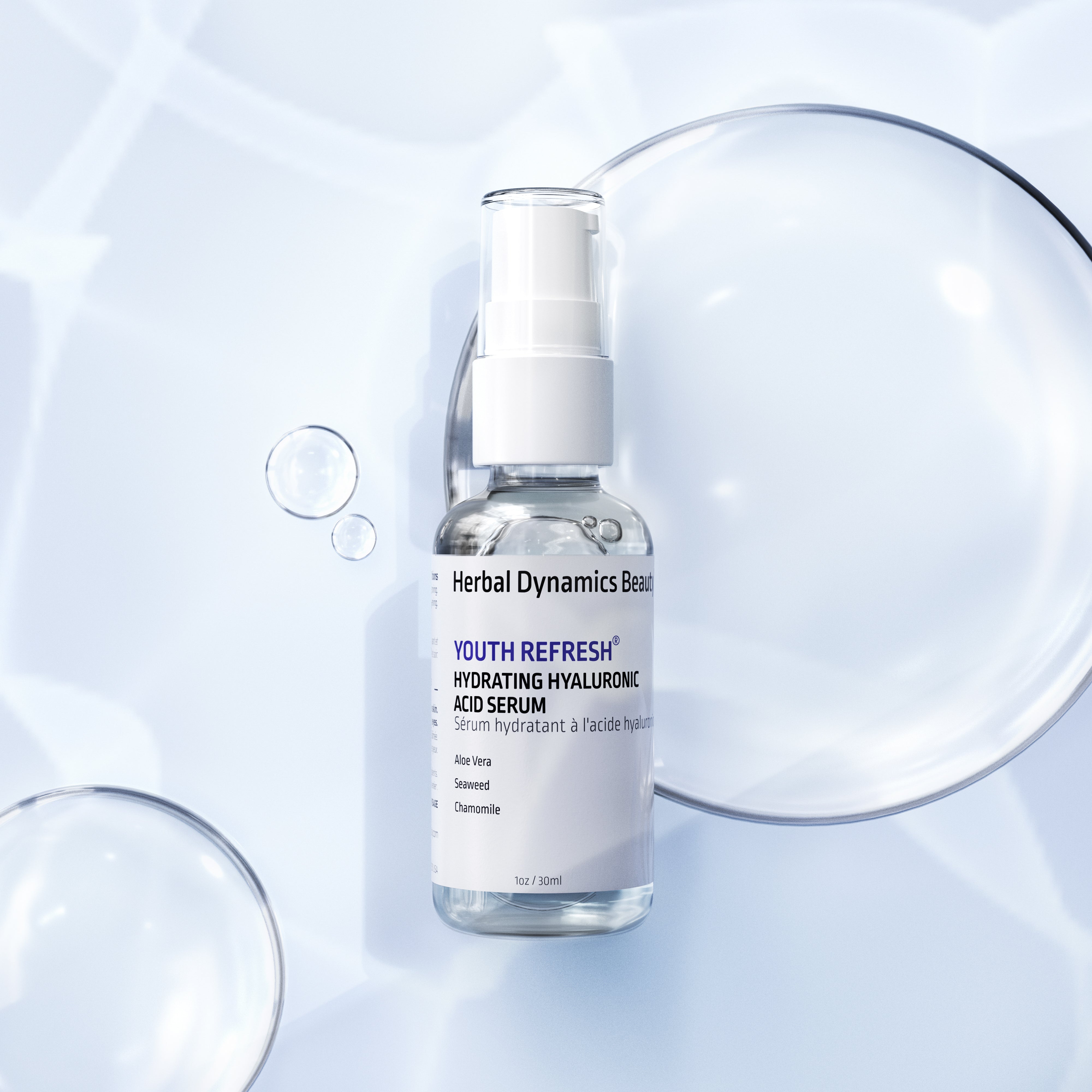
Youth Refresh® Hydrating Hyaluronic Acid Serum combines hyaluronic acid, glycerin and sodium PCA with aloe, chamomile, grape-seed and bladderwrack extracts. It is most relevant as a lightweight humectant step; individual botanical sensitivity still matters.
Hydrating serums can fit dry, oily, combination, mature and sensitive routines because dehydration is not a skin type. The best texture and moisturizer pairing differ. Start with our dry vs. dehydrated skin guide.
Hydrating serums contain water and therefore need an effective preservation system and stable packaging. “Preservative-free” is not automatically safer. Do not dilute a purchased serum or add kitchen ingredients, because that can disrupt preservation.
| Skin type or concern | Practical formula preference |
|---|---|
| Dry | Humectant serum under a cream with emollients and occlusives |
| Oily/dehydrated | Light serum and lotion that do not leave a heavy film |
| Sensitive | Shorter fragrance-free formula, introduced slowly |
| Acne-prone | Light texture; stable routine; one new product at a time |
Surface hydration and feel can change after one application. That does not prove long-term remodeling. Evaluate comfort, pilling and irritation during repeated use, and judge structural anti-aging claims separately.
If your moisturizer already keeps skin comfortable, an extra serum is optional. A shorter routine can be less expensive, reduce pilling and make it easier to identify irritation.
Before adding another serum, use the face moisturizer guide to check whether the base cream meets your needs. The oil-versus-serum comparison helps distinguish the roles when product names overlap.
“Best hydrating serum” and “best serum for dehydrated skin” often describe the same purchasing need. Choose a formula for water-binding support and a finish that works with your moisturizer; an oily or dry skin type changes the surrounding routine.
| Your need | What to look for | What to check |
|---|---|---|
| Lightweight hydration | Glycerin, hyaluronic acid or sodium PCA in a comfortable base | Follow with moisturizer if the serum does not leave skin comfortable. |
| Sensitivity to fragrant ingredients | Fragrance-free formula screened for your personal triggers | A botanical extract or a short ingredient list is not a tolerance guarantee. |
| Dryness as well as dehydration | Humectants paired with emollients and occlusives in the routine | A richer moisturizer may solve the problem without another serum. |
Choose by moisturizing role and tolerance. For persistent dry-skin needs, use the dry-skin serum guide; for shine alongside tightness, use the oily-skin serum guide.
Return to face-serum selection basics or the broader selection guide. Serum versus moisturizer helps decide whether an extra bottle is useful.
For sensitivity-specific selection, see the sensitive-skin serum guide. The routine overview explains when an additional hydrating layer is optional.
If glycerin is the ingredient you are evaluating, the glycerin product-selection guide compares serum and moisturizer roles, while the concentration guide explains why ingredient-list position cannot reveal an exact percentage.
For a hydration-focused purchase, Dry-skin serum selection asks whether a light layer adds value or whether the moisturizing base needs attention. Panthenol formula selection reviews ingredient labels and routine fit.
The NMF guide explains urea, amino acids, PCA and lactates as parts of the small-solute mixture. Urea product selection compares serum, lotion and cream roles. A light urea serum is not automatically a complete moisturizer or a substitute for a localized rough-scale preparation.