Your Cart is Empty


For dry skin that is comfortable but rough, a carefully chosen lactic-acid or PHA formula may be useful. For skin that is cracked, burning or actively peeling, moisturizer and gentle care come first. Do not buy an exfoliant simply because you can see flakes.
Low oil content, dehydration, irritation and an underlying skin condition can overlap. Removing more surface material may make a damaged barrier feel worse. Start with dry versus dehydrated skin and look at cleansing, weather and recent active-product changes.
If water or moisturizer stings, pause optional acids and use the barrier-care routine. Persistent cracking, itching or a rash deserves evaluation. Exfoliation is not a treatment for every cause of dry skin.
| Your need | What to look for | What to check |
|---|---|---|
| Surface texture on comfortable skin | A lactic-acid formula with humectants | Check warnings and start only when skin is comfortable; do not exfoliate raw flakes. |
| A cautious alternative format | A PHA formula containing gluconolactone | Review the complete formula; a PHA can still irritate. |
| Persistent tightness or cracking | Moisturizer and gentle cleansing before exfoliation | Adding acid does not correct insufficient moisturizing support. |
Lactic acid can contribute both exfoliation and formulation-dependent moisturizing effects. That does not make every lactic-acid serum a barrier-repair product. A moisturizing lotion with lactate and an acidic exfoliating serum can behave very differently.
If you are choosing between glycolic and lactic acid, use the focused comparison. The full formula, not the word “lactic,” determines how suitable a product may be. Mature skin often benefits from this same comfort-first approach; age alone is not a reason to increase strength.
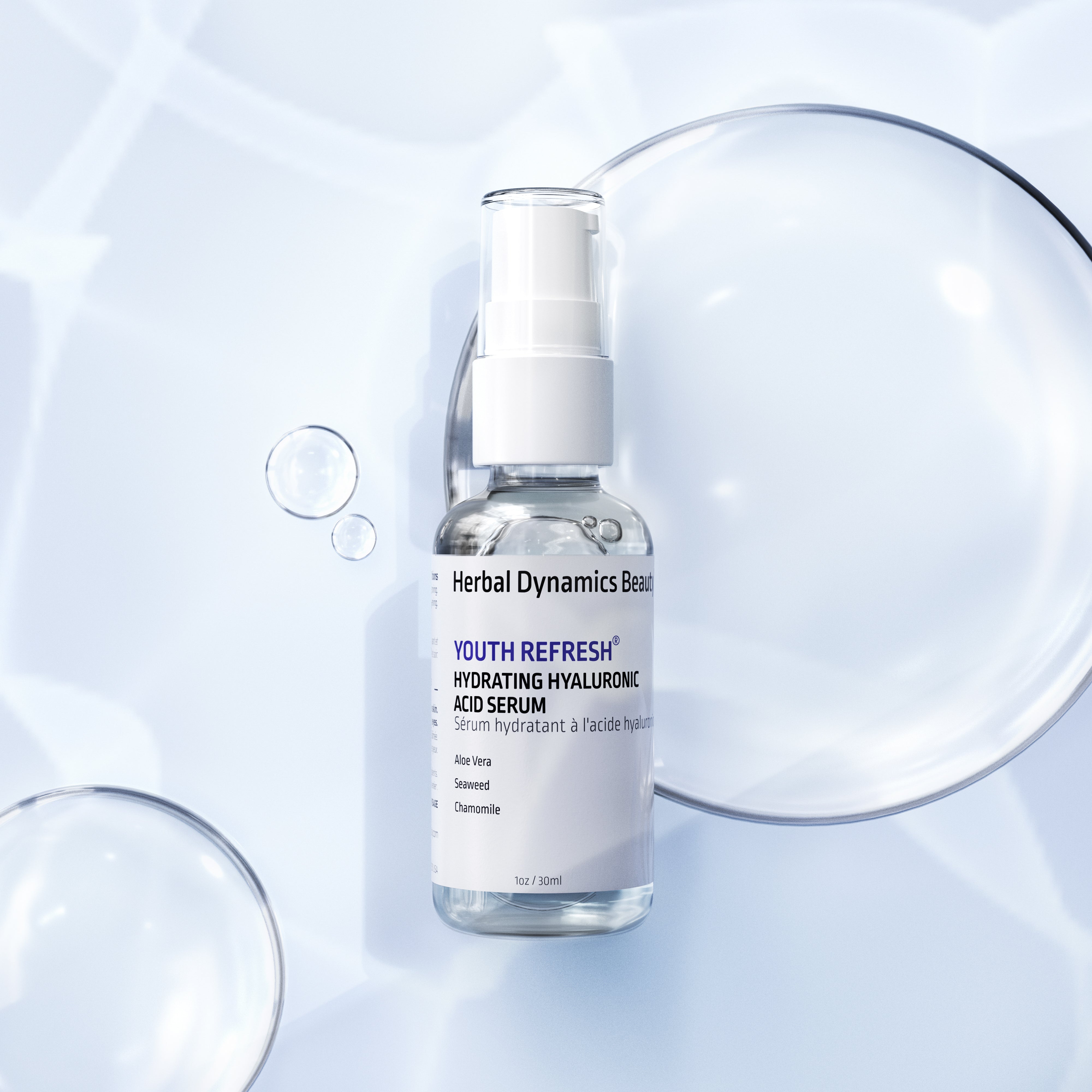
For optional humectant support on comfortable skin, Youth Refresh® Hydrating Hyaluronic Acid Serum supplies hyaluronic acid, glycerin and sodium PCA. It belongs before a moisturizer when that suits your routine. It is not a peel and should not be used to make an irritating acid tolerable. The dehydration guide explains that hydration role.
Look for a complete formula that combines water-binding ingredients with emollient or occlusive support, and that your skin tolerates. Youth Refresh® Prickly Pear Antioxidant Daily Moisturizer is one available option for comfortable skin; its formula includes caprylic/capric triglyceride, shea butter and glycerin. Botanical extracts and other active ingredients still need consideration if you react easily.
A bland moisturizer may be preferable during irritation. Do not add multiple new hydration products at the same time as an exfoliant—you will lose track of what helped or caused discomfort.
There is no required exfoliation frequency for dry skin. Use the product’s limits and your skin’s response, and be willing to omit it entirely. Increasing tightness, flakes or sensitivity means reassessing the routine, not exfoliating more. See the frequency guide and over-exfoliation signs.
Follow the exfoliant’s directions, including rinsing when required, and use a tolerated moisturizer. Compare dry-skin moisturizer choices and application order instead of adding more exfoliation whenever the face feels rough.
Urea and ordinary dryness explains water retention; urea and rough scale explains stronger keratolytic uses. A hydration-focused urea moisturizer differs from an exfoliating acid product. Assess irritation and the formula’s actual purpose before treating dry facial flakes with another active.
By Herbal Dynamics Beauty • Updated October 4, 2026. General skincare education; persistent, painful or worsening symptoms need professional assessment.