Your Cart is Empty


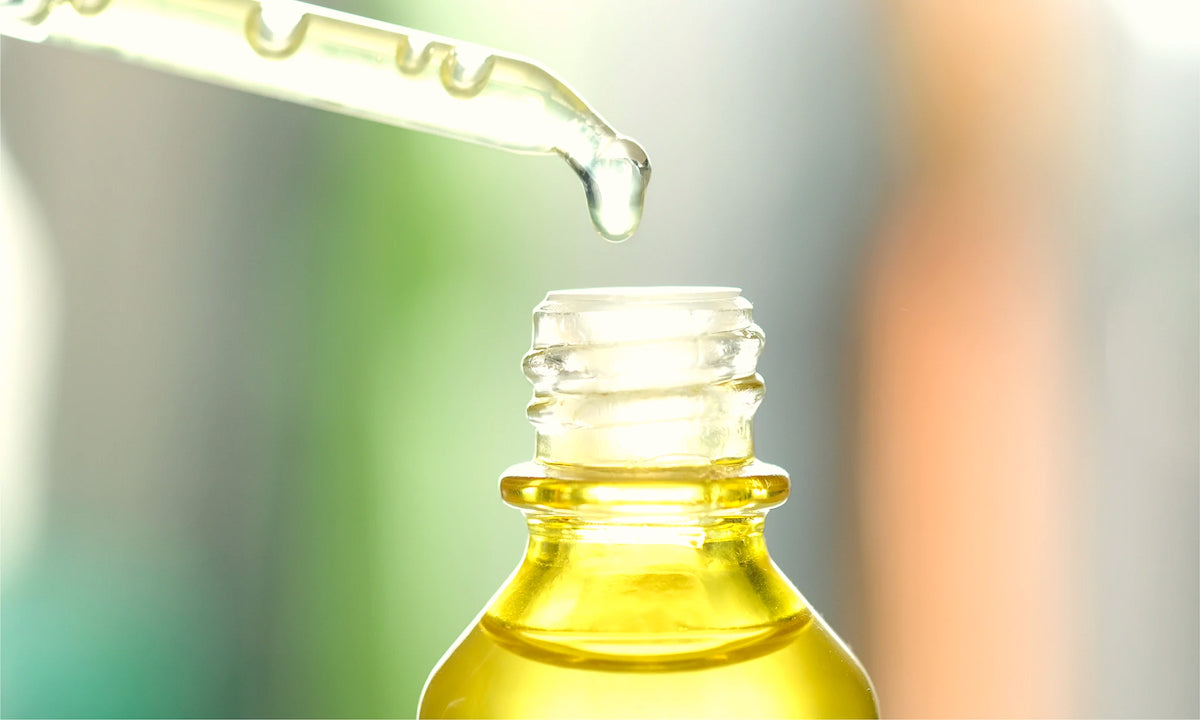
Short answer: Jojoba oil—more precisely a liquid wax made from Simmondsia chinensis seeds—is a useful emollient that can soften skin and reduce moisture loss in a well-formulated product. Evidence does not support calling jojoba a cure for acne, eczema, psoriasis, sunburn, infection, or wounds.
Last updated: September 2026. This article provides cosmetic education and does not recommend jojoba as treatment for a skin disease or wound.
Unlike common triglyceride plant oils, jojoba consists largely of long-chain wax esters. Its texture, oxidation stability, and skin feel make it useful in moisturizers, cleansers, lip products, hair products, and facial oils. “Natural,” “cold-pressed,” or “organic” describes sourcing or processing; it does not by itself prove effectiveness or eliminate allergy risk.
For a direct ingredient comparison, see squalane versus jojoba and rosehip oil. The squalane guide explains the related emollient option without assuming that either ingredient exactly reproduces human sebum.
| Claim | Evidence-based interpretation |
|---|---|
| Moisturizes dry skin | Reasonable. Jojoba is an emollient and occlusive-supporting ingredient that can soften the surface and help reduce moisture loss. |
| Balances sebum | Not established. Similarity to some skin-surface lipids does not prove that jojoba makes oil glands produce less sebum. |
| Treats acne | Preliminary. A small study tested a clay-and-jojoba mask, so the result cannot isolate jojoba or establish it as first-line acne treatment. |
| Heals wounds or sunburn | Not an appropriate cosmetic claim. Do not apply a cosmetic oil to an open wound or severe burn unless a clinician directs you. |
| Treats eczema or psoriasis | Not established. An emollient may improve dryness, but inflammatory disease can require diagnosis and medication. |
| Prevents wrinkles | Jojoba can temporarily make dry lines look softer by improving surface moisture; it does not stop intrinsic aging. |
Some people tolerate jojoba well, but no oil is universally non-comedogenic. Pore-clogging scales are based on inconsistent methods and cannot predict every person’s response. Herbal Dynamics Beauty’s comedogenic scale guide explains why formulation and individual use matter more than a single rating.
If acne is your main concern, use therapies supported by current acne guidelines rather than relying on jojoba alone. Herbal Dynamics Beauty’s evidence-based acne ingredient guide compares common options.
Jojoba can contribute emollience, but it does not replace every component of a barrier-supporting moisturizer. Humectants attract water, emollients smooth gaps between surface cells, and occlusive ingredients reduce water loss. Ceramides and other lipids may also be useful depending on the formula. See Herbal Dynamics Beauty’s ceramide and skin-barrier guide.
Applying more oil does not necessarily create more hydration. Water content and oil content are different, and a heavy layer can feel uncomfortable or trap irritating ingredients underneath it. Start with a small amount and assess the complete routine rather than assuming that shine means the barrier is repaired.
Patch-testing is especially sensible if you have eczema, a history of cosmetic allergy, very reactive skin, or a known allergy to a product’s fragrance or botanical ingredients. Seek professional care for deep acne, an infected-looking rash, an open wound, or a significant burn.
No. It is a seed-derived liquid wax. It does not have the same composition or fragrance-volatility profile as an essential oil, though a jojoba product can still contain added essential oils or fragrance.
Jojoba can soften the surface and reduce moisture loss, but it does not supply the water-binding and barrier-lipid balance of every complete moisturizer. Very dry or compromised skin may do better with a fragrance-free cream.
A single laboratory rating cannot predict individual breakouts. Test the actual finished product on a limited area and judge it over time rather than relying only on an ingredient score.