Your Cart is Empty


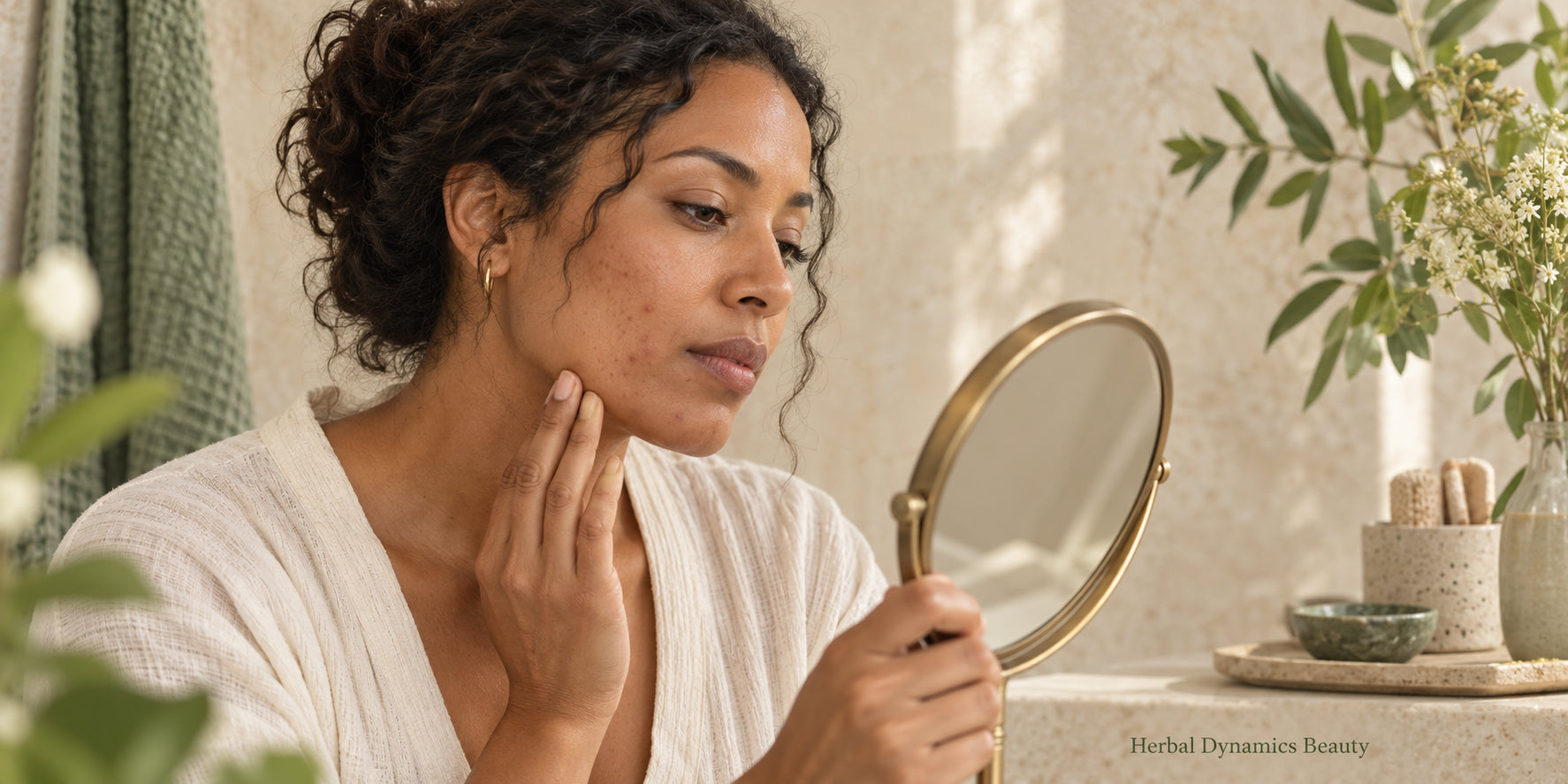
Adult acne can persist from adolescence or begin later, and hormones can influence it even when blood hormone levels are normal. Chin and jawline breakouts may fit a hormonally influenced pattern, but location alone cannot diagnose a hormone disorder or tell you which treatment to use.
Acne involves follicular plugging, sebum, inflammation and interactions with skin microbes. Genetics, hormonal signaling, some medicines and product exposures may contribute. Stress may aggravate acne, but a breakout is not proof that you have failed to manage your life or wash correctly.
Some people notice changes around menstrual cycles, pregnancy or menopause; others have no obvious cyclical pattern. Adults can also have dry or sensitive acne-prone skin, so harsh oil-stripping routines may be especially uncomfortable.
Persistent lower-face acne can be one clue, especially if there is a recurring cycle-related pattern. It is not a diagnostic map of the ovaries, digestive system or another organ. A clinician considers the full history, examination, medicines and other symptoms.
| Observation | Useful next step | What not to conclude |
|---|---|---|
| Recurring lower-face lesions | Record timing and discuss persistent acne with a clinician | Every chin pimple proves abnormal hormones |
| Sudden change after a medicine or supplement | Review it with the prescriber or pharmacist | Stop a necessary prescription on your own |
| Acne with irregular periods or new excess hair growth | Ask about assessment for an underlying hormonal condition | Self-diagnose from a skincare quiz |
| Itchy, uniform or rash-like bumps | Seek help distinguishing acne from a mimic | Treat every eruption with more exfoliation |
| Deep painful lesions or scars | Arrange dermatology care early | Wait until every cosmetic has failed |
Topical retinoids and benzoyl peroxide have strong AAD guideline support for acne. Salicylic acid and azelaic acid are other options with conditional recommendations. The right plan depends on lesion type, tolerability and medical circumstances.
Cosmetic retinol is not interchangeable with adapalene or prescription tretinoin. Hydrating serums and moisturizers support comfort; they do not correct an endocrine condition or replace medical therapy.
For appropriate patients, clinicians may consider combined oral contraceptives, spironolactone or other prescription approaches. These involve health history, contraindications, pregnancy considerations and follow-up. They are not products to select from a cosmetic ingredient chart.
The AAD hormonal-therapy guide explains why a clinician may consider these options. Hormonal treatment is not suitable for everyone, and “hormone-balancing” teas or supplements are not equivalent substitutes.
Keep gentle cleansing, moisturizer and sunscreen consistent. Introduce treatment as directed, without automatically adding an acid toner, scrub and mask. If you are oily and tight at once, read dry versus dehydrated skin; if products burn, use barrier-aware acne care.
The acne-prone skincare guide helps with cosmetic choices, and the AM/PM routine guide explains application. Do not judge a regimen only by whether it dries a visible pimple quickly.
Avoid retinoids during pregnancy or when planning pregnancy and discuss acne medicines with your prenatal clinician. Breastfeeding also requires product-specific advice. Do not continue a pre-pregnancy prescription plan simply because it is applied to the skin.
Get care for scarring, deep pain, rapid worsening, unusual associated symptoms or substantial emotional impact. The goal is to prevent further damage and find a tolerable plan, not to prove that you can manage acne without support.
Updated September 20, 2026. General skincare education, not a diagnosis or individualized treatment plan. Seek professional care for deep, painful, scarring, persistent or rapidly worsening acne.