Your Cart is Empty


There is no universal best Panthenol percentage for every skin type or product. Research tested particular concentrations within defined formulas; those results do not create a dose rule for every serum, toner or cream. If the percentage is undisclosed, ingredient-list position cannot reliably calculate it.
Camargo and colleagues tested formulations containing 0.5%, 1.0% or 5.0% Panthenol on healthy volunteers' forearms. The 1.0% and 5.0% preparations reduced measured TEWL after repeated application under the study conditions. That does not show that 5% is the best facial choice or that lower-listed Panthenol is pointless.
Those percentages belong to the tested preparations. The vehicle, application, endpoint and other ingredients affect the finding. The barrier-evidence guide explains why water content and water loss should be assessed separately.
| Question | Why it changes the decision |
|---|---|
| Which ingredient form was tested? | Panthenol terminology and Dexpanthenol research need to be matched carefully. |
| Which complete product was studied? | A cream result is not proof about another brand's serum at the same number. |
| What was the comparison and endpoint? | Hydration, TEWL, roughness and medical outcomes are different claims. |
For US cosmetic labeling, ingredients above one percent generally appear in descending order of predominance. Ingredients at one percent or less may be listed without that ordering. The position of Panthenol therefore does not reveal whether the formula contains a specific fraction or matches a study.
A "B5 complex" number may also describe a mixture rather than pure Panthenol. Check what the brand actually discloses. B5 label terminology separates Panthenol, pantothenic acid and broader vitamin language.
An amount is one part of formulation, not a performance score. A texture you can use comfortably and a complete moisturizing base may be more useful than a headline number. A personally triggering ingredient or an allergy remains relevant regardless of the Panthenol percentage.
Do not increase the amount or frequency of an irritating product simply to reach a dose. Do not add raw Panthenol to a finished cosmetic: changing its composition can affect stability and preservation.
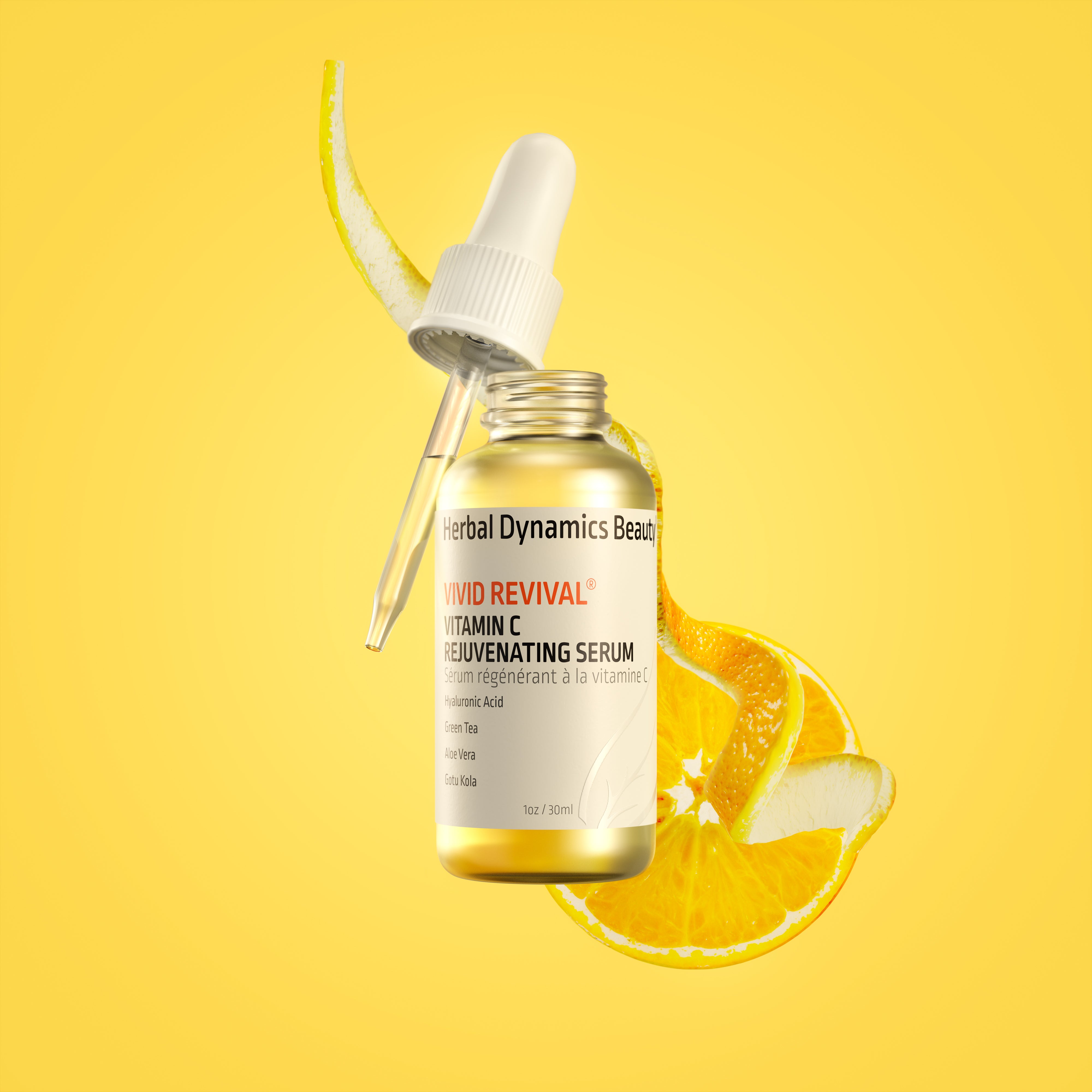
Vivid Revival® Vitamin C Rejuvenating Serum lists Dexpanthenol in a multi-ingredient Vitamin C serum. Youth Refresh® Hyaluronic Acid & Oat Overnight Recovery Mask lists Panthenol in an overnight moisturizing base. Neither published ingredient list supplies a Panthenol percentage, so this guide does not assign one or claim they match the trial formulas.
Their fit depends on the category and complete ingredient list. The mask's aromatic botanicals and the serum's other active ingredients still matter. Serum-versus-moisturizer guidance addresses that practical choice.
Return to Panthenol product selection for the purchase decision and Panthenol use guidance for timing and order. The ingredient pillar connects the evidence to the wider cluster.
General cosmetic education. Persistent, painful or worsening symptoms and medical-treatment decisions need individual professional assessment.
Product disclosure: Herbal Dynamics Beauty publishes this guide and makes and sells the products linked here. Ingredient research is not a clinical test of these finished formulas, and the cited researchers and medical organizations do not endorse them.
By Herbal Dynamics Beauty · Updated October 4, 2026.