Your Cart is Empty


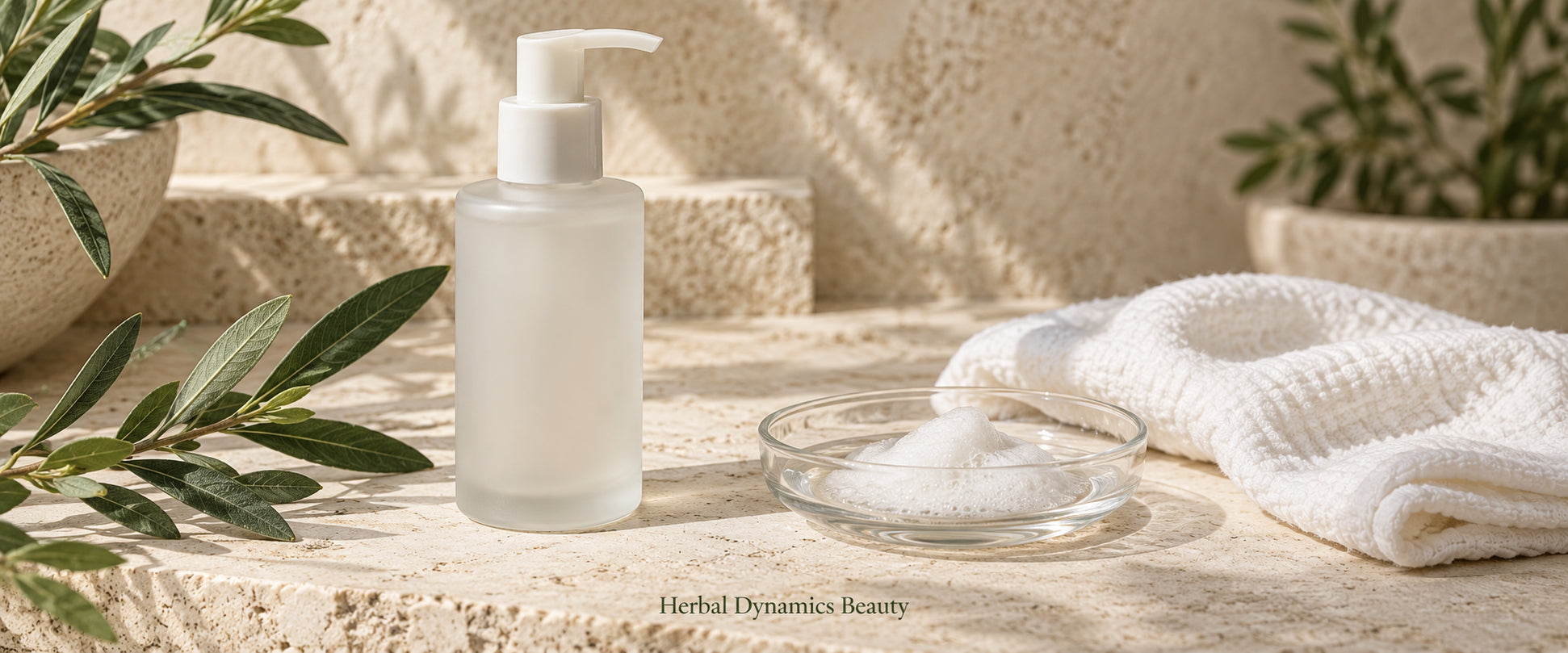
The best cleanser for sensitive skin removes what needs washing away without leaving persistent burning, itch or uncomfortable tightness. Start with a mild facial cleanser and consider a fragrance-free, non-exfoliating formula. Skin type, contact time and how you wash matter as much as whether the bottle says “gentle.”
For a straightforward gentle cleanser, look for a mild, non-soap base and avoid fragrance or botanical ingredients that have triggered you before. Glycerin can be part of the formula, but its presence does not guarantee a comfortable wash. Judge how your skin feels after rinsing.
For normal-to-dry sensitive skin, a cream-format wash may feel more comfortable than a strongly foaming cleanser. Humectants and emollients matter alongside the cleansing system. Fatty alcohols are not interchangeable with an ethanol-based astringent, and a sensitive-skin label does not promise individual tolerance.
| Need | What to consider | Avoid assuming |
|---|---|---|
| Dry sensitive skin | A mild cream or lotion cleanser and comfortable after-feel | A strong lather is required to get clean |
| Oily sensitive skin | A gentle gel or foam if it feels comfortable | Removing every trace of oil is the goal |
| Sensitive acne-prone skin | A gentle base cleanser; review medicated options within the acne plan | Every cleansing step should contain salicylic acid or benzoyl peroxide |
| Makeup or water-resistant sunscreen | A suitable remover or cleanser used as directed, with minimal rubbing | Everyone needs two full face washes every night |
| Current burning or rash | Previously tolerated care and professional advice if symptoms persist | An acid wash or cleansing brush will remove the problem |
For acne-specific product decisions, see gentle versus medicated acne cleansers. For the broader format comparison, see choosing a facial cleanser for your skin.
Identify fragrance, essential oils and your known allergens. A “natural” surfactant can still irritate, while a product containing a familiar sulfate is not automatically unsuitable at every concentration. Evaluate the finished wash and directions, rather than classifying every ingredient as good or bad from its name.
Micellar water is a cleansing format, not a toner replacement or a requirement. If it leaves residue or discomfort, reassess its use and rinsing instructions. The micellar-water comparison explains the different role.
The American Academy of Dermatology face-washing guidance favors gentle application and limiting routine washing to twice daily and after heavy sweating. If your face repeatedly feels uncomfortable despite gentle technique, review the formula and frequency with a clinician.
Persistent burning, new itching, swelling, rash or a marked worsening of dryness is not a desirable cleansing effect. Keep the ingredient list and use the irritation-versus-allergy guide to understand why the sensation alone cannot identify an allergen. For tightness after the next step, read tightness despite moisturizing.
Choose the moisturizer and sun protection before buying optional toner or serum. A cleanser does not need an extensive botanical blend to do its job. For the complete buying framework, return to Best Skincare for Sensitive Skin.
For dry, sensitive skin, compare hydrating cleanser choices; for oily but reactive skin, use the oily-skin cleanser guide alongside the tolerance checks above. The main facial-cleanser comparison brings the options together.
Double cleansing is optional. If one suitable wash removes what you wear comfortably, there is no need to add another. Review tightness after washing and excessive cleansing if even a gentle product seems to leave skin sore.
By Herbal Dynamics Beauty · Updated September 21, 2026.
General skincare education. Persistent, painful or worsening symptoms need professional assessment.